
- What Are Kraft Paper Laminated Woven Valve Bags?
- Why This Format Exists: Problem → Method → Result → Discussion
- Anatomy of Kraft Paper Laminated Woven Valve Bags: Layer Stack, Valve Integration, and Block‑Bottom Geometry
- Manufacturing Workflow in Detail: From Tape to Pallet
- Valve Systems Explained: Heat‑Sealed vs. Co‑Extruded, Internal vs. Extended, Reduced vs. Standard
- Selecting the Right Packaging Scheme: A Systems‑Thinking Framework
- Data Reinforcement: Real‑World Ranges and Tolerances for Kraft Paper Laminated Woven Valve Bags
- Application Map: Where Kraft Paper Laminated Woven Valve Bags Win and Why
- Printing & Branding on a Matte Stage: How to Keep Color Honest and Durable
- Quality Assurance and Compliance: What a Solid Spec Must Name
- Case Files (Problem → Method → Result): Three Tight Narratives
- Comparative Study: Kraft Paper Laminated Woven Valve Bags vs. Alternatives
- RFQ‑Ready Specification Template (Copy, Paste, Adjust)
- Frequently Asked Questions About Kraft Paper Laminated Woven Valve Bags
- What Sets Kraft Paper Laminated Woven Valve Bags Apart?
- Dealing With High‑Strength Loads And Rough Logistics In Kraft Paper Laminated Woven Valve Bags
- Tips For Working With Moisture‑ Or Oxygen‑Sensitive Goods Using Kraft Paper Laminated Woven Valve Bags
- Choosing The Right Architecture For Kraft Paper Laminated Woven Valve Bags
- The Importance Of Precision In Valve Placement And Block‑Bottom Geometry
- Using Professional Conversion Services For Best Results With Kraft Paper Laminated Woven Valve Bags
- Techniques For Forming And Filling Kraft Paper Laminated Woven Valve Bags Efficiently
- Ensuring Quality In Customized Kraft Paper Laminated Woven Valve Bags
- Understanding The Role Of The Valve In Kraft Paper Laminated Woven Valve Bags
- Why Are Foil‑Lined Liners Preferable Than Others For Certain Kraft Paper Laminated Woven Valve Bags?
- The Role Of The Filler And Closure Energy In Kraft Paper Laminated Woven Valve Bags Performance
- Importance Of Orientation And Pallet “Axes” In Handling Kraft Paper Laminated Woven Valve Bags
- Choosing The Right Supplier For Kraft Paper Laminated Woven Valve Bags
- References
What Are Kraft Paper Laminated Woven Valve Bags?
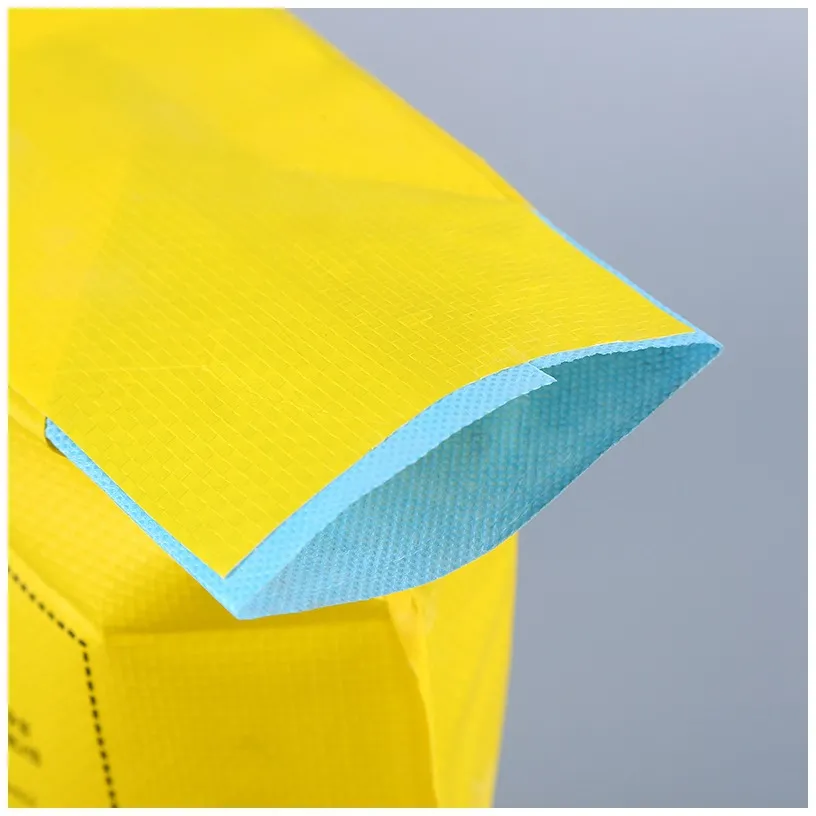
What exactly are Kraft Paper Laminated Woven Valve Bags? In plain terms, they are heavy‑duty sacks that bond a printable kraft paper face to a woven polypropylene (PP) fabric core and integrate a purpose‑built valve for fast, clean filling. In trade catalogs and RFQs you will also see aliases like paper‑laminated woven valve sacks, kraft‑poly composite valve bags, paper‑laminated PP woven bags, block‑bottom valve sacks, and paper‑poly valve bags. Different labels, one platform: a paper exterior for matte optics and crisp coding, a woven backbone for tear strength, and a valve mouth engineered for speed.
The signature features of Kraft Paper Laminated Woven Valve Bags read like a checklist for plant managers and brand teams alike: high tensile‑to‑weight ratio; puncture and tear resistance that multi‑wall paper struggles to match; block‑bottom geometry that stacks like bricks; line‑ready valve configurations (internal, extended, reduced) that match ultrasonic or hot‑air closures; tunable barrier via PE extrusion coats, BOPP/VMPET film faces, or optional inner liners; anti‑slip outer textures for pallet stability; UV stabilizers for yard storage; and a kraft face that accepts flexographic or offset inks without glare.
How are Kraft Paper Laminated Woven Valve Bags made? The manufacturing process follows a disciplined sequence: PP resin is extruded into tapes and oriented for strength; tapes are woven into flat or circular fabric; kraft paper is bonded to the fabric by extrusion lamination (molten LDPE/LLDPE tie) or solventless PU adhesive; printing is applied on kraft (flexo/offset) or, when a film face is used, via reverse gravure beneath the film; the web is converted into block‑bottom form with hot‑air welded corners; the valve sleeve—heat‑sealed or co‑extruded to the mouth—is inserted; QA (seam strength, valve pull‑out, color, drop resistance) closes the loop.
Where do these bags work best? The uses are broad and practical: cement and dry mortar, gypsum and lime, fertilizers and soil amendments, salt, grains and flour, animal feed and pet food, sugar, engineering plastics and masterbatches, minerals, pigments, calcium carbonate, and construction chemicals. Whenever the product is free‑flowing, the route is rough, and the brand needs to be read at a glance, Kraft Paper Laminated Woven Valve Bags earn their place. For a quick overview of styles and sizes, see Kraft Paper Laminated Woven Valve Bags.
Why This Format Exists: Problem → Method → Result → Discussion
Problem. Plants need fast filling with low dust; warehouses need stable pallets; marketers want matte, natural optics with legible codes; quality teams insist on consistent seals and documented compliance. Conventional paper sacks tear under rough handling; film‑only pouches slip, glare, and feel synthetic.
Method. Combine a kraft face (for texture, readability, low glare) with a woven PP core (for strength) and a sealed valve mouth (for clean, rapid filling). Add lamination options to reach the barrier your product actually needs.
Result. The bag behaves like equipment: predictable sealing windows, repeatable pallet performance, stable color, and line speeds that hold through real shifts—not just trials.
Discussion. The genius of Kraft Paper Laminated Woven Valve Bags is not one property but the way properties interact. Change coat weight and moisture ingress changes; shorten the valve and residual air drops; choose matte paper and barcode scans improve. The structure is a soundboard—tune one string and the chord changes.
Anatomy of Kraft Paper Laminated Woven Valve Bags: Layer Stack, Valve Integration, and Block‑Bottom Geometry
Layer stack. Outside: kraft paper (70–120 g/m²), ribbed or smooth, white or natural. Inside: PP woven fabric (65–120 g/m²; meshes 7×7 to 14×14; denier 700–1000D common for 25–50 kg duty). Between them: an extrusion‑coated LDPE/LLDPE tie or a solventless PU adhesive bond. Optional film faces—BOPP 18–25 µm for photo graphics or VMPET 12 µm for mid‑barrier—can be added where branding or barrier demands it. Inner liners—PE for moisture control or PET//AL//PE for maximal barrier—are specified for hygroscopic or oxygen‑sensitive products.
Valve integration. The valve sleeve is not an afterthought. VidePak‑style lines weld a film‑coated sleeve to the mouth by heat sealing or design a co‑extruded sleeve to fuse with the mouth during forming. In both cases, the joint acts like a continuous lamina; after fill, the sleeve is sonic‑ or hot‑air‑sealed. No thread, no pinholes, no dust path.
Block‑bottom geometry. A pre‑creased web folds into a square base; hot‑air corners resist blow‑out; a re‑entrant bottom fold damps rocking. Blocks stack like bricks; stretch wrap can be lighter; pallets travel straighter. The geometry is humble, the impact unmistakable.
Manufacturing Workflow in Detail: From Tape to Pallet
1) Tape extrusion and weaving. PP resin is melted, extruded into tapes, and oriented for tensile strength. Tapes are woven into fabric at target GSM/mesh—flat or circular, depending on the converter’s platform.
2) Lamination. Kraft is bonded to the fabric. Extrusion lamination lays a molten polymer curtain that wets both webs and solidifies into a robust tie; adhesive lamination offers cooler processing and bondline finesse. Process control matters: temperature, nip pressure, web tension, edge guiding. Paper cockle and fabric creep are the enemies.
3) Printing. The kraft face receives flexo/offset inks for matte, low‑glare branding; film faces are reverse‑printed by gravure (8–10 colors), protecting inks behind the film for scuff resistance.
4) Conversion. The laminate is cut to length, gusseted, and folded into block‑bottom form. Valve sleeves are placed and welded. Micro‑perforations are mapped to powder bulk density to vent entrained air during fill.
5) Valve closing. After fill, the sleeve is closed by ultrasonic or hot‑air sealing. Seal window = jaw temperature × pressure × dwell; sleeves are tailored (PE‑rich vs. PP‑modified) to match the filler’s energy profile.
6) QA and palletization. Seam strength, valve pull‑out, drop resistance, seal strength, Sutherland rub, and ΔE color checks create a data trail. Bags are counted, stacked, and wrapped to a documented recipe.
Valve Systems Explained: Heat‑Sealed vs. Co‑Extruded, Internal vs. Extended, Reduced vs. Standard
Heat‑sealed sleeves. A film‑coated sleeve (PE/PP) is welded to the mouth and later closed by ultrasonic/hot‑air energy. Advantages: broad compatibility, clean hygiene, well‑defined process windows.
Co‑extruded sleeves. A sleeve engineered with a matching melt range fuses to the mouth during forming; fewer parts, repeatable joints, efficient assembly.
Internal sleeves. Tucked within the wall, they deliver the best sift‑proofing for fine powders (<50 µm cement, pigments). Pair with micro‑perfs for deaeration.
Extended sleeves. Protruding for easy spout docking, they shine on legacy rotary packers and coarse granules (fertilizers, salts).
Reduced valves. Shortened to limit residual air when the body does the venting; they shrink pallet bulge and speed downstream stabilization.
The choice is contextual. Ask: powder fineness, target bags per minute, spout geometry, hygiene requirements, closure energy available. The correct valve is not generic; it is a fit.
Selecting the Right Packaging Scheme: A Systems‑Thinking Framework
Barrier need. Low to moderate? Rely on PE extrusion coats and tight seams. Medium? Add VMPET faces for light/aroma; consider PE liners for moisture. High? Use PE inner liners for robust moisture control or aluminum‑foil liners (in PET//AL//PE) when oxygen and light must be near zero.
Inner bag or not. No liner when routes are short and products are forgiving; PE liners for humid lanes and caking risks; foil liners for long storage or oxygen‑sensitive goods. PE liners weld cleanly, accept anti‑static/slip additives, and avoid flex‑crack issues.
Outer optics. Matte kraft for natural tonality and easy coding; BOPP‑on‑kraft hybrids for photo‑grade zones; grit or embossed anti‑slip for pallet friction without heavier wrap.
Valve geometry & closure. Internal/sonic for fine powders; extended/tuck‑in for coarse granules; reduced valves when residual air hurts stacking.
Filling line fit. Match sleeve resin to ultrasonic vs. hot‑air systems; define seal windows; set micro‑perf density by bulk density and particle size.
Compliance & sustainability. Contact plies must meet FDA 21 CFR 177.1520 and EU 10/2011. For end‑of‑life, mono‑PP stacks aid polymer recycling, while kraft faces support low‑glare coding and premium feel—choose per region.
Synthesis. Combine these decisions into a single‑page spec. When procurement, QA, and operations read the same recipe, quotes become apples‑to‑apples and trials become validations, not explorations.
Data Reinforcement: Real‑World Ranges and Tolerances for Kraft Paper Laminated Woven Valve Bags
Capacity & dimensions — nominal 20–50 kg; body width 350–610 mm; length 440–920 mm; block‑bottom width 90–180 mm; valve location top‑left/top‑right (face view).
Woven fabric — 65–120 g/m²; meshes 7×7 to 14×14; tensile linked to tape orientation and denier (700–1000D in cement class).
Kraft paper — 70–120 g/m²; ribbed for stiffness or smooth for fine print.
Lamination/coats — PE extrusion 18–30 g/m²; optional BOPP 18–25 µm or VMPET 12 µm film faces; PE/PP valve films 60–120 µm.
Printing — 1–6 colors flexo on kraft; 8–10 colors gravure on film (reverse‑print); ΔE tolerances declared in artwork SOPs.
Functional — micro‑perforations mapped to product; anti‑slip outer textures; UV packages for yard storage.
Test anchors — filled‑bag drop (ISO 7965 for paper sacks; ASTM D5276 for ≤50 kg containers), seam and valve pull‑out (per ISO 23560 methods), film tensile (ASTM D882), dart impact (ASTM D1709), Sutherland rub (ASTM D5264), color to ISO 12647.
These ranges are not brochure poetry—they mirror mainstream listings and machine capability sheets and give procurement a common language with vendors.
Application Map: Where Kraft Paper Laminated Woven Valve Bags Win and Why
Cement & dry mortar. Fine powders trap air. Internal sonic‑seal valves plus micro‑perfs reduce dust, speed cycles, and stabilize pallets. Block‑bottom bases push cube utilization higher.
Gypsum & lime. Hygroscopic tendencies and friability benefit from kraft faces (low glare, easy coding) and PE‑coated woven backs for moisture moderation.
Fertilizers & salts. Coarse granules dock easily via extended sleeves; anti‑slip outers prevent pallet creep; matte hazard pictograms remain readable under strong light.
Animal feed & pet food. Retail visibility drives graphics; use BOPP‑on‑kraft for photo panels while retaining kraft elsewhere. Internal sleeves keep fills clean.
Flour & premixes. Paper aesthetics matter; woven strength prevents seam tears in humid routes; sonic‑seal closures reduce foreign‑fiber risk compared with sewing.
Engineering plastics & masterbatches. Moisture pickup ruins downstream processing. Pair kraft‑laminated woven outers with PE liners (anti‑static) or foil liners for long tropical routes.
Minerals & pigments. Powder fineness demands controlled venting; reduced valves lower residual air and pallet bulge, improving stack heights.
Printing & Branding on a Matte Stage: How to Keep Color Honest and Durable
A kraft face is beautiful—and unforgiving if you ignore process control. Three habits keep brands intact:
- Protect high‑rub zones. Use matte OPV where conveyors scuff and forks nick. It preserves tone without introducing glare.
- Use reverse‑print panels for hero art. Place photo‑grade imagery under BOPP/VMPET; let everyday compliance text live on paper.
- Control color. ISO‑aligned press workflows and declared ΔE tolerances ensure a green on kraft matches a green on film across SKUs. When codes must scan first time, specify white opacity in the code window and verify contrast.
Quality Assurance and Compliance: What a Solid Spec Must Name
Standards. ISO 23560:2015 for woven PP sacks; ISO 7965/ASTM D5276 for drop testing; ASTM D882/D1709 for film mechanics; ASTM D5264 for print rub; ISO 12647 for process color.
Food contact. Contact plies (PE/PP liners or sealants) must comply with FDA 21 CFR 177.1520 and EU 10/2011 (overall migration typically held to 10 mg/dm²); retain Declarations of Compliance for films, inks, and adhesives.
Metals & pigments. Align with regional packaging directives (e.g., EU 94/62/EC) and keep spot‑check lab data.
Records. Incoming COAs (TAPPI T 410 for kraft grammage), lamination SPC (temperature, nip), seal windows, and pallet wrap recipes. Measured performance is repeatable performance.
Case Files (Problem → Method → Result): Three Tight Narratives
Case A — Dry‑mix mortar across a coastal route
Problem. Humid season spiked caking and dust; pallets leaned at height.
Method. Internal sonic‑seal valves, micro‑perfs mapped to bulk density, anti‑slip stripes, and stiffer bottom panels.
Result. Faster bags per minute, cleaner aisles, straighter pallets, fewer returns.
Case B — Legacy rotary packers on fertilizers
Problem. Frequent mis‑docks and long changeovers.
Method. Extended sleeves with tuck‑in closure; matte kraft for hazard icons; defined spout‑to‑sleeve interference.
Result. Improved docking rate, shorter changeovers, lower wrap usage due to better pallet interlock.
Case C — Engineering plastics shipped to the tropics
Problem. Moisture‑induced hydrolysis defects at the customer.
Method. PE inner liner (anti‑static), defined liner‑seal SOP, kraft outer with anti‑slip finish.
Result. No caking after 60‑day transit; defect rate fell; pallets stacked higher with less creep.
Comparative Study: Kraft Paper Laminated Woven Valve Bags vs. Alternatives
All‑kraft valve sacks. Paper‑only streams are simple to recycle and look authentically natural. But wet strength and puncture tolerance fall short in rough routes; sewing introduces fiber and pinholes.
BOPP‑laminated woven sacks. Photo‑grade graphics and superb rub resistance; glossier optics unless matte film is used. Lot‑coding is sometimes easier on kraft; choose per aisle lighting and scanner performance.
FIBC big bags. Best for tonnage and forklift‑centric logistics. Over‑spec for 20–50 kg SKUs that still need retail‑visible print and manual handling.
Against these, Kraft Paper Laminated Woven Valve Bags occupy a middle ground where retail‑ready optics, warehouse mechanics, and hygienic filling all converge.
RFQ‑Ready Specification Template (Copy, Paste, Adjust)
Format & orientation — Block‑bottom valve; 25 kg net; valve at top‑right (face view); internal sonic‑seal sleeve; reduced valve length.
Dimensions & tolerances — Width 480 mm, length 780 mm, bottom 120 mm; tolerances ±5 mm; re‑entrant bottom fold.
Materials & layers — Woven PP 90 g/m² (mesh 10×10, ≈900D) with UV masterbatch; kraft face 90 g/m²; extrusion lamination PE 24 g/m²; micro‑perfs Xperdm2X per dm² mapped to bulk density; optional PE inner liner thickness/anti‑staticgradethickness/anti‑static grade.
Printing — Flexo 4–6 colors on kraft; ΔE ≤ 3 vs. master; matte OPV in rub zones; barcode contrast ≥ target.
Closures — Valve sonic‑seal dwell XmsX ms at Y°CY °C; seal width ≥ 8 mm; inner‑liner seal recipe if used.
QA & tests — ISO 23560 seam ≥ spec; ASTM D5276 drop (butt/side/flat at agreed heights); valve pull‑out ≥ spec; ASTM D882/D1709 for films; ASTM D5264 rub; OTR/F1249 if liner is barrier‑critical; retain samples by lot.
Palletization — Pattern 8×5 per layer × 5 layers (example); cornerboards; top sheet; wrap tension & turns recorded.
Frequently Asked Questions About Kraft Paper Laminated Woven Valve Bags
Are these bags food‑safe? Yes—when contact plies (PE/PP liners or sealants) comply with FDA 21 CFR 177.1520 and EU 10/2011, and inks/adhesives carry current Declarations of Compliance.
Can they achieve photo‑grade imagery? Yes—by adding a reverse‑printed film panel (BOPP/VMPET) for hero zones while keeping kraft elsewhere, or by using a hybrid film‑faced variant.
Do we need an inner liner for every SKU? No. Reserve liners for hygroscopic or oxygen‑sensitive goods and long, humid routes. For cement/gypsum in covered domestic lanes, the laminate alone usually suffices.
How fast can these bags run? With tuned sleeves and seal windows, block‑bottom valve lines in this category routinely approach ~100 bags/min. Real speed depends on deaeration maps and sleeve‑spout match.
What causes pallet lean even with block‑bottoms? Often insufficient bottom stiffness, low outer friction, or over‑tight wrap. Increase panel stiffness, add anti‑slip textures, and recalibrate the wrap recipe.
Can the structure remain mono‑material for recycling? If recyclability is paramount, specify mono‑PP stacks (PP fabric + printable PP film and PP‑friendly sleeves). Kraft faces complicate polymer streams but deliver optics and coding benefits—choose per region and channel.
Which is better—heat‑sealed or co‑extruded sleeves? Heat‑sealed sleeves are versatile and proven; co‑extruded sleeves simplify parts and improve repeatability. Select based on your filler’s closure energy and the laminate’s melt window.
How do we keep codes scannable under bright lighting? Use matte kraft faces, high‑opacity whites under code windows, and avoid glossy varnish directly over barcodes unless tests confirm contrast.
Why do some bags scuff even with OPV? Check conveyor sidewalls and transfer points; add radius corners on high‑contact edges; consider reverse‑print film panels for the rub‑heavy zones.
What Sets Kraft Paper Laminated Woven Valve Bags Apart?
Kraft Paper Laminated Woven Valve Bags combine a printable kraft paper face with a tear‑resistant woven polypropylene (PP) core and a purpose‑built valve for fast, low‑dust filling. In listings they also appear as paper‑laminated woven valve sacks, kraft‑poly composite valve bags, paper‑poly valve bags, and block‑bottom valve sacks. The feature stack is pragmatic: high tensile‑to‑weight strength, puncture toughness, brick‑like stacking from block‑bottom geometry, tunable barrier (PE coat, VMPET/BOPP face, or inner liners), and clean closures by ultrasonic or hot‑air sealing. Manufacturing follows a disciplined flow—tape extrusion → weaving → lamination (extrusion or adhesive) → printing (flexo/offset on kraft; reverse gravure under film) → block‑bottom forming → valve integration → QA. As for uses, these bags serve cement and dry mortar, gypsum and lime, fertilizers and salts, grains and flour, animal feed and pet food, sugar, engineering plastics and masterbatches, and minerals/pigments. For styles and sizes, see Kraft Paper Laminated Woven Valve Bags.
Dealing With High‑Strength Loads And Rough Logistics In Kraft Paper Laminated Woven Valve Bags
Problem. Heavy, abrasive products and long routes punish weak seams and pillowed bases. Method. Use woven PP fabric in the 65–120 g/m² class, hot‑air welded block‑bottoms, and internal valve sleeves with micro‑perforations scaled to bulk density. Result. Straighter pallets, fewer butt‑drop failures, lower wrap consumption. Discussion. Strength is not an abstract number; it is the interaction between fabric denier, bottom stiffness, and valve design that keeps Kraft Paper Laminated Woven Valve Bags reliable when forklifts and weather are unkind.
Tips For Working With Moisture‑ Or Oxygen‑Sensitive Goods Using Kraft Paper Laminated Woven Valve Bags
Problem. Hygroscopic powders cake; aroma‑rich blends stale. Method. Add an inner liner—PE when moisture control and hygiene dominate; PET//AL//PE when oxygen/light must approach zero. Define seal windows (temperature, pressure, dwell) and protect foil from flex‑cracks with supportive films. Result. Stable flowability, intact flavor, fewer returns. Discussion. Barrier is a spectrum. Choose the lowest architecture that meets shelf‑life and route, and reserve foil for the truly sensitive.
Choosing The Right Architecture For Kraft Paper Laminated Woven Valve Bags
Background. Not all laminates behave the same under scuff, light, and wash‑downs. Method. Map need to stack: kraft//PP woven with PE coat for rugged utility; kraft//VMPET//PE for mid‑barrier and richer ink density; BOPP film on kraft zones for photo‑grade panels. Result. The bag that reaches stores looks like the artboard and survives conveyors. Discussion. A small change—e.g., matte BOPP instead of gloss—can lift barcode contrast and reduce aisle glare without changing the brand palette.
The Importance Of Precision In Valve Placement And Block‑Bottom Geometry
Problem. Millimeter drift in cut length, gusset depth, or sleeve position causes mis‑docks, leakers, and skewed graphics. Method. SPC on cut‑off and gusseting, register control from printing to conversion, and valve jigs that keep sleeve angle consistent. Result. Faster changeovers, fewer stoppages, cleaner floors. Discussion. Precision is a hygiene factor—visible only when it’s missing. In Kraft Paper Laminated Woven Valve Bags, accuracy equals uptime.
Using Professional Conversion Services For Best Results With Kraft Paper Laminated Woven Valve Bags
Problem. Outsourced lamination or printing without governance invites color drift and bond variability. Method. Work with converters who run extrusion and adhesive lamination in‑house, document ΔE tolerances (ISO 12647), and share bond/peel data for each laminate family. Result. Lots behave predictably across seasons and shifts. Discussion. A bag is a system; suppliers who measure the system reduce firefighting on your line.
Techniques For Forming And Filling Kraft Paper Laminated Woven Valve Bags Efficiently
Problem. Air entrainment slows fills and bulges pallets. Method. Pair reduced‑length internal sleeves with micro‑perforation maps; match sleeve resin to closure energy (ultrasonic vs. hot‑air); standardize seal widths (≥8 mm typical). Result. Higher bags/min, tighter net weights, safer stacks. Discussion. Throughput is not only machine speed; it is how the bag lets trapped air escape without leaking dust.
Ensuring Quality In Customized Kraft Paper Laminated Woven Valve Bags
Problem. Marketing makes claims; auditors ask for numbers. Method. Specify tests: ISO 23560 for woven sack characteristics; ISO 7965/ASTM D5276 for filled‑bag drop; ASTM D882/D1709 for film mechanics; ASTM D5264 for print rub; ASTM D3985/F1249 for liner barrier; TAPPI T 410 for kraft grammage. Result. Disputes shrink; root‑cause analysis speeds up. Discussion. Data is a cost only once; lack of data is a cost every day.
Understanding The Role Of The Valve In Kraft Paper Laminated Woven Valve Bags
Background. The valve is the locus of speed, hygiene, and sealing certainty. Method. Decide between internal vs. extended sleeves and between sonic‑seal vs. tuck‑in closures. Internal + sonic‑seal suits fine powders and clean rooms; extended + tuck‑in eases docking on legacy rotary packers for granules. Result. Clean fills, shorter cycle times, repeatable seals. Discussion. There is no universal “best” valve—only the valve that fits your powder, spout, and throughput target.
Why Are Foil‑Lined Liners Preferable Than Others For Certain Kraft Paper Laminated Woven Valve Bags?
Problem. Oxygen, light, and residual volatiles degrade sensitive products. Method. Use PET//AL//PE liners where OTR/WVTR must approach instrument limits; keep foil away from high‑flex corners; adopt radius folds and supportive outer kraft to reduce micro‑cracks. Result. Longer shelf‑life and more stable sensory profiles. Discussion. Foil is not always necessary, but when it is, nothing else matches its barrier physics.
The Role Of The Filler And Closure Energy In Kraft Paper Laminated Woven Valve Bags Performance
Problem. A perfect bag on the wrong filler still leaks. Method. Align sleeve polymer with closure energy: PE‑rich sleeves for ultrasonic windows; PP‑modified sleeves for longer hot‑air dwell; record temperature/pressure/dwell SOPs by SKU. Result. Seal integrity rises; variability falls. Discussion. Bag and machine are a couple—tune both or fix neither.
Importance Of Orientation And Pallet “Axes” In Handling Kraft Paper Laminated Woven Valve Bags
Problem. Pallets lean when friction and geometry fight each other. Method. Choose anti‑slip outer textures, align valve location with pallet pattern, and specify bottom stiffness appropriate to stack height. Result. Higher tiers, fewer collapses, lower film use. Discussion. Orientation—of valve, barcode window, and re‑entrant fold—governs downstream efficiency more than most specs acknowledge.
Choosing The Right Supplier For Kraft Paper Laminated Woven Valve Bags
Problem. Similar brochures mask very different capabilities. Method. Ask for production pedigrees (e.g., modern block‑bottom converters), require lot‑level COAs, color histories, and seam/valve data, and request on‑line trial support. Result. Quotes turn into stable supply, not experiments. Discussion. True partners can explain not only what they make but why each parameter exists.
References
ISO 23560:2015 — Woven polypropylene sacks — Characteristics and test methods.
ISO 7965 / ASTM D5276 — Drop testing for filled sacks ≤50 kg.
ASTM D882 / ASTM D1709 — Tensile and dart impact for films used in valves/laminates.
ASTM D5264 — Sutherland Rub for print durability.
ASTM D3985 / ASTM F1249 — Oxygen and water‑vapor transmission for barrier liners.
ISO 12647 — Process control for CMYK printing (flexo/gravure variants).
TAPPI T 410 — Basis weight (grammage) of paper and paperboard.