
VIDEPAK Tubular FFS Films: High-Performance Polyethylene film for Automated Industrial Packaging
In modern industrial packaging, speed alone is not enough. A packaging line must run fast, but it must also seal consistently, protect the product, release trapped air when necessary, build a stable pallet, display clear graphics, and keep performing after thousands of repeated machine cycles. That combination of demands is exactly where VIDEPAK Tubular FFS Films create value.
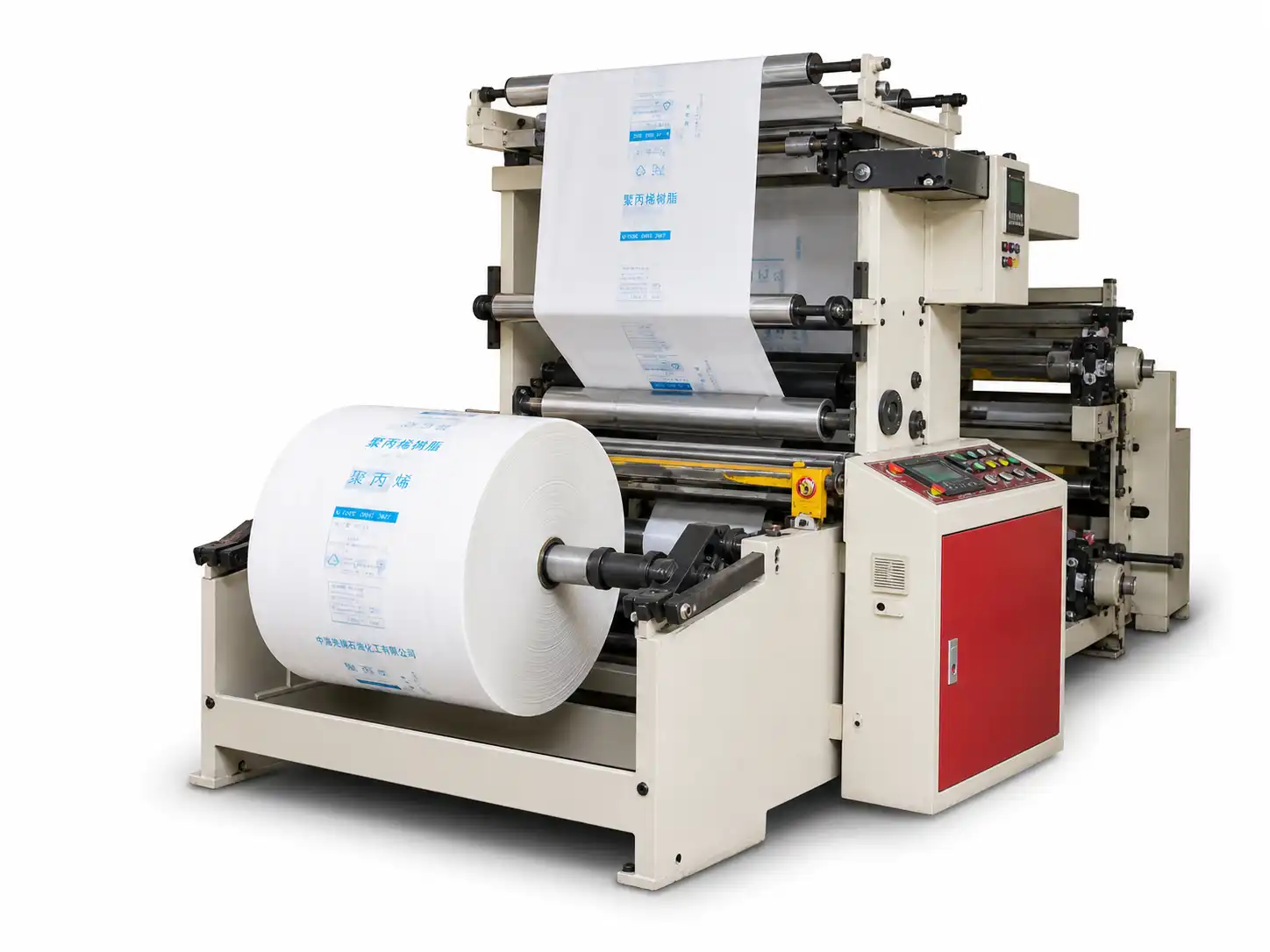
VIDEPAK Tubular FFS Films are continuous tubular rolls designed for automatic Form-Fill-Seal systems. The machine draws the tube from the roll, creates the required bag length, seals one end, fills the product, closes the second end, and sends the completed pack toward palletizing. Form. Fill. Seal. One connected process rather than a series of separate bag-handling steps. VIDEPAK describes its tubular FFS products as suitable for high-speed automated filling of bulk materials including grains, fertilizers and chemicals.
THE VIDEPAK DESIGN IDEA: A successful Polyethylene film should not simply be “strong.” It should be strong where strength matters, sealable where sealing matters, smooth where the machine needs smooth movement, textured where the pallet needs grip, and breathable only where controlled air release is necessary. That is why multi-layer co-extrusion, Embossing Strips and Micro-Perforation should be designed as one packaging system rather than purchased as unrelated options.
Understanding VIDEPAK Tubular FFS Films as a Packaging Platform
Tubular FFS Films begin with a simple concept: supply industrial packaging as a continuous polyethylene tube on a reel instead of supplying thousands of individual empty bags. Yet that apparently simple change affects almost every part of the packaging operation. Rollstock can reduce individual bag handling, support continuous automation and connect bag forming directly with product dosing and heat sealing. VIDEPAK’s published product information identifies its FFS tubular PE products specifically as solutions for automated packaging and describes width, thickness, roll diameter and printing as configurable parameters.
The tubular structure matters. Because the material is already produced as a continuous tube, the automatic packaging system does not need to create longitudinal side seams in the same way that some flat-web bag-making processes do. The tube can be advanced to the required length, transversely sealed, filled and closed. For industrial buyers, that means the film is not merely a packaging material; it becomes an operating input to the filling line. Dimensional consistency affects tracking. Friction affects movement. Thickness uniformity affects sealing. Winding quality affects uninterrupted production. The performance of Tubular FFS Films therefore begins long before a finished bag reaches the pallet.
Form Automatically
The continuous tube feeds directly into the FFS system, where controlled film advance defines the finished package length.
Fill Efficiently
The opened tube receives a measured dose of powder, pellets, granules or other flowable industrial material.
Seal Reliably
A carefully designed seal layer helps the filled package close within the machine’s selected temperature, pressure and dwell-time window.
Form-Fill-Seal Operating Logic: From One Reel to Repeated Finished Packs
The real advantage of Tubular FFS Films appears when the film, machine and product are treated as one system. A reel that looks perfect in storage is not successful if it wanders during unwinding. A very tough Polyethylene film is not successful if its seal window is too narrow for normal operating conditions. A very slippery film may travel smoothly through guides but create an unstable pallet. A very rough film may stack well but drag on machine-contact surfaces. Good engineering lives between these extremes.
Typical VIDEPAK FFS Process Flow
During production of the roll itself, molten polyethylene is formed into a tubular blown film, cooled, collapsed into lay-flat form and wound. During customer use, that tube follows another sequence: unwind, advance, bottom seal, fill, top seal, separate and palletize. VIDEPAK’s technical material emphasizes that the specification has to connect the resin structure, tube geometry, winding, friction, venting, sealing system and customer machinery rather than optimize one value in isolation.
This is also why application data are important. Twenty-five kilograms of smooth polymer pellets and twenty-five kilograms of fine mineral powder place very different demands on Tubular FFS Films. Pellets can create local impact and puncture stress. Fine powders can trap air, contaminate a sealing zone or escape through an overly aggressive vent pattern. Equal weight does not mean equal packaging. Same kilograms, different physics.
A professional manufacturer therefore starts with questions before it starts with film: What is being packed? What is the bulk density? What is the particle size? How fast is the filling line? What temperatures are involved? How high is the filled bag dropped? How is the pallet stacked? Is the product sensitive to humidity? VIDEPAK’s published guidance similarly recommends collecting packed-material, machine, roll, filling, pallet and logistics information before finalizing an FFS specification.
Why Polyethylene film and multi-layer co-extrusion Matter
The heart of VIDEPAK Tubular FFS Films is Polyethylene film. Polyethylene is useful for industrial FFS applications because different PE grades can be combined to balance flexibility, toughness, stiffness, puncture performance, processing behavior and heat sealing. VIDEPAK states that its tubular films can combine HDPE and LDPE materials and that its heavy-duty polyethylene range can use co-extruded structures with up to nine layers.
That distinction matters because one resin rarely has to do only one job. During filling, the Polyethylene film needs enough stiffness to move predictably through the equipment but enough flexibility to form around the product. During sealing, the inner surface must respond predictably to the sealing jaws. During warehouse handling, the package needs resistance to puncture and impact. During pallet transport, the outside surface must contribute the correct friction. During printing, the external surface needs controlled treatment and dimensional stability. One tube. Many duties.
multi-layer co-extrusion gives the manufacturer a practical way to distribute those duties among separate layers while still producing a unified Polyethylene film. Instead of trying to make every layer identical, the structure can be designed so the outer skin supports machine handling and printing, central layers provide mechanical performance, and an inner layer supports sealing. VIDEPAK’s published technical guidance explains the same principle: more layers are not automatically better; their value lies in the freedom to place the required functions where they are useful.
Layer-by-Layer Engineering and the Logic of multi-layer co-extrusion
Think of multi-layer co-extrusion as a small team working inside one film. The outside communicates with the machine and the market. The middle carries much of the mechanical workload. The inside creates the closure. Each layer supports the others; none should fight the others.
VIDEPAK’s published material describes HDPE as useful where greater stiffness and shape control are wanted, while LDPE and LLDPE-type selections can contribute processing flexibility, strength, stretch, impact and puncture resistance. The exact resin ratios are project-specific rather than universal. That is the point of multi-layer co-extrusion: tune the structure instead of forcing one recipe onto every product.
MORE LAYERS DO NOT AUTOMATICALLY MEAN BETTER FILM. A capable manufacturer uses multi-layer co-extrusion to solve a defined problem. The real question is not “How many layers?” but “What should each layer accomplish?” A simpler structure that runs reliably can be better than a complex structure that adds no useful function.
Film gauge follows the same logic. Thicker is not automatically better. Extra material may increase certain strength margins, but it can also change heat transfer, stiffness, reel weight and material consumption. The correct Polyethylene film thickness should reflect packed weight, density, product shape, filling temperature, machine settings, drop conditions and transport risk. VIDEPAK publishes a heavy-duty film capability of approximately 0.10–0.25 mm, but explicitly presents the final specification as application-dependent.
For quality evaluation, mechanical properties can be connected to recognized test methods. ASTM D882 covers tensile testing for thin plastic sheeting and films; ASTM D1709 covers free-falling dart impact resistance for plastic film. These methods allow a technical discussion to move away from vague words such as “strong” and toward measurable behavior under defined conditions.
The goal is balance: enough stiffness, enough toughness, enough seal performance, enough friction, enough ventilation. Not more material for the sake of more material. Better architecture for the sake of better packaging.
How Embossing Strips and Micro-Perforation Add Targeted Function
Two filled industrial bags can fail for opposite reasons. One can slide because its surface has too little friction. Another can swell because trapped air cannot leave. The first problem points toward Embossing Strips. The second points toward Micro-Perforation. They solve different problems, but they follow the same design principle: modify only the area that needs modification.
VIDEPAK lists embossing and micro-perforation among the available surface and air-release options for its heavy-duty polyethylene products. Its product guidance also emphasizes that these features should be positioned according to the customer’s product, filling process and pallet configuration rather than treated as automatic defaults.
Controlled Friction with Embossing Strips, Controlled Air Release with Micro-Perforation
Embossing Strips are localized textured areas created on the film surface. Their main job is to improve bag-to-bag grip in selected contact zones. Instead of making the complete Polyethylene film surface highly resistant to sliding, selected textured lanes can help filled bags hold position when stacked while the remaining film can be designed for smoother travel through the packaging machine. VIDEPAK describes this as a way to balance machine movement with pallet stability.
This balance is important because friction has two audiences. The packaging machine often prefers predictable movement. The pallet prefers controlled grip. Too slippery, and filled bags may shift. Too resistant, and the film may drag, wrinkle or track poorly. Embossing Strips separate these requirements geographically: glide here, grip there.
The placement of Embossing Strips should therefore follow the filled-bag contact pattern. Their width, number and position can be coordinated with the printing area so branding remains clean while friction is concentrated where two bags actually touch. ASTM D1894 provides a recognized method for measuring static and kinetic coefficients of friction for plastic film and sheeting, giving quality teams a useful measurement tool when setting and verifying friction targets.
Micro-Perforation, by contrast, is an air-management feature. During rapid filling, powders and some granulated products can carry air into the package. When that air remains trapped, the finished bag can balloon, remain too thick for efficient palletizing, settle slowly or push product toward the sealing area. Properly designed Micro-Perforation gives the air a controlled route outward.
Yet ventilation is not a simple “more holes equals better” equation. Every opening changes the relationship between air release, dust retention, moisture protection and mechanical integrity. Fine powder can escape through an overly open pattern. A moisture-sensitive product can be exposed if ventilation is excessive. A poorly located pattern may vent slowly because the holes become covered by the product or folded into the wrong part of the finished bag. Effective Micro-Perforation is therefore based on position, pattern and density—not just presence or absence. VIDEPAK specifically recommends evaluating trapped air, product loss, dust behavior and moisture requirements when selecting venting.
The troubleshooting logic above reflects VIDEPAK’s published guidance that friction and ventilation should be localized and application-specific.
DESIGN PRINCIPLE: Embossing Strips manage where the package should grip. Micro-Perforation manages where the package should breathe. Good design does not texture everything and perforate everything. It creates functional zones.
These options become even more valuable when combined with multi-layer co-extrusion. The layer structure can address sealability and mechanical resistance, while Embossing Strips address localized surface friction and Micro-Perforation addresses controlled air escape. Structural problem, surface problem, airflow problem—three different questions, three coordinated answers.
For fine powders, the priority often moves toward controlled air release and keeping product away from the seal. For dense pellets or angular granules, puncture resistance and pallet stability may become more important. For products that travel long distances on tall pallets, the combination of a tough Polyethylene film and correctly positioned Embossing Strips can be particularly important. This is why the same nominal size of Tubular FFS Films can require very different functional designs.
VIDEPAK as a manufacturer: Published Capabilities, Quality Control and Customization
A customer does not really buy a roll of Polyethylene film. The customer buys predictable production from that roll. This distinction defines the role of a professional manufacturer. Resin selection, extrusion stability, thickness control, printing, winding, roll dimensions, functional treatments, inspection and communication all affect what eventually happens on the customer’s packaging line.
VIDEPAK states that it was founded in 2008 and employs more than 500 people, with products supplied to more than 70 countries. Its published company profile identifies 16 extrusion lines as part of its wider industrial packaging production base. VIDEPAK also states that its quality-management practices follow ISO 9001:2015 and that production and testing reference international systems including ASTM, JIS, EN and ISO standards.
For its heavy-duty polyethylene range, VIDEPAK publishes an annual supply capability of more than 500 million PE bags, while its wider company website publishes an overall bag production capability of up to 800 million pieces annually. These are company-published capacity figures and should be understood as indicators of manufacturing scale rather than as a specification for an individual order.
More important for a buyer of Tubular FFS Films, VIDEPAK publishes concrete dimensional and converting ranges. These provide a useful starting point for RFQ preparation, although the final combination must still be validated against the packed product and actual filling equipment.
The capability values above are published by VIDEPAK for its polyethylene and FFS product range; they describe available manufacturing windows rather than a guarantee that every possible combination is appropriate for every machine or end use.
Printing is another part of performance rather than merely decoration. Up to ten-color capability gives brands space for strong product identity, instructions, safety information, lot information and machine-readable elements, but good graphics still depend on surface treatment, register control, winding quality and the placement of functional zones. Embossing Strips should not accidentally damage a critical artwork area; Micro-Perforation should not interfere with important codes or compromise a high-risk seal region. Design for the eye. Design for the machine. Design for the pallet.
From Specification to a Validated Supply Program
A strong manufacturer should connect product design with measurable quality controls. For Polyethylene film, tensile behavior can be evaluated with ASTM D882, impact resistance can be examined with ASTM D1709, and friction can be quantified with ASTM D1894. Seal strength can be measured under ASTM F88/F88M, which ASTM describes as a method for measuring seal strength in flexible barrier materials and as a useful quantitative tool for packaging process validation and control.
ASTM describes D882 as a test method for tensile properties of thin plastic sheeting and film, D1709 as a method for determining impact resistance using a free-falling dart, D1894 as a method for static and kinetic coefficients of friction, and F88/F88M as a seal-strength method for flexible barrier materials.
The final test, however, is the customer’s production line. Laboratory data are essential, but they cannot fully reproduce every combination of filling temperature, product dust, bag drop, jaw contamination, conveyor movement, pallet vibration and transport climate. That is why VIDEPAK recommends trial-based development: understand the product, understand the machine, propose the Polyethylene film, run samples, measure the result, improve where required and then approve the production standard.
A BETTER RFQ CREATES A BETTER FILM
For a precise VIDEPAK proposal, customers should provide the packed material, net weight, bulk density, particle characteristics, filling temperature, required production speed, machine information, present film size and thickness, maximum reel dimensions, gusset requirements, printing artwork, pallet pattern, storage conditions, sealing information, need for Embossing Strips, and need for Micro-Perforation. VIDEPAK’s own selection guidance recommends collecting this type of process and logistics information before defining the finished specification.
This approach turns VIDEPAK from a simple manufacturer of film into a packaging-development partner. It also reduces a common purchasing mistake: comparing two Tubular FFS Films only by price per kilogram. A lower material price means little if poor winding creates line stops, inappropriate friction destabilizes pallets, weak seals generate rejects or the wrong Micro-Perforation pattern releases valuable product. Purchase price is visible. Process cost is often hidden.
VIDEPAK’s value proposition is therefore built around a connected package: Polyethylene film architecture through multi-layer co-extrusion, customized dimensions, optional gussets, controlled printing, Embossing Strips for selected friction zones, Micro-Perforation for controlled de-aeration, recognized quality-test methods and trial-based specification development. Its published range of widths, thicknesses, roll diameters, printing capability and co-extruded layer options gives industrial buyers a defined technical starting point instead of an undefined commodity film.
For polymer pellets, fertilizer, grain, feed, minerals, salts, powders, chemical granules and other dry flowable products, the question is not simply whether Tubular FFS Films can hold the product. The better question is whether the Tubular FFS Films can help the complete packaging process perform more predictably—from reel to machine, from machine to pallet, from pallet to warehouse, and from warehouse to customer.
A capable manufacturer designs for all four stages.
VIDEPAK Tubular FFS Films: ONE ROLL, MULTIPLE FUNCTIONS, ONE CONNECTED PACKAGING SYSTEM.
Choose the Polyethylene film for the product. Build the structure through multi-layer co-extrusion. Put Embossing Strips where the pallet needs grip. Put Micro-Perforation where trapped air needs a controlled exit. Match the reel to the machine. Verify the seal. Test the filled bag. Then repeat with confidence. This is how VIDEPAK approaches industrial FFS packaging—not as film alone, not as a bag alone, but as a complete production input engineered by an experienced manufacturer.
- VIDEPAK Tubular FFS Films: High-Performance Polyethylene film for Automated Industrial Packaging
- Understanding VIDEPAK Tubular FFS Films as a Packaging Platform
- Why Polyethylene film and multi-layer co-extrusion Matter
- How Embossing Strips and Micro-Perforation Add Targeted Function
- VIDEPAK as a manufacturer: Published Capabilities, Quality Control and Customization
- Ⅰ. Curtain-Raiser — One Roll to Wrap Them All?
- Ⅱ. Lexicon Labyrinth — Aliases, Acronyms, Alter-Egos
Ⅰ. Curtain-Raiser — One Roll to Wrap Them All?
Picture a coil of polyethylene so large it needs its own forklift cradle. You feed the tail into an FFS carousel and—abracadabra—out march neatly formed, product-stuffed sacks at the rate of forty-five a minute. That mesmerising polymer ribbon is the Tubular FFS Films; a.k.a. FFS sleeve, gusseted PE roll stock, or, in line-operator slang, “the endless bag.”
Why revisit an old workhorse? Because today’s Tubular FFS Films carry micro-textures that tame slip, laser vents that exhale steam, and serialised inks that gossip with blockchains. They have, in short, levelled up. This article unpacks their anatomy, chronicles their aliases, and—using data, anecdotes, and the odd Socratic aside—explains how an ostensibly humble sleeve can quietly reengineer supply-chain physics.
Ⅱ. Lexicon Labyrinth — Aliases, Acronyms, Alter-Egos
Ⅱ-1. Names You Might Meet in the Wild
- FFS Sleeve — Highlights the Form-Fill-Seal tango performed on vertical‐formers from Haver & Boecker or W&H.
- Tubular PE Roll Stock — Hints at the circular-die extrusion that yields a seamless tube, flat-folded for transport.
- Continuous Gusseted Film — Favoured by North-American converters; spotlights the side folds that create expandable flanks.
- Heavy-Duty PE Web — Signals thickness north of 100 µm, good for 50 kg payloads and zero nonsense.
Call them what you will; they all reference the same polymeric Möbius strip that morphs into a bag only when the filler’s photo-eye screams “next!”
Ⅱ-2. Why Adopt Tubular FFS Films?
| Lever | Payoff | Analogy |
|---|---|---|
| Seamless Side Walls | Zero side-seal leaks | One-piece forged crankshaft vs. bolted assembly |
| On-Demand Bag Length | SKU agility; no obsolete stock | Roll-to-roll digital label printing |
| Inline Vent/Emboss Options | Product-specific tuning | Custom orthotics vs. generic insoles |
PE Valve Bags
Premium tubular FFS PE films designed for automatic packaging with strong sealing and durability.
Check More →Multi-Layer Polyethylene Valve Bags
High-performance multi-layer tubular FFS PE films with excellent barrier and load-bearing properties.
Check More →Co-Extruded PE Films
Professional co-extruded tubular FFS PE films optimized for industrial automatic packaging lines.
Check More →PE Open Mouth Bags
Versatile tubular FFS PE films supporting open mouth and valve type packaging solutions.
Check More →Reference Mosaic
- TÜV Rheinland, Gate-to-Gate LCA: Heavy-Duty Bag Formats, 2025.
- VidePak R-Lab, “PCR LDPE Seal-Integrity Trials,” Tech Memo 07-25.
- Haver & Boecker, FFS 1800 Datasheet, Rev 4.
- W&H, “Topas SL Performance Curves,” 2024.
- SGS, Migration Certificate GZHL-2403009432, 2024.
≈ 1,560 words (Word count plugin).