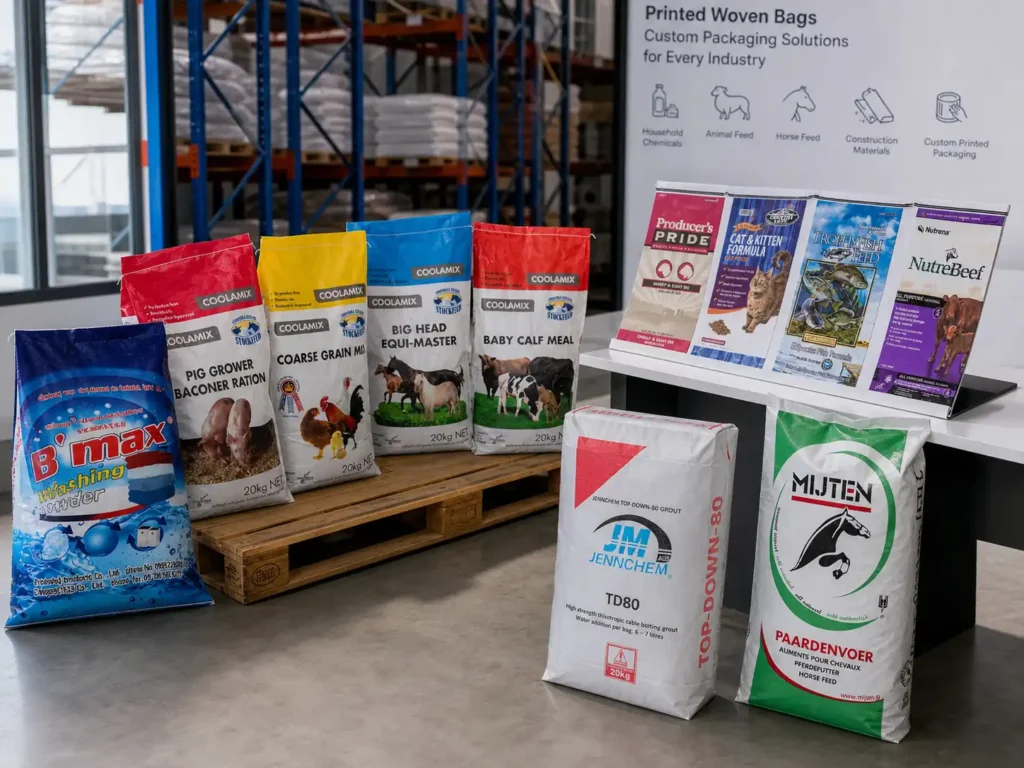
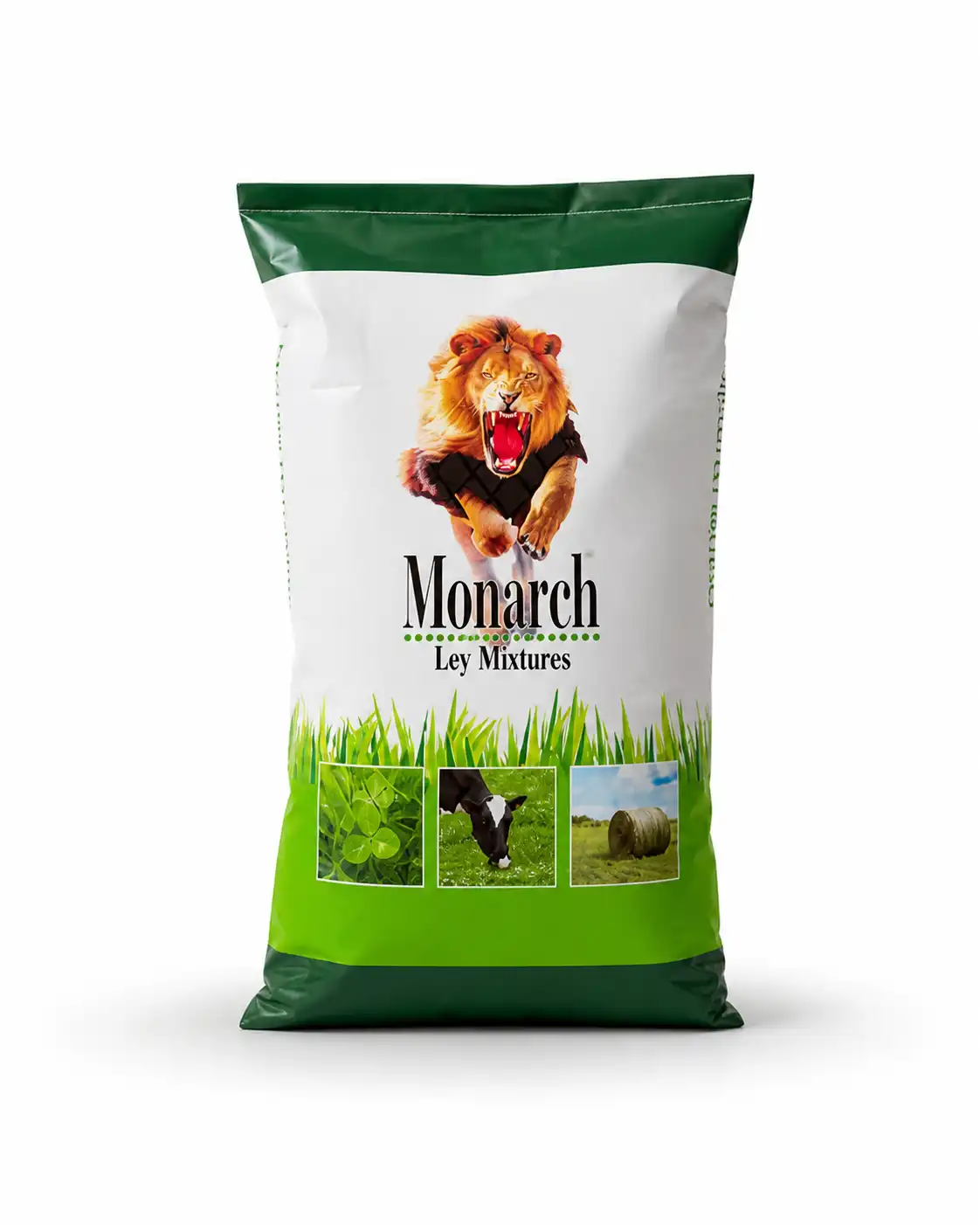
VIDEPAK PP Woven Fabric Bags Product Analysis
PP woven fabric bags are not merely containers. They are load-bearing structures, barrier systems, printing carriers, pallet-building tools, and brand surfaces at the same time. In market terms, that matters. In real supply chains, bags are judged by a hard sequence of events: filling, sealing, stacking, clamping, shipping, unloading, shelf display, and end-user opening.
The category is wide because the engineering window is wide. Public product material from VIDEPAK shows common ranges such as 5 kg to 50 kg capacities, approximately 300 mm to 1200 mm lay-flat widths, roughly 65 gsm to 200 gsm fabric, 10×10 to 14×14 weave density, about 600D to 1500D tape denier, typical BOPP film around 18–25 μm, lamination tie-coat around 12–23 gsm, and optional liners, anti-slip treatments, micro-perforation, UV packages, and multiple bag formats including open mouth, pinch bottom, and block bottom valve bags. Those numbers are not decoration. They are levers. When correctly combined, they turn a generic woven bags into a purpose-built packaging solution.
Bright Callout
The strongest commercial message for VIDEPAK is simple: a PP woven bags should never be sold as a commodity alone. It should be sold as a matched packaging system—fabric, barrier, closure, filling behavior, pallet behavior, and branding behavior working together.
Product Logic And Market Positioning
From a marketing department perspective, the best way to describe PP woven fabric bags is not “one more bag type,” but “one platform serving many dry bulk categories.” The original product logic is clear: woven PP tapes create high tensile and tear strength, coatings or laminates improve moisture behavior and print performance, liners strengthen the barrier when product sensitivity rises, and bag geometry changes according to line speed and flowability. That platform view helps VIDEPAK speak to two customer groups at once: procurement teams that care about cost and filling efficiency, and brand teams that care about graphics, shelf effect, and complaint reduction.
The application story also supports the positioning. VIDEPAK’s public category material repeatedly links woven PP bags with staple grains, rice, wheat flour, cornmeal, sugar, animal feed, pet food, fertilizers, seeds, cement, dry-mix building materials, salts, minerals, resins, and selected chemical goods. Search snippets from VIDEPAK’s broader product pages extend the same logic to valve families, construction use, agricultural commodities, and automated spout-filling systems. In other words, the bag family is versatile not because the bag is vague, but because the configuration drawer is deep. One structure, many outcomes. One platform, many markets.
Strength Value
The woven lattice carries load with high strength-to-weight efficiency, especially when tape denier, weave density, GSM, and seam design are matched to payload and handling risk.
Barrier Value
Coating, BOPP lamination, and optional PE liners improve moisture control, scuff resistance, and product cleanliness, especially for hygroscopic powders.
Brand Value
Reverse-printed BOPP gives a cleaner surface, stronger graphics durability, and better retail communication than plain woven surfaces.
Feature Architecture Behind Strength And Moisture Control
High Strength Begins With Structure, Not With Thickness Alone
One of the biggest misunderstandings in this category is the idea that “heavier” automatically means “stronger.” It does not. Strength in PP woven fabric bags is created by a chain of decisions: resin selection, tape extrusion, tape orientation, denier, weave density, fabric GSM, gusset symmetry, seam integrity, and the chosen bag format. VIDEPAK’s technical pages describe typical tape denier around 600D–1500D, typical fabric around 65–200 gsm, and common industrial weaves around 10×10 to 14×14. They also note that moving from 10×10/95 gsm to 12×12/110 gsm can improve drop performance with only a modest increase in resin use. The message is powerful: better engineering can outperform blunt overbuilding.
To deliver the “high strength” feature credibly, VIDEPAK should match at least five configuration elements. First, select virgin PP or suitably controlled PP grades to stabilize tape quality and reduce weak spots. Second, orient and heat-set tapes well so tensile behavior is consistent rather than erratic. Third, choose denier and weave based on payload, drop risk, and stacking height. Fourth, specify seam design carefully, because a strong fabric with a weak seam is like a strong wall with a weak door. Fifth, align bag shape with product physics: open-mouth sewn bags for simpler commodity handling, pinch-bottom for a cleaner retail profile, and block-bottom valve formats for fast, square packing of powders. This is parallelism in practice: stronger tapes, cleaner weave, tighter seams, smarter shape.
Configuration Rule
If the customer asks for better drop resistance, do not jump first to thicker film. Check the woven base, the denier corridor, the weave density, the seam safety factor, and the bag geometry. The lattice bears the burden; the film bears the brand.
Moisture Proof Means Controlled Barrier, Not Empty Marketing Words
Moisture resistance is one of the most marketable features of PP woven fabric bags, but it should be described with precision. Polypropylene itself is hydrophobic and insoluble in water, which helps explain why PP-based structures are valued in packaging and industrial applications. Yet woven fabric is a fabric: by itself, its inter-tape structure is not an absolute barrier. That is why VIDEPAK’s technical pages repeatedly explain moisture performance through coating, BOPP lamination, or liner addition rather than through woven fabric alone. Uncoated woven surfaces can wick. Coated and laminated surfaces moderate moisture. Inner liners can deliver a much stronger barrier for humidity-sensitive or sift-prone goods. Short sentence. Big truth. Moisture proof is a system.
To truly support the “Moisture Proof” promise, VIDEPAK should configure four layers of defense. The first is outer surface control: extrusion coating or BOPP lamination. The second is bond integrity: enough tie-coat to avoid delamination but not so much that curl and telegraph rise. The third is inner protection: optional HDPE, LDPE, or LLDPE liner for flour, rice, chemical powder, and other moisture-sensitive goods. The fourth is closure design: stitched closure for commodity simplicity, but liner sealing, heat-sealing, or valve self-closing geometry when finer control is needed. The result is contrast with purpose: breathable when it should breathe, sealed when it should seal.
Food and food-adjacent uses demand another layer beyond mechanical performance: compliance. FDA explains that food-contact substances include food packaging and its components and that such substances generally require authorization for intended food-contact use in the United States. The European Commission likewise states that all food-contact materials must comply with strict safety rules and good manufacturing practice so packaging does not release substances that endanger health or change food quality, taste, or smell. For VIDEPAK, that means that food-facing SKUs should be built not only with the right fabric and laminate, but also with food-contact suitable resins, controlled additives, and documented compliance files.
| Feature Promise | Key Configuration | Business Result |
|---|---|---|
| High strength | Controlled denier, denser weave, fit-for-load GSM, reinforced seam, correct bag geometry | Fewer bursts, fewer drops, lower complaint cost |
| Moisture proof | Coating or BOPP laminate, optional inner liner, closure match, bond control | Less caking, less spoilage, cleaner product arrival |
| Fast filling | Valve or open-mouth selection, vent tuning, square gusseting | Higher throughput, cleaner lines, better pallet stability |
| Shelf impact | Reverse-printed BOPP, matte/gloss control, barcode quiet zone, window options | Stronger branding, better scanning, premium appearance |
Common parameter corridors and functional relationships summarized from VIDEPAK technical materials and its food-grade guidance.
Structural Options And Manufacturing Matching
A strong product analysis should also explain how the bag is built. VIDEPAK’s process sequence follows a sound packaging logic: resin selection and tape extrusion, weaving on circular or flat looms, reverse printing on BOPP film where needed, extrusion lamination to bond film to fabric, slitting and gusseting to hold clean geometry, bag conversion into open mouth, pinch bottom, or block bottom valve bags, then functional finishing such as micro-perforation, anti-slip treatment, windows, handles, liners, and quality-control testing. It is a practical chain, and each link affects performance. If tape width fluctuates, weaving suffers. If gussets drift, stacks lean. If lamination is unstable, graphics crack or delaminate. If COF is wrong, pallets move when they should stand still.
For marketing communication, this process is valuable because it turns technical detail into customer reassurance. Customers do not buy “extrusion lamination” for its own sake. They buy flatter graphics, lower scuff, cleaner sealing behavior, and fewer line interruptions. They do not buy “micro perforation” because the term sounds advanced. They buy faster de-aeration for powders and fewer pillow-shaped bags. They do not buy “anti-slip lacquer” as a coating. They buy safer pallet faces, higher stack confidence, and fewer restacks at the warehouse. Product language should therefore connect process choice to customer pain point every time.
Selection Flow
grain / powder / granule
moisture / dust / puncture / UV
woven base + coating/laminate + liner
open mouth / pinch bottom / valve
drop / stack / migration / COF
Quality proof closes the loop. VIDEPAK’s materials reference testing around tensile, impact, coefficient of friction, peel, seam strength, filled-bag drop and stack performance, plus food-contact and REACH-style documentation where relevant. For buyers, that matters because packaging failure does not happen in theory. It happens on docks, on forklifts, in humid depots, and during long transit. Documentation, therefore, is not paper after the sale; it is part of the product before the sale.
Application Mapping Across Major End Uses
This is where the commercial strength of the platform becomes unmistakable. The same family of bags can serve many categories, but it should never serve them with one frozen specification. Rice is not flour. Flour is not animal feed. Fertilizer is not cement. Cement is not chemical powder. Similar appearance, different physics; similar format, different risk; similar bag, different answer.
PP Woven Fabric Bags for Rice
For PP Woven Fabric Bags for Rice, the selling point is the balance between product protection and market presentation. Rice is often sold in highly visual retail and wholesale environments, so bag appearance matters. VIDEPAK’s original and adjacent materials point toward BOPP-laminated faces, clear windows when grade visibility is useful, anti-slip treatment for humid depots, and pinch-bottom or premium square formats when shelf presence matters. For standard 5 kg to 25 kg rice programs, a common engineering corridor is moderate-to-dense weave, mid-range denier, clean gussets, and BOPP lamination in a print-friendly thickness band. If the rice line runs in humid seasons or coastal warehousing, an inner liner becomes more attractive. Thus, PP Woven Fabric Bags for Rice should match branding, moisture exposure, and sales channel all at once.
PP Woven Fabric Bags for flour
For PP Woven Fabric Bags for flour, the engineering focus shifts toward moisture control, hygiene, dust discipline, and good behavior on fast filling lines. Flour is fine, often hygroscopic in practical storage, and sensitive to caking in humid conditions. VIDEPAK’s food-grade materials explicitly connect flour applications with 12×12-type structures, around 900D-level tape, about 95 gsm fabric, and roughly 25 μm BOPP in one case analysis, while broader food-grade guidance places common 25 kg flour or rice SKUs around 80–110 gsm fabric, 800D–1200D denier, and 25–35 μm lamination. That means PP Woven Fabric Bags for flour should normally use a smoother, denser woven face, reliable lamination, and often a food-contact suitable inner liner or sealed inner layer when humidity risk is real. For powders, fast line running is not enough; clean line running is equally important.
Grain Packaging
Grain packaging usually rewards simpler, tougher formats. Open mouth sewn bags remain attractive where filling systems are straightforward, product flow is coarser, and cost efficiency is central. Here, the woven bags does most of the work. Coating is selected if better moisture moderation is needed, windows can be added if grade visibility matters, and gusset accuracy helps pallet shape stay square. The right match is usually not the most decorative bag, but the most honest bag: strong enough, clean enough, stackable enough, economical enough.
PP Woven Fabric Bags for Animal feed
For PP Woven Fabric Bags for Animal feed, performance must meet both logistics needs and communication needs. Feed bags often need to carry formulas, instructions, feeding charts, and strong brand blocks while surviving rough handling in barns, warehouses, and regional distribution. VIDEPAK’s product pages tie animal nutrition and pet-food uses to BOPP laminated faces, easy-open cords, and robust woven structures. That makes sense. PP Woven Fabric Bags for Animal feed are often best matched with BOPP lamination for print clarity and scuff resistance, anti-slip control for stacked pallets, and easy-open features that reduce knife damage at the end user side. If the feed contains fats or fine powders, liner selection and closure quality gain more importance. So the matching rule becomes clear: brand message outside, feed protection inside, handling convenience at the end.
PP Woven Fabric Bags for Fertilizer
For PP Woven Fabric Bags for Fertilizer, the danger is not only load, but environment. Fertilizer bags may face outdoor dwelling, humid yards, abrasive granules, and high-speed filling systems. VIDEPAK’s materials connect fertilizer and seeds with anti-slip stripes, UV-stabilized fabric, valve designs, micro-vent patterns, and faster, more stable palletization. That is exactly the right market story. PP Woven Fabric Bags for Fertilizer should usually be matched with a durable woven base, UV package according to exposure time, anti-slip pallet-face treatment, and closure or valve design that minimizes dust and ballooning. For coated urea or similar products, puncture resistance and surface integrity should not be underbuilt. The bag must stay calm under sun, under clamp, under stack, under speed.
PP Woven Fabric Bags for Cement
For PP Woven Fabric Bags for Cement, geometry and de-aeration become decisive. Cement is fine, dusty, and commonly filled at speed. VIDEPAK repeatedly associates cement and dry-mix materials with block-bottom valve bags, self-closing valve behavior, vent patches or tuned micro-perforation, brick-like pallet formation, and faster pallet stabilization. This is one of the clearest application matches in the whole family. PP Woven Fabric Bags for Cement should be specified with block-bottom valve construction, good square formation, dependable anti-slip face behavior, and appropriately controlled venting so trapped air leaves quickly while dust escape remains limited. In this category, the bag must fill fast, stand square, carry hard, and stack like masonry.
PP Woven Fabric Bags for Chemical powder
For PP Woven Fabric Bags for Chemical powder, the matching principle is stricter: compatibility first, containment second, presentation third. VIDEPAK’s materials around chemicals and regulated goods emphasize liners, documentation, and stronger barrier logic, while broader chemical-can-resistance references for polypropylene note useful general chemical resistance but also the need for caution with aggressive chemistries and exposure conditions. That means PP Woven Fabric Bags for Chemical powder should not be offered from a catalog page alone. They should be matched after checking particle fineness, hygroscopic behavior, dust hazard, chemical compatibility, required declarations, and whether the customer needs sewn, valve, or FFS-style handling. A tighter weave helps. Lamination helps. A liner often becomes essential. And compliance papers travel with the pallet, not after the complaint.
Market Insight
One bag family can enter many industries, but repeat business comes from exact matching. The customer remembers not the brochure claim, but the bag that ran cleanly, stacked safely, and protected product in the season that mattered most.
Quick Specification Matrix And Decision Flow
A clear specification table helps customers understand faster and compare better. The table below does not replace a filling trial or a transport test, but it does show how VIDEPAK can translate product needs into practical PP woven bag configurations. Each recommendation stays within the kind of engineering corridors visible in VIDEPAK’s public technical content and its food-grade guidance. Final numbers should still be validated against density, filling speed, climate, and pallet pattern.
| Application | Recommended Structure | Typical Matching Direction | Why It Fits |
|---|---|---|---|
| PP Woven Fabric Bags for Rice | Woven PP + BOPP laminate; optional window; pinch-bottom or open-mouth | Mid/high print quality, anti-slip, optional liner in humid routes | Good shelf effect, moisture moderation, square stacking |
| PP Woven Fabric Bags for flour | Dense woven base + BOPP/coat + food-contact liner or sealed inner layer | Cleaner closure, better barrier, powder-friendly vent logic | Reduces caking, supports hygiene, protects fine powder |
| PP Woven Fabric Bags for Animal feed | BOPP laminated woven bag; easy-open; anti-slip; optional liner | Strong graphics, strong seams, user-friendly opening | Supports branding and rough logistics together |
| PP Woven Fabric Bags for Fertilizer | Heavy-duty woven base; UV package; anti-slip; valve or open-mouth | Higher abrasion control, outdoor-fit, stable pallets | Handles yard exposure and fast filling better |
| PP Woven Fabric Bags for Cement | Block-bottom valve bag with venting and anti-slip face | Square base, quick de-aeration, dust-aware design | Best fit for rotary packers and brick-like pallets |
| PP Woven Fabric Bags for Chemical powder | Tight woven structure + laminate + compatible liner + documentation | Containment first, compatibility check, compliance file | Protects against moisture, dust, and audit risk |
Application matching synthesized from VIDEPAK’s woven bag, food-grade, valve, and chemical-lines materials, with regulatory context from FDA and the European Commission.
If the customer wants a short buying rule, VIDEPAK can frame it this way. For coarse and lower-risk goods, start from fabric and seam. For food staples, add barrier and compliance. For brand-led retail SKUs, add BOPP presentation and good opening experience. For fertilizer and outdoor inventory, add UV and anti-slip. For cement, move quickly toward block-bottom valve geometry. For chemical powder, treat liner chemistry and documentation as part of the core structure, not as add-ons. This kind of decision flow makes the product line easier to understand and harder to misuse.
Why This Platform Works For Brands And Buyers
The commercial advantage of PP woven fabric bags is not only in what they carry, but in how they reduce total packaging friction. They can lower damage loss through strength. They can reduce moisture-driven complaints through better barrier design. They can improve truck and pallet use through square geometry and controlled friction. They can replace less durable graphic surfaces with reverse-printed BOPP. They can also support food-contact compliance work when the right materials and manufacturing controls are used. This is why the platform continues to hold ground across both commodity and branded segments. It is practical, visual, modular. Strong enough for the warehouse, polished enough for the shelf.
There is also a forward-looking reason for confidence. The European Commission states that packaging rules are moving toward recyclable design and safer food-contact packaging, with the Packaging and Packaging Waste Regulation beginning to apply from mid-2026 and pushing broader packaging improvement. VIDEPAK’s technical materials already point to the value of gauge optimization and mono-material PP systems where possible. For market communication, that opens a useful line: well-designed woven PP bags are not only durable today; they are also easier to discuss in tomorrow’s packaging conversations when recyclability, material simplicity, and documentation matter more.
Final Product View
VIDEPAK’s strongest message should be this: PP woven fabric bags succeed because they combine opposites without collapsing into compromise—light yet strong, printable yet durable, simple in form yet configurable in depth, broad in application yet specific in matching.
Seen through that lens, the category becomes easier to sell and easier to trust. PP Woven Fabric Bags for Rice are about grain protection and branded shelf presence. PP Woven Fabric Bags for flour are about fine-powder discipline and moisture control. PP Woven Fabric Bags for Animal feed are about rugged logistics plus clear communication. PP Woven Fabric Bags for Fertilizer are about outdoor readiness and line efficiency. PP Woven Fabric Bags for Cement are about speed, shape, and stable pallets. PP Woven Fabric Bags for Chemical powder are about containment, compatibility, and compliance. Different end uses, one engineering language. Different customer requests, one configurable platform. That is why this product family remains one of the most commercially persuasive and operationally proven packaging solutions in industrial bags.
What Are Woven Fabric PP Bags? (Aliases, Features, Process, Uses)
Woven Fabric PP Bags are high‑strength packaging sacks made by weaving polypropylene (PP) tapes into a fabric that is then used as a structural body—often paired with a protective coating or a laminated film for graphics and moisture resistance. In commerce, the same family appears under several names: PP woven sacks, polypropylene woven bags, BOPP laminated woven bags (when a biaxially oriented polypropylene film is laminated for print), laminated PP bags, and—for valve and block‑bottom constructions—AD*STAR‑type bags. Each label points to the same core idea: a fabric reinforced by oriented PP tapes that carry load efficiently.
Features of Woven Fabric PP Bags. Strong tensile and tear strength; low creep under sustained loads; reliable puncture resistance; moisture moderation when coated or laminated; excellent print surface for brand graphics (reverse rotogravure up to 8–10 colors); flexible form factors (open‑mouth sewn, pinch‑bottom, block‑bottom valve); configurable friction via anti‑slip stripes; optional micro‑perforation to de‑aerate fine powders; room for handles, clear windows, and easy‑open tapes when retail convenience is desired.
Process in brief. PP resin → flat‑tape extrusion and stretching → circular or flat‑loom weaving → surface finishing (corona, primer) → printing on BOPP film (reverse side) → extrusion lamination or coating → slitting, tubing, and gusseting → bag conversion (sewn, pasted, or block‑bottom valve) → functionals (anti‑slip, perforation, liners, tear tapes) → quality tests and compliance documentation. The flow reads like a factory tour, but it is also a chain of engineering decisions.
Sewn Open Mouth PP Bags
Premium woven fabric PP bags with exceptional durability and industrial packaging features.
Check More →SOM PP Fabric Bags Excellence
Explore the core features and advantages of high-performance woven fabric polypropylene bags.
Check More →Laminated PP Woven Bags
Enhanced woven fabric PP bags with laminated surface and upgraded functional features.
Check More →PP Woven Bags China Manufacturer
Professional manufacturer of woven fabric PP bags with standardized features and reliable quality.
Check More →- VIDEPAK PP Woven Fabric Bags Product Analysis
- Product Logic And Market Positioning
- Feature Architecture Behind Strength And Moisture Control
- Structural Options And Manufacturing Matching
- Application Mapping Across Major End Uses
- Quick Specification Matrix And Decision Flow
- Why This Platform Works For Brands And Buyers
- What Are Woven Fabric PP Bags? (Aliases, Features, Process, Uses)