
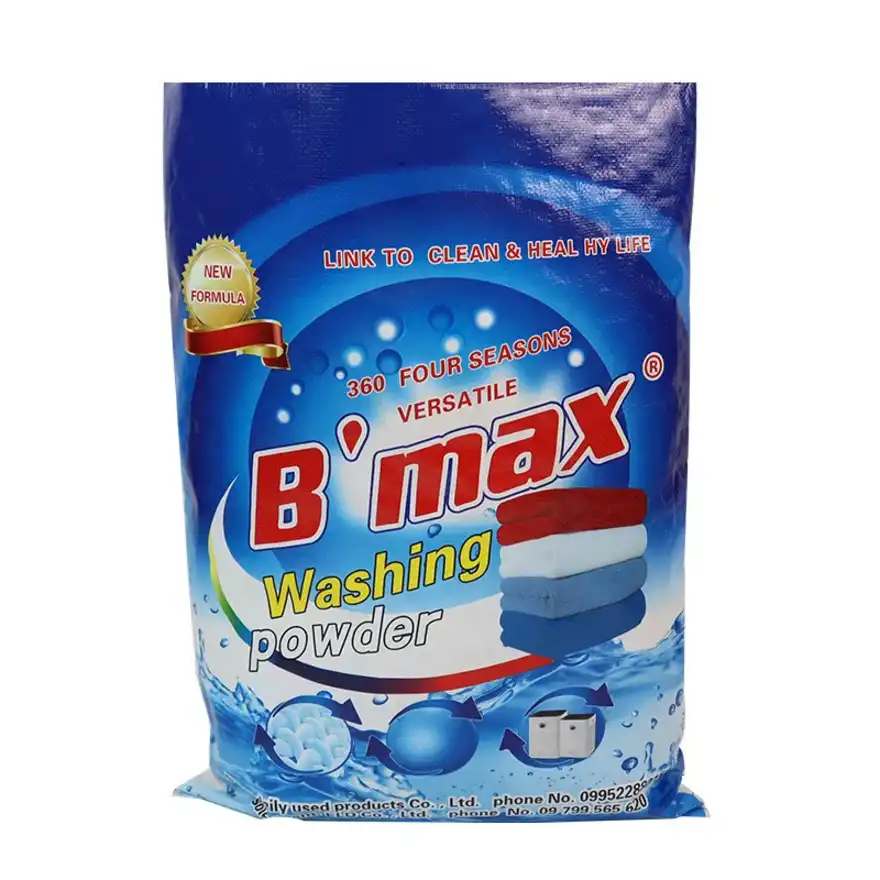
VIDEPAK Printed BOPP Woven Bags: High-Impact Packaging Engineered to Sell, Protect, and Perform
Packaging has two jobs, and neither can be treated as secondary. It must protect the product through filling, stacking, storage, transport, and handling; at the same time, it must attract attention, explain value, and strengthen trust at the point of sale. VIDEPAK printed BOPP woven bags are designed for this double duty. They combine a strong woven polypropylene base with a reverse-printed BOPP film surface, creating a package that can carry weight like an industrial sack while presenting color, photography, text, barcodes, and brand details like premium retail packaging.
The woven fabric carries the load. The film carries the image. The lamination joins structure and appearance into one working system. When fabric weight, tape denier, weave density, film gauge, surface friction, seam design, and filling method are matched correctly, BOPP woven bags can protect both product and presentation across the supply chain. VIDEPAK’s current product range includes customizable dimensions, multiple opening and bottom styles, matte or glossy finishes, micro-perforation, anti-slip treatment, transparent windows, and printing of up to ten colors.
The VIDEPAK value in one line: strong enough for the route, clear enough for the shelf, flexible enough for the filling line, and controlled enough for repeat orders.
Why Printed BOPP Woven Bags Matter in Modern Packaging
Many products are sold in crowded categories where the package is the largest advertising surface available. Rice, grains, seeds, pet food, animal feed, fertilizer, garden products, salt, sugar, flour, minerals, and industrial ingredients may compete side by side with similar claims and similar prices. In that setting, a plain sack can carry the product, but it may not carry the brand. Printed BOPP woven bags turn the package into a visible sales tool: large color areas can remain clean, photographs can look sharp, small text can stay readable, and front, back, and side panels can be planned as one coordinated design.
Reverse printing is central to that result. The artwork is printed on the inner side of the transparent or finished BOPP film, and the printed side is then laminated toward the woven substrate. The ink is therefore viewed through the film rather than exposed directly to rubbing. This structure helps protect graphics from ordinary scuffing and handling while supporting gloss, matte, pearlized, or other visual effects. The original VIDEPAK technical analysis describes this cooperation clearly: the woven matrix provides tensile capacity, while the film improves print quality, surface protection, and moisture resistance.
Appearance, however, is only half of the business case. A package that looks excellent but slips on a pallet, balloons during filling, cracks at a fold, or opens at the seam is not premium packaging; it is premium risk. VIDEPAK therefore treats BOPP woven bags as a complete performance system rather than a decorated fabric tube. Outer coefficient of friction can be adjusted for conveyor flow and pallet stability. Micro-perforation can release trapped air. Gussets can improve shape. Block bottoms can increase standing stability. Heat-sealed or sewn constructions can be selected around product flow, dust, hygiene, and equipment speed.
Brand Impact
High-resolution graphics, strong color contrast, protected print, clear product information, and finish options that help a pack look planned rather than generic.
Logistics Strength
A woven polypropylene skeleton supports heavy contents, repeated handling, stacking pressure, and the sharp moments that occur during loading and transport.
Line Compatibility
Open-mouth, valve, pinch-bottom, pasted, gusseted, perforated, and anti-slip options allow the package to be built around the real filling process.
This combination is especially useful when the route is demanding and the buying decision is visual. In humid export routes, dusty factories, tall pallet stacks, or retail channels, the difference between “adequate” and “engineered” becomes visible. One leaks or leans; the other arrives intact, stands straight, and speaks clearly.
Inside the Structure: How Each Layer Works
A reliable VIDEPAK bag begins with the structural layer. Virgin polypropylene resin is melted, formed into a thin sheet, slit into tapes, and stretched so the polymer chains become more oriented. Those tapes are woven in warp and weft directions to form a light but strong fabric. Tape denier, tape width, draw ratio, weave density, and fabric grammage all influence tensile behavior, elongation, puncture resistance, stiffness, and the way stress moves toward a seam. Higher mass can add strength, but more material is not automatically better. A lighter design with a stable weave and a stronger seam can outperform a heavier design with poor conversion control.
The visual layer is the BOPP film. “BOPP” means biaxially oriented polypropylene, a film stretched in two directions to improve stiffness, clarity, and dimensional stability. For typical printed BOPP woven bags, the film may be selected in gloss, matte, pearlized, opaque, or special-effect formats. Film gauge affects feel, fold behavior, print protection, and resistance to crease whitening. A thin film can reduce material and cost; a thicker film can improve body and surface durability. The correct choice depends on package size, artwork, distribution stress, and the desired shelf effect.
Between the woven base and the printed film is the bonding layer. Extrusion coating or another suitable lamination process joins the two surfaces. Bond quality matters at flat panels, but it matters even more at folds, gussets, corners, and sewn edges, where the structure is bent and stressed. Inadequate bonding may appear as bubbles, edge lift, whitening, or delamination. Excessive coating may create unnecessary stiffness or cost. The useful target is not “maximum adhesive”; it is stable peel performance with an even, well-controlled layer.
The ranges above are practical design windows, not automatic specifications. VIDEPAK’s product page currently lists finished bag grammage of about 100–180 GSM, thickness of about 90–130 microns, customized sizing, and standard capacity optimized for roughly 5–40 kg, while its broader technical analysis covers designs extending toward 50 kg when fabric, seams, and bag style are engineered accordingly.
The closure completes the structure. A folded and stitched bottom offers a familiar, economical solution. A heat-sealed pinch bottom creates a neat edge and helps control fine powders. A block bottom forms a stable, box-like footprint that can improve pallet shape and retail presentation. A valve construction supports rapid filling and can reduce open-mouth dust. There is no single “best” bag style. There is only the style that fits the product, the filler, the route, and the selling environment.
Design rule: do not select fabric, film, printing, and closure as separate items. A strong fabric with a weak seam still fails. A beautiful film with the wrong friction still slips. A tight laminate with no venting still slows powder filling. Performance lives in the links.
VIDEPAK Product Configurations and Practical Specifications
VIDEPAK develops printed BOPP woven bags by starting with use conditions rather than a fixed catalogue shape. The first questions are direct: What is the product? What is its bulk density? Is it granular, sharp, dusty, oily, or moisture-sensitive? How much air does it trap? What is the target fill weight? How fast is the filling line? How high will pallets be stacked? Will the route include humidity, sunlight, cold, rough handling, or repeated transfers? The answers determine the structure.
These bands reflect the engineering logic presented in VIDEPAK’s process-level analysis: lighter retail packs can use lower denier and lower fabric weight, while 25 kg and 50 kg programs usually need stronger tapes, denser fabric, better seams, or a combination of all three. The same source also stresses that denier is only one lever; film gauge, lamination, seam bite, valve shape, and surface friction can shift the final result.
For graphics, VIDEPAK can support up to ten colors and can develop artwork for full-panel presentation. Gloss finishes create bright saturation and strong shelf energy. Matte finishes reduce glare and can give premium products a softer, more controlled look. Transparent windows can reveal the contents and support buyer confidence. Anti-slip treatment can improve stack security. Micro-perforation can release air from powders or fine granules. Each option adds value only when it solves a real need, so the design process should separate “attractive feature” from “useful function.”
Gloss
Best for bright colors, high contrast, strong photography, and immediate shelf visibility. It can show handling marks more clearly, so scuff expectations should be defined.
Matte
Best for lower glare, premium tone, softer visual contrast, and categories where a calm, high-value appearance supports the brand position.
Functional Surface
Anti-slip lacquer, controlled friction, perforation, and windows turn the surface from decoration into a working part of filling, transport, and purchase.
Dimensions are customized around fill volume, pallet footprint, and equipment. Width, length, gusset depth, valve size, and bottom geometry should be confirmed through drawings and samples. Millimeters matter because pallets magnify small errors: one uneven pack becomes one uneven layer, then one unstable load.
From Resin to Ready Bag: A Controlled Production Flow
Consistent printed BOPP woven bags do not come from one machine. They come from a chain of controlled steps in which each stage prepares the next. VIDEPAK’s process covers tape extrusion, weaving, printing, lamination, cutting, gusseting, bag conversion, inspection, and packing. The purpose of process control is not to make every stage look impressive by itself; it is to keep variation small enough that the final bag behaves the same from lot to lot.
Upstream Control: Tape, Fabric, Printing, and Lamination
Resin Check
Material identity, cleanliness, and process suitability
Tape Extrusion
Denier, width, draw, tensile, and elongation control
Weaving
Mesh, fabric weight, tension, and defect inspection
Reverse Printing
Registration, color, ink condition, and visual consistency
Lamination
Coat weight, temperature, bond, flatness, and appearance
At tape extrusion, stable denier and elongation help keep the fabric balanced. Large variation may cause loom breaks during production or weak areas in the finished sack. During weaving, missing tapes, oil marks, uneven tension, and fabric weight drift must be identified before lamination hides or amplifies them. Printing then requires control of registration, ink viscosity, color difference, and residual solvent. Lamination requires stable web tension, pressure, temperature, and coating weight. These controls are connected: weak tape creates weak fabric; poor print condition can reduce bond quality; poor bond quality can fail at a sewn fold.
The BOPP film is reverse printed before it is bonded to the fabric. This protects the ink beneath the clear or finished outer surface. Color approval should compare production samples with agreed artwork or physical standards under controlled viewing conditions. Brand colors should not depend on memory, and acceptance should not depend on who is standing beside the press. Measured color targets, registration limits, barcode checks, and retained references create a common language between buyer and factory.
Downstream Control: Conversion, Testing, Traceability, and Packing
After lamination, the material is slit, cut, gusseted, folded, sewn, sealed, or formed into a valve structure. This is where flat material becomes a working package. Length tolerance affects pallet shape. Gusset symmetry affects filling and standing. Stitch density and seam bite affect drop resistance. Valve size affects filling speed and dust. Perforation pattern affects air release and barrier. Conversion is not a finishing step; it is structural engineering at full production speed.
Final inspection should combine appearance and performance. Visual checks confirm printing, dimensions, contamination control, seam appearance, and correct artwork. Physical tests may include fabric tensile strength, seam strength, peel or bond behavior, coefficient of friction, UV resistance when required, and filled-bag drop testing. ASTM D5276 covers free-fall drop testing for loaded containers, including bags and sacks, while ISO 23560 defines characteristics, requirements, and test methods for woven polypropylene sacks used for 25 kg and 50 kg food products such as cereals, sugar, and pulses.
Traceability closes the loop. Production lots should connect incoming materials, tape and fabric rolls, printed film, lamination settings, conversion lines, inspection results, and packed bales. When a buyer reports a concern, traceability turns a broad question into a focused investigation. Which lot? Which roll? Which shift? Which setting? Fast answers protect both parties, while vague answers expand cost and uncertainty.
A repeat order should repeat performance, not only artwork. The goal is stable dimensions, stable strength, stable color, stable friction, stable sealing, and stable delivery from the first approved lot to the next production run.
Performance by Application: Selecting the Right Bag for the Real Route
Different products challenge packaging in different ways. Grains can puncture weak areas, powders can sift and hold air, pet food needs strong shelf presentation, and fertilizer may combine abrasion, weight, and humidity. A good manufacturer uses a shared platform but adjusts the details for each route.
For rice and grain programs, printed BOPP woven bags often balance a premium front panel with strong logistics performance. A 5 kg retail pack may focus on photography, handle comfort, and easy opening. A 25 kg trade pack may focus more on pallet stability, seam safety, and warehouse handling while keeping the same brand system. The packaging family can therefore stay visually consistent across sizes without forcing every size into the same technical construction.
For fine powders, ventilation becomes critical. Lamination naturally reduces breathability by closing the woven surface, which is useful for moisture and sifting control but can trap air. The answer is not to remove the laminate without analysis. The answer may be a valve, micro-perforation, controlled vent area, different filling speed, or a de-aeration feature. Air must leave where engineers choose, not where the bag fails.
For abrasive or heavy products, increasing tape denier may create more strength margin, but it should be paired with seam and corner analysis. Field failures often begin at the weakest geometry rather than the strongest flat panel. A thicker fabric cannot rescue a narrow seam, an uneven fold, or a valve that concentrates stress. This is why VIDEPAK recommends whole-bag validation instead of judging performance from fabric GSM alone.
Problem → Method → Result
A leaning pallet is not solved by “a stronger bag” in the abstract. The method may combine better bag dimensions, a squarer bottom, tuned anti-slip treatment, lower trapped air, and a revised stacking pattern. The result is not simply higher tensile strength; it is a straighter, safer, more efficient load.
The same systems logic applies to brand presentation. A matte finish may look premium but must still run on conveyors. A glossy finish may increase color impact but must still resist visible scuff. A transparent window may build trust but must be positioned away from high-stress folds. Good packaging design is a sequence of balanced choices: more visibility without less strength, more barrier without slower filling, more friction without poor machinability, more material only where it creates measurable value.
Quality, Compliance, Sustainability, and the VIDEPAK Partnership
Buyers do not purchase only bags. They purchase continuity: the confidence that approved material, color, dimensions, closure, and performance will return in the next lot. VIDEPAK supports this through raw-material checks, controlled production, lot inspection, sample approval, and traceable release. The company states that it uses virgin materials, tests to customer and relevant standard requirements, works under ISO 9001-based quality control, and uses precision production equipment to improve stability. ISO describes ISO 9001 as a globally recognized framework for establishing, maintaining, and continually improving a quality management system.
For food-related applications, “food grade” must be treated as a documented use condition, not a loose label. Resin, additives, inks, adhesives, and liners should be reviewed for the intended market and contact situation. In the United States, FDA resources identify Title 21, including parts 175–178, as the key reference area for authorized indirect food additives, and FDA lists polypropylene within its food-contact substance resources. Requirements still depend on the exact formulation, food type, temperature, and intended use, so the final declaration must match the actual structure rather than the polymer name alone.
Sustainability also requires specific language. BOPP woven bags are rich in polypropylene, and designs that keep the structure within compatible PP-based materials may support recycling where collection, sorting, cleaning, and reprocessing systems accept them. Yet recyclability cannot be claimed from the main resin alone. Inks, adhesives, coatings, windows, liners, product residue, and local infrastructure all matter. Both RecyClass and the Association of Plastic Recyclers emphasize evaluating the complete package design against the relevant recycling stream.
Material reduction should follow evidence. The lightest bag is not sustainable if it breaks, wastes product, or requires extra secondary packaging; the heaviest is not automatically safer if added resin does not address the failure. VIDEPAK seeks the useful middle: enough fabric, film, lamination, and seam, with no unnecessary mass.
VIDEPAK offers reference samples for fast material and print review, as well as custom mock-ups that reproduce requested size, structure, and artwork more closely before mass production. Its published product information lists a typical minimum order quantity of 10,000 pieces per specification, custom sample timing of about ten business days, and general bulk lead times of about 15–25 business days, subject to order quantity and technical requirements. These commercial figures should be reconfirmed for each project because artwork, film supply, testing, and conversion complexity can change the schedule.
Choosing the right manufacturer therefore means asking beyond price per bag. Can the supplier explain why a structure is suitable? Can it connect graphics to lamination, lamination to conversion, conversion to filling, and filling to pallet performance? Can it define tolerances, test the finished bag, retain references, and trace a lot? Can it reduce material without reducing safety? Can it adapt without turning every change into uncertainty?
VIDEPAK printed BOPP woven bags are built for brands that need packaging to do more.
More than carry. More than print. More than protect. They are designed to connect product safety, filling efficiency, pallet stability, visual communication, and repeatable supply in one practical package.
For buyers developing a new program, the most useful starting point is a complete application brief: product, target weight, bag dimensions, annual demand, current filling method, pallet pattern, storage conditions, artwork, finish preference, closure, liner need, and required tests. From that information, VIDEPAK can shape a printed BOPP woven bags specification that is neither overbuilt nor underprepared. The result is packaging that looks confident because it is controlled, performs reliably because it is matched, and supports growth because it can be repeated.
- VIDEPAK Printed BOPP Woven Bags: High-Impact Packaging Engineered to Sell, Protect, and Perform
- Why Printed BOPP Woven Bags Matter in Modern Packaging
- Inside the Structure: How Each Layer Works
- VIDEPAK Product Configurations and Practical Specifications
- From Resin to Ready Bag: A Controlled Production Flow
- Performance by Application: Selecting the Right Bag for the Real Route
- Quality, Compliance, Sustainability, and the VIDEPAK Partnership
- What Is Printed BOPP Woven Bags?
- Why Printed BOPP Woven Bags Matters
- Denier, Load, and Safety Margins of Printed BOPP Woven Bags
- References
What Is Printed BOPP Woven Bags?
Printed BOPP Woven Bags are high‑strength, graphics‑ready packaging sacks built by laminating a reverse‑printed BOPP (Biaxially Oriented Polypropylene) film to a woven polypropylene substrate and then converting the laminate into functional bag styles. Some readers also meet them under the aliases BOPP laminated woven bags, BOPP sacks, laminated raffia bags, or BOPP PP woven sacks—different names for the same hybrid: a textile backbone carrying the load, a film skin carrying the message.
What makes Printed BOPP Woven Bags distinctive is the way structure and surface cooperate. The woven PP matrix delivers tensile capacity; the BOPP film protects the yarns, enhances moisture resistance, and enables photorealistic print under a hard, scuff‑resistant shell. The outcome is a sack that looks retail‑ready yet behaves like industrial packaging.
Features of Printed BOPP Woven Bags. A concise portrait: high strength‑to‑weight ratio; moisture and abrasion tolerance; broad style flexibility (open‑mouth, pinch‑bottom, block‑bottom/AD‑style, valve); food‑compatible variants when built on appropriate lines; recyclability potential in PP streams where infrastructure exists. Beautiful on the shelf, resilient on the pallet.
Laminated BOPP Woven Bags
High-quality laminated BOPP woven bags supporting custom vibrant printing for brand and product display.
Check More →BOPP Bags With Custom Printing
Professional custom printed BOPP woven bags with clear patterns, bright colors and personalized design.
Check More →BOPP PP Woven Bags Solutions
Complete packaging solutions for printed BOPP PP woven bags with customizable specifications.
Check More →BOPP vs PP Woven Bags
Comparison analysis highlighting the printing advantages and performance of BOPP woven bags.
Check More →How are they produced? Resin is melted and drawn into tapes; tapes are woven into fabric; BOPP film is reverse‑printed; the film and fabric are laminated by extrusion coating or adhesive bonding; the laminate is slit, gusseted, cut, and then converted—sewn, heat‑welded, or pinch‑sealed—into the chosen style; finally, samples are tested and lots are packed. Each step manipulates a different lever of performance: denier, weave, peel, seam.
What are they used for? Food grains, sugar, flour, animal feed, seeds, fertilizers, industrial powders, plastic pellets—the common thread is 5–50 kg fills that demand both brand impact and mechanical reliability. If you need a quick benchmark or a supplier explainer, this page is a practical anchor: Printed BOPP Woven Bags.
Why Printed BOPP Woven Bags Matters
We call them Printed because the reverse‑printed BOPP layer protects ink behind the film. We call them BOPP because biaxial orientation grants stiffness, clarity, and scuff resistance. We call them Woven Bags because the fabric core is not film but a network of polypropylene tapes whose denier, weave density, and orientation govern strength. Change any of the three, and you alter the bag’s character: switch printing to surface flexo and scuffs appear; switch BOPP to plain PE and art dulls; switch woven to cast film and stacking behavior drifts.
Denier, Load, and Safety Margins of Printed BOPP Woven Bags
Printed BOPP Woven Bags are more than pretty faces; they are engineered textiles. Denier—grams per 9,000 meters of tape—becomes the short lever with a long shadow.
What does denier actually do? Heavier tapes (higher D) increase tensile capacity, often lift tear propagation thresholds, and raise GSM (grams per square meter). Lower denier trims resin and cost, yet narrows safety margins unless compensated by weave density, seam design, or lamination choices. Pretend denier is a volume knob, not a binary switch; the music changes gradually.
A pragmatic denier corridor. Field specifications and purchasing programs for Printed BOPP Woven Bags frequently land in these bands:
- Light retail (≤10 kg): 600–800D tapes; 10×10–12×12 meshes; uncoated fabric 55–80 g/m²; lamination adds ~20–30 g/m².
- Mid‑load (10–25 kg): 700–900D; 11×11–12×12; 70–95 g/m² base fabric.
- Food 25 kg: about 900D; 12×12; ~90–100 g/m²; UV‑stabilized where outdoor storage is common.
- Heavy 50 kg: about 1000D; 12×12–14×14; ~100–110 g/m²; abrasive products may justify 1200–1500D for added abuse resistance.
The numbers look neat. Real life is messier. Seam type, BOPP gauge, valve geometry, and COF interact. That is why fit‑for‑purpose bag design should test the whole system, not merely a yarn.
Selection table—useful when writing an RFQ.
| Load class | Typical fill | Tape denier (guide) | Tape width (nom.) | Weave (ends × picks) | Fabric GSM (uncoated) | Lamination add‑on | Design emphasis |
|---|---|---|---|---|---|---|---|
| Light retail | 5–10 kg | 600–800D | 2.5 mm | 10×10–12×12 | 55–80 g/m² | +20–30 g/m² | Graphics priority; lean fabric; easy‑open options. |
| Mid‑load | 10–25 kg | 700–900D | 2.5 mm | 11×11–12×12 | 70–95 g/m² | +20–30 g/m² | Pallet handling; moderate seam margins. |
| Food 25 kg | 25 kg | ≈900D | 2.5 mm | 12×12 | ~90–100 g/m² | +20–30 g/m² | UV‑stabilized masterbatch; stack stability. |
| Heavy 50 kg | 50 kg | ≈1000D | 2.5 mm | 12×12–14×14 | ~100–110 g/m² | +20–30 g/m² | Seam integrity; drop resistance; anti‑slip. |
| High‑abuse | 25–50 kg | 1200–1500D | 2.5–3.0 mm | 12×12–14×14 | 110–130 g/m² | +20–30 g/m² | Abrasive products; block‑bottom valve style. |
References
- ISO 23560 — Woven polypropylene sacks for bulk packaging of foodstuffs.
- ASTM D5035 — Textile fabrics: breaking force and elongation by strip method.
- ASTM D5034 — Textile fabrics: breaking strength and elongation by grab method.
- ASTM D903 — 180° peel or stripping strength of adhesive bonds.
- IS 9755 — HDPE/PP woven sacks for packing fertilizers.
- Starlinger Group — Tape extrusion, circular looms, coating/lamination solutions for PP woven sacks.
- Windmöller & Hölscher — Paper and valve sack converting technologies relevant to hybrid portfolios.
- Industry supplier datasheets for Printed BOPP Woven Bags (film gauges, anti‑slip lacquers, COF tuning).