VIDEPAK PBOM bags: High-Performance Pinch Bottom Open Mouth Bags for Stronger Protection, Cleaner Filling, and Better Brand Presentation
Industrial packaging has to do far more than hold a product. It must survive filling, lifting, dropping, stacking, warehousing, container transport, climate changes, and repeated handling; at the same time, it may need to control dust, resist moisture, support automated filling, display clear product information, and present a professional brand image. This is exactly where VIDEPAK PBOM bags are designed to add value. By combining an open-mouth filling format with a factory-formed bottom and a pinch-style top closure, VIDEPAK Pinch Bottom Open Mouth Bags create a packaging system that can be engineered around the product rather than forcing the product to fit a standard sack.
VIDEPAK produces PBOM bags in multiwall kraft paper and woven polypropylene constructions, with optional polymer films, liners, laminated surfaces, barrier layers, gussets, micro-perforation, custom graphics, and application-specific sealing systems. The aim is simple: strength where the bag carries the load, barrier where the product needs protection, and clean surfaces where the brand needs to be seen. VIDEPAK’s published product range includes typical paper constructions of two to five plies, kraft paper commonly around 70–100 g/m² per ply, optional PE and higher-barrier liners, and customized dimensions selected according to filling weight and bulk density.
Packaging principle: a good industrial bag is not simply “strong.” It is strong enough for the product, open enough for efficient filling, closed enough for protection, stable enough for transport, and attractive enough for the market. Properly specified PBOM bags bring those requirements together in one package.
Why PBOM bags Solve More Than One Packaging Problem
A wide opening for filling, a secure structure for distribution
The basic logic behind Pinch Bottom Open Mouth Bags is easy to understand. One end of the bag is prepared and closed during bag manufacturing, while the opposite end remains fully open so the packer can introduce powders, granules, pellets, grains, feed, ingredients, minerals, or other dry products. After filling, the open end is folded into the designed pinch area and sealed, normally through a heat-activated adhesive or another validated sealing system. Compared with a conventional sewn closure, this configuration can remove or reduce the needle-hole pathways through which very fine material may sift, although the actual level of containment always depends on the complete bag construction, seal quality, liner design, and product characteristics.
This combination is why PBOM bags are useful across very different markets. A food ingredient producer may focus on hygiene, moisture control, and clean graphics. A fertilizer producer may care more about puncture resistance, humidity, and outdoor logistics. A pet food company may prioritize both mechanical strength and retail appearance. A mineral packer may need effective de-aeration because fine powder traps air during filling. The bag may look simple from the outside, but its job is not simple at all. Each layer, fold, gusset, perforation, coating, adhesive zone, and printed surface has a purpose.
Cleaner Closure
A correctly activated pinch-seal system gives PBOM bags a continuous folded closure without the normal line of sewing-needle holes, helping reduce sifting pathways for suitable dry products.
Stable Pack Shape
The formed bottom, side gussets, and controlled top closure help filled Pinch Bottom Open Mouth Bags settle into a compact shape that supports organized pallet patterns and efficient handling.
Flexible Material Design
VIDEPAK PBOM bags can be based on multiwall kraft paper or PP woven structures, with liners, coatings, laminates, and barrier combinations selected for the application.
The benefit is balance, not a single headline feature
Packaging decisions often involve trade-offs. More barrier can add material. More stiffness can affect filling behavior. More venting can influence moisture protection. A stronger seal is useful only when the filling line can activate it consistently. For that reason, VIDEPAK approaches PBOM bags as a system of interacting choices. The product characteristics, target net weight, bag dimensions, material type, liner, air-release requirement, closure design, printing, pallet pattern, storage environment, and filling equipment should be specified together. This is a more reliable approach than choosing a sack only by width, length, or price per piece.
How Pinch Bottom Open Mouth Bags Work from Filling to Final Pallet
The packaging sequence
The operating principle of Pinch Bottom Open Mouth Bags can be divided into a clear sequence. First, the empty bag is presented to the filling system with its mouth open. The product enters through a gravity hopper, auger, or other suitable filling arrangement. Trapped air is managed through the material structure or engineered venting when required. Once the target weight is reached, the bag transfers to the closing station. The top is prepared, folded or pinched according to the design, and the adhesive or sealing layer is activated. The finished package can then proceed to check-weighing, metal detection where applicable, palletizing, stretch wrapping, and shipment. VIDEPAK notes that this open-mouth configuration is suitable for a broad range of powders and granules, while the exact machine interface must be matched to the user’s line.
Typical PBOM bags Packing Flow
Open mouth positioned for filling
Powder, granule, pellet, grain, or ingredient
Controlled according to product and bag design
Fold and activate the specified seal
Check, stack, protect, ship
A stable production result depends on all stages working together. Bag design cannot compensate for uncontrolled sealing temperature, poor filling alignment, excessive trapped air, or an unsuitable pallet pattern; likewise, good equipment performs best when the bag has been engineered for that equipment.
Why the top seal deserves special attention
The pinch area is not simply a folded decoration. It is a functional closure interface. Adhesive selection, adhesive position, fold geometry, surface condition, temperature, pressure, contact time, and contamination from the packed product can influence the finished seal. ASTM F88/F88M is an established method for measuring the force required to separate seals in flexible barrier materials and for recording the mode of failure, which is why seal-strength testing is useful when qualifying packaging constructions that include flexible sealing layers.
For the customer, this means that a purchase specification should not stop at “heat-sealable PBOM bags.” The target closure method should be discussed together with actual filling-line conditions. A well-engineered bag and a validated sealing window form a pair: material plus machine, package plus process. That pairing helps improve repeatability during long production runs.
Material Engineering Behind VIDEPAK PBOM bags
Multiwall kraft paper constructions
For applications that value stiffness, a familiar paper appearance, efficient flexographic printing, and configurable barrier layers, VIDEPAK offers multiwall paper PBOM bags. Its published product information describes typical constructions of two to five plies, with heavy-duty designs adjusted according to product weight and handling requirements. Kraft paper in approximately the 70–100 g/m² range per relevant ply is listed among common options, while bleached or natural surfaces can be selected according to appearance and printing needs.
Paper alone, however, should not automatically be treated as a moisture or oxygen barrier. When the packed material is hygroscopic, aroma-sensitive, greasy, or otherwise sensitive to the environment, the package can be designed with a polymer film, coated layer, grease-resistant component, or higher-barrier structure. VIDEPAK lists PE-family liners and co-extruded structures among the available options, with the final material chosen according to the protection target rather than simply adding layers without purpose.
Woven polypropylene constructions
Where puncture resistance, toughness, repeated handling, and humid logistics are major concerns, woven PP Pinch Bottom Open Mouth Bags provide another route. Woven polypropylene uses oriented polymer tapes arranged into a load-bearing fabric. The woven body can then be coated or laminated, including with a printable BOPP surface, while an internal film can be introduced when the product requires an additional barrier or containment layer. VIDEPAK describes PP woven PBOM bags for applications including fertilizers, feed, grains, minerals, construction products, salt, and other demanding dry materials.
The laminated version is especially useful when industrial toughness and retail communication have to share the same package. The woven fabric does the heavy mechanical work; the outer film provides a smoother graphics surface. VIDEPAK’s BOPP laminated bag information describes customized high-resolution printing, multiple surface finishes, micro-perforation, anti-slip treatment, and multi-color artwork options. For PBOM bags, the exact printing method and number of colors should be confirmed against the selected construction and artwork; VIDEPAK’s specific product information lists flexographic printing up to eight colors as a typical option for this format.
| Design Layer or Feature | Primary Role | Common VIDEPAK Options | Key Buyer Question |
|---|---|---|---|
| Load-bearing body | Carries product weight and handling forces | Multiwall kraft or woven PP | What net weight, bulk density, and handling stress must the bag support? |
| Barrier component | Controls moisture, oxygen, grease, aroma, or fine-particle movement as required | PE-family films, co-ex structures, coatings, specialized liners | Which environmental factor can damage the product? |
| Outer print surface | Communicates brand, instructions, regulations, and traceability | Printed kraft or laminated printable film | Is the bag industrial-only, retail-facing, or both? |
| Closure and venting | Closes the pack while managing trapped air | Heat-activated pinch systems, tear-open features, micro-perforation where appropriate | How does the filling machine behave at target line speed? |
VIDEPAK’s published specifications show that material, liner, closure, printing, and venting choices can be customized; actual combinations should be validated for the packed product and filling equipment.
Food-contact applications require specification, not assumptions
When PBOM bags are intended for food or food ingredients, the materials actually contacting the product must be selected and documented for the destination market and intended conditions of use. In the European Union, Regulation (EC) No 1935/2004 establishes the general framework for materials and articles intended to come into contact with food, while plastic food-contact materials are subject to additional specific requirements. Therefore, “food grade” should be supported by a defined material structure and appropriate compliance documentation rather than used as a vague marketing label.
Important: moisture resistance, oxygen resistance, sift resistance, and food-contact suitability are different properties. One should never be assumed from another. VIDEPAK can build PBOM bags around specific targets, but the correct solution begins by defining what the product actually needs to be protected from.
Performance of PBOM bags Across the Supply Chain
Protection starts before the truck leaves the factory
A packaging failure is rarely limited to the cost of one empty bag. A leaking sack can mean lost product, dust on machinery, cleaning time, rejected pallets, damaged neighboring goods, customer complaints, and extra labor. For this reason, evaluating Pinch Bottom Open Mouth Bags should focus on total packaging performance rather than unit price alone. VIDEPAK emphasizes dimensional checks, closure inspection, physical testing, barrier verification where required, print inspection, and production-lot traceability as parts of its quality-control approach.
Drop performance is particularly important for industrial sacks because bags can fall during filling, conveying, palletizing, loading, and manual handling. ISO 7965-1:2024 specifies a vertical-impact drop-test method for filled paper sacks, including procedures for evaluating how a sack responds to free-fall impact. For woven or plastic-based constructions, the applicable method should be selected according to material and package type; ISO’s sack-testing catalogue separately identifies drop-test standards for paper sacks and sacks made from thermoplastic flexible film.
Barrier should be measured when barrier matters
Statements such as “moisture proof” can be misleading unless the complete structure and test conditions are known. ASTM F1249 provides a recognized procedure for determining water-vapor transmission rate through flexible barrier materials, including multilayer polymers, films, and coated structures. If moisture protection is critical, a buyer should therefore define a target and test the proposed liner or laminate under relevant conditions instead of relying only on the appearance or thickness of the bag.
The same principle applies to oxygen-sensitive products. Barrier is an engineering value, not a visual feature. A transparent film can have a different performance from another transparent film; two liners of similar thickness can behave differently because resin family, layer structure, orientation, sealing, and defects matter. VIDEPAK’s PBOM bags can incorporate different liner structures, but the correct barrier level should be matched to shelf-life and logistics requirements.
Think in Terms of Total Packaging Cost
The cheapest empty sack is not always the lowest-cost package. A more useful calculation considers bag price together with filling efficiency, seal consistency, product loss, pallet stability, storage exposure, transport damage, claims, rework, branding requirements, and disposal or recovery routes. For many applications, properly designed PBOM bags are valuable because several of these functions can be engineered into one format.
Pallet quality begins with bag geometry
Well-proportioned gussets and controlled filling help PBOM bags develop a regular shape instead of an uncontrolled pillow form. The pinch-style ends can create clean terminal areas, while the filled body provides broad contact surfaces between adjacent bags. That geometry can support tighter pallet patterns, but actual pallet stability still depends on product flow, fill volume, bag coefficient of friction, layer pattern, pallet dimensions, compression, stretch wrap, straps, and transport conditions. VIDEPAK therefore treats dimensions and material selection as application-specific parameters rather than fixed universal values.
Where VIDEPAK Pinch Bottom Open Mouth Bags Fit Best
From food ingredients to demanding industrial powders
The versatility of PBOM bags comes from their ability to change construction while keeping the same basic filling-and-closing concept. VIDEPAK identifies applications across food and nutrition ingredients, animal feed and pet food, agricultural materials, fertilizers, minerals, chemical products, construction powders, salts, pellets, seeds, and other dry bulk goods. Different products naturally require different versions: a flour pack and a fertilizer pack may share the same bag style, but they should not automatically share the same materials, vent pattern, liner, or closure specification.
| Application | Typical Packaging Concern | Useful Design Direction | Why PBOM bags Are Relevant |
|---|---|---|---|
| Flour, starch, mixes, dry ingredients | Fine particles, hygiene, humidity | Controlled venting, suitable barrier layer, validated pinch seal | Wide-mouth filling plus a closure designed to reduce sifting pathways |
| Pet food and animal feed | Weight, grease, handling, appearance | Paper or laminated woven structure with customized graphics | Combines load-bearing performance with strong branding potential |
| Fertilizer, seed, agriculture | Humidity, puncture, repeated logistics | Woven PP, lamination, optional liner, anti-slip treatment | Durable package with customizable surface and closure |
| Minerals and construction powders | Abrasion, trapped air, dust, heavy loads | Heavy-duty body with engineered de-aeration and seal system | Supports open-mouth filling while allowing controlled final closure |
| Chemicals and additives | Containment, moisture, identification | Product-compatible liner, controlled closure, clear regulatory printing | Construction can be tailored around product sensitivity and transport conditions |
These are application directions rather than universal specifications. VIDEPAK’s product information identifies these industries as common markets for the format, while final material and performance requirements depend on the actual packed product, line, destination, and storage conditions.
How PBOM bags compare with other common sack formats
A pasted valve bag fills through a relatively small valve opening and is often attractive for specialized powder-filling systems. A sewn open-mouth sack offers a very familiar closure method and can be practical where existing sewing equipment is already installed. A block-bottom open-mouth format offers strong standing geometry and can be useful for many granular goods. Pinch Bottom Open Mouth Bags, by contrast, combine full-width open-mouth filling with a folded, sealable top, which is particularly attractive when the packer wants good access during filling but fewer potential sifting paths after closure. VIDEPAK’s own comparison emphasizes this balance between filling access, closure integrity, and pallet-friendly geometry.
No bag style wins every application. High-speed valve filling may be the priority for one plant; compatibility with an existing sewing line may dominate another decision. The stronger procurement question is not “Which bag is best?” but “Which bag is best for this product, on this machine, through this supply chain?” For customers who need an open mouth, customizable barrier, clean final closure, and broad branding area, PBOM bags deserve serious consideration.
VIDEPAK Customization: Turning Standard PBOM bags into Product-Specific Packaging
Dimensions should follow product volume, not habit
VIDEPAK’s published typical range for paper-format PBOM bags includes lay-flat widths of approximately 300–600 mm, lengths of approximately 450–1,000 mm or more, and gusset depths commonly around 80–200 mm per side, with customized sizes available. These figures are useful as a starting reference, not as a universal purchasing rule. Two products packed at the same net weight can require very different bag dimensions because bulk density, particle shape, entrained air, settling behavior, headspace, and filling speed can differ substantially.
For that reason, VIDEPAK can develop Pinch Bottom Open Mouth Bags from target packed volume backward. The process considers how much material the bag must hold, how much expansion is expected during filling, what amount of headspace is needed for a dependable pinch fold, how the filled bag should fit the pallet, and whether the outer dimensions remain suitable for transport and retail display. The result should be a working package, not simply an empty bag that matches a drawing.
Typical specification window
| Specification Item | Published Typical Range / Option | What the Buyer Should Evaluate |
|---|---|---|
| Lay-flat width | About 300–600 mm; wider custom designs possible | Filling spout, target volume, pallet footprint |
| Bag length | About 450–1,000+ mm | Bulk density, headspace, net weight, pallet height |
| Gusset | About 80–200 mm per side | Internal volume and filled-bag geometry |
| Paper construction | Typically 2–5 plies; heavier builds can be developed | Drop stress, puncture, stiffness, cost |
| Kraft basis weight | Typical relevant ply options around 70–100 g/m² | Strength, print surface, construction balance |
| Optional liner | LDPE/HDPE approximately 20–80 μm; co-ex barrier structures approximately 40–90 μm among listed options | Moisture, oxygen, aroma, grease, food-contact requirements |
| Pinch closure | Heat-activated system; published tab/tape references around 20–35 mm | Sealer type, temperature, pressure, dwell time, contamination risk |
| Printing | Up to eight-color flexographic printing listed for the product format | Artwork, barcodes, legal text, color consistency, surface selection |
The ranges above reflect VIDEPAK’s published typical product information. They should be treated as engineering reference values; final commercial specifications are customized and should be confirmed by drawings, samples, filling trials, and agreed acceptance criteria.
Printing is functional as well as visual
Custom artwork on PBOM bags does more than create shelf impact. The print area may carry product grade, net weight, ingredient information, batch information, QR codes, safety directions, storage instructions, regulatory marks, multilingual text, and handling symbols. On laminated woven versions, a smooth printed film can also create a more consumer-oriented appearance than untreated woven fabric. VIDEPAK’s laminated woven portfolio supports high-detail multi-color graphics and surface treatments such as matte or gloss finishes, subject to the selected construction.
Good packaging design follows a hierarchy: first protect the product, then run reliably on the filling line, then survive the supply chain, then communicate the brand. Great Pinch Bottom Open Mouth Bags do all four at the same time.
Quality Assurance for VIDEPAK Pinch Bottom Open Mouth Bags
Control what matters before it becomes a customer problem
Consistency is especially important when a customer runs thousands of PBOM bags through the same filling and sealing equipment. A few millimeters of uncontrolled dimensional variation, uneven gussets, inconsistent adhesive placement, unstable friction, print misregister, or incomplete seal activation can create more trouble on a high-speed line than an obvious cosmetic defect. VIDEPAK’s published quality approach therefore includes dimensional inspection, glue and seal checks, physical performance testing, liner or barrier checks where specified, visual print inspection, lot identification, and shipment documentation.
For paper sacks, modern ISO standards provide recognized methods for testing vertical-impact resistance. ISO 7965-1:2024 specifically covers drop testing of filled paper sacks, while the ISO catalogue also includes standards for sack dimensions, conditioning, sampling, and thermoplastic sack testing. These standards are useful because a meaningful performance test must define the specimen, conditioning, drop orientation, height, procedure, and reporting method rather than relying on an informal “we dropped the bag and it looked fine” test.
For sealing layers, ASTM F88/F88M measures flexible-package seal strength; for moisture-barrier materials, ASTM F1249 measures water-vapor transmission rate. These methods evaluate different functions, which illustrates a central principle of packaging quality: one test cannot prove everything. Strength, seal integrity, dimensions, barrier, print, and filled-package behavior need separate acceptance criteria when each property is critical to the application.
VIDEPAK Quality Logic for PBOM bags
Raw material check → converting control → dimension check → closure inspection → print check → application-specific physical testing → lot approval → shipment documentation.
The purpose of this sequence is not simply to find defective bags at the end. It is to stabilize production earlier, where correction is faster and waste is lower. VIDEPAK’s published quality information describes in-process inspection together with final-lot verification and traceability.
A stronger specification creates a stronger supply relationship
For procurement teams, the best way to buy PBOM bags is to convert expectations into measurable requirements. A useful specification can identify the product, nominal fill weight, bulk density, dimensions and tolerances, paper or woven construction, ply or layer structure, liner type, closure design, printing artwork, venting arrangement, pallet quantity, packing method, relevant food-contact or chemical-contact documentation, and agreed tests. Samples and line trials can then confirm that the paper specification works in the real factory. This reduces ambiguity for both buyer and manufacturer.
Choosing VIDEPAK PBOM bags as a Complete Packaging System
Start with the product and work outward
The strongest Pinch Bottom Open Mouth Bags project usually begins with questions rather than a catalogue number. Is the product free flowing or difficult to deaerate? Is it sharp, abrasive, dusty, greasy, or hygroscopic? Will the package see high humidity? Does it need direct or indirect food-contact documentation? What is the filling speed? What sealer is installed? How many bags are placed on each pallet? Will the pack be sold at retail or remain inside an industrial supply chain? What failures would be most expensive? Each answer narrows the construction until the package becomes specific to the real job.
| Before Requesting a Quote | Information That Helps VIDEPAK Specify the Bag |
|---|---|
| Packed product | Product name, particle type, sensitivity, abrasion, moisture behavior, food-contact status |
| Target pack | Net weight, bulk density, preferred filled dimensions |
| Filling line | Filler type, filling speed, bag applicator, existing sealing equipment |
| Protection target | Moisture, oxygen, grease, aroma, dust, puncture, UV or other relevant exposure |
| Brand requirements | Artwork, number of colors, finish, barcode or QR requirements, legal text |
| Logistics | Pallet pattern, bags per pallet, container route, storage conditions, destination market |
This information allows VIDEPAK to move beyond an empty-sack quotation and develop PBOM bags around the full packaging environment. VIDEPAK’s published portfolio supports paper and PP woven variants, custom liners and coatings, configurable dimensions, multi-color printing, venting solutions, and specialized closure features, providing a broad design space for both industrial and consumer-facing products.
Strength outside, protection inside, communication everywhere
That is the real advantage of modern PBOM bags. They do not ask a customer to choose between an industrial package and an attractive package, between easy filling and secure closing, or between standardization and customization. Instead, the format gives packaging engineers a flexible platform. Multiwall paper can deliver stiffness and a natural paper surface. Woven PP can provide toughness under difficult handling. Lamination can improve the printable face. A liner can address a defined barrier requirement. Gussets can shape the filled package. Venting can help trapped air escape. The pinch closure can create a neat final end. The elements work separately, yet the package succeeds only when they work together.
The VIDEPAK Approach
For VIDEPAK, Pinch Bottom Open Mouth Bags are not simply another bag style. They are a configurable packaging platform built around four connected goals: protect the contents, perform on the filling line, remain stable through logistics, and present the customer’s product clearly.
When those goals are translated into dimensions, materials, barrier targets, closure settings, printing requirements, and test criteria, PBOM bags can become more than packaging around a product. They become part of the production process and part of the product experience itself.
VIDEPAK PBOM bags are therefore especially suitable for buyers who want one packaging format to connect manufacturing efficiency with downstream protection. The wide opening supports practical filling; the engineered bottom supports package formation; the pinch-style closure provides a clean, configurable closing method; paper and woven PP constructions provide different routes to strength and appearance; optional films and liners support product-specific barrier strategies; and custom printing turns the finished package into a clear communication surface.
Good packaging is rarely about adding everything. It is about adding the right things: the right strength, the right barrier, the right venting, the right dimensions, the right closure, and the right graphic surface. That principle guides the development of VIDEPAK Pinch Bottom Open Mouth Bags. For powders, granules, feed, food ingredients, agricultural products, minerals, construction materials, and other dry goods, properly engineered PBOM bags provide a practical path from filling line to warehouse, from warehouse to pallet, and from pallet to the final customer.
VidePak’s PBOM bags (Pinch Bottom Open Mouth Bags) – also known as PBCT bags (Pinch Bottom Cut Top Bags)– are heavy-duty industrial sacks engineered for secure, stable packaging of powders, granules, and granular goods. These multiwall kraft paper or woven polypropylene bags feature a distinctive tapered, pinch-folded base and a top opening designed for heat-sealing. When filled, the open top is folded over and closed (usually with a pre-applied adhesive and heat sealer) to create an airtight, sift-proof seal. This pinch-bottom design yields a nearly flat, brick-like base for stable stacking on pallets and a neat profile on retail shelves. VidePak’s PBOM bags combine this proven structural design with top-quality materials, advanced machinery, and rigorous testing to meet the demands of global bulk packaging.
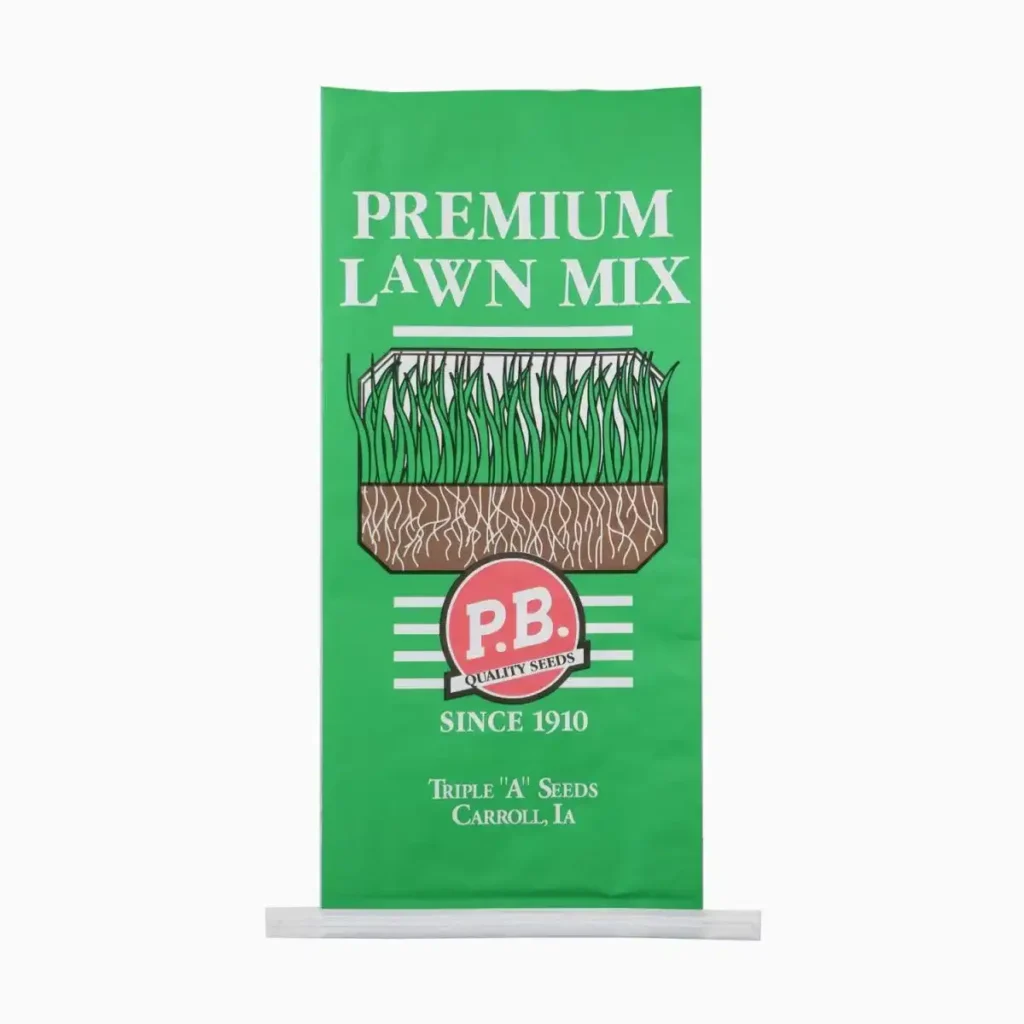
Figure: Example of a multiwall PBOM (Pinch Bottom Open Mouth) bag used for agricultural packaging. The bag’s base is factory-folded and pasted into a stable block, and the open top is folded and heat-sealed to form an airtight, sift-proof closure.
- VIDEPAK PBOM bags: High-Performance Pinch Bottom Open Mouth Bags for Stronger Protection, Cleaner Filling, and Better Brand Presentation
- Why PBOM bags Solve More Than One Packaging Problem
- How Pinch Bottom Open Mouth Bags Work from Filling to Final Pallet
- Material Engineering Behind VIDEPAK PBOM bags
- Performance of PBOM bags Across the Supply Chain
- Where VIDEPAK Pinch Bottom Open Mouth Bags Fit Best
- VIDEPAK Customization: Turning Standard PBOM bags into Product-Specific Packaging
- Quality Assurance for VIDEPAK Pinch Bottom Open Mouth Bags
- Choosing VIDEPAK PBOM bags as a Complete Packaging System
- What Is a Pinch Bottom Open Mouth (PBOM) Bag?
- VidePak Multiwall Kraft Paper PBOM Bags
- VidePak PP Woven PBOM Bags
What Is a Pinch Bottom Open Mouth (PBOM) Bag?
A PBOM bag is a type of multi-ply bag whose bottom is factory-sealed (pasted or heat-bonded) and whose top remains open for filling. After filling, the operator closes the top by pinching it together and activating a heat-sensitive adhesive or sealing tape to lock the closure. Because the base has been pre-pasted during manufacturing, the bag stands up with a flat bottom panel and well-creased gussets. The tapered sides (resulting from the pinch fold) give it a trapezoidal silhouette, which improves stability on a pallet and presentation on a shelf. In practice, PBOM bags provide an ideal balance of speed, protection, and stackability: they fill quickly through wide-opening spouts or hoppers (often at rates up to thousands of bags per hour on automated lines) and then achieve a near-hermetic seal to protect the contents. Key features of PBOM bags include:
- Factory-pasted bottom: Each bag’s base is sealed and reinforced in production, ensuring a strong, flat footing and minimizing bottom failures.
- Pinch-fold closure: A pre-applied hot-melt adhesive or heat-seal tape on the top flap allows the bag to be sealed quickly after filling, yielding a dust-tight and tamper-evident finish.
- Multiwall structure: Typically 3–5 plies of heavy kraft paper (70–100 g/m² per ply) provide tensile strength and tear resistance for heavy loads (commonly 25 kg, 50 lb, or more). High-performance papers and wet-strength resins can be used for demanding applications.
- Optional liners and coatings: Film or foil liners (PE, HDPE, EVOH, etc.) can be bonded inside for moisture, oxygen or aroma barriers. External coatings (water-based dispersion or PE extrusion) reduce porosity and improve splash resistance.
- Custom printing: Large flat surfaces on the front and back allow high-resolution flexographic printing (4–8 colors) for branding, product information or regulatory labeling. Food-grade inks and coatings ensure safety for edible goods.
VidePak’s PBOM bags are versatile by design. They are engineered to handle a wide array of products – from fine powders to coarse grains – while maintaining a clean, professional appearance. The combination of a square bottom panel and a tightly sealed top makes these bags well-suited to applications where pallet stability, contents protection, and retailer appeal are important.
Multiwall Paper Bags Pinch Block Bottom
Professional pinch block bottom design for multiwall paper bags, matching PBOM bag structure.
Check More →Kraft Paper Sacks Product Guide
Complete guide including PBOM pinch bottom open mouth kraft paper sacks for industrial use.
Check More →Pasted Paper Valve Bags
High-strength paper packaging bags with stable bottom structure same as PBOM bags.
Check More →Multiwall Paper Bags With PE Liner
3/4/5 ply multiwall bags with PE liner, available with pinch bottom open mouth design.
Check More →VidePak Multiwall Kraft Paper PBOM Bags
VidePak’s multiwall kraft paper PBOM bags use multiple layers of virgin kraft paper laminated into one strong container. These bags often consist of 2 to 5 plies of heavy unbleached or bleached kraft paper (each ply usually 70–100 g/m²) bonded with water-based adhesives. The outer ply can be made of bright white or natural brown kraft paper, chosen for strength and printability. An inner ply may be a moisture-resistant or greaseproof grade if needed. Between paper plies VidePak can insert a polyethylene film liner (20–80 µm thick) or a coextruded film with EVOH core (for oxygen barrier) to protect moisture- or aroma-sensitive products.
Each multiwall bag is converted by folding and gluing the bottom into a flat, sealed base before printing. This pasted base holds a square shape when filled. VidePak applies pre-applied hot-melt adhesive tape or coating on the topmost inner ply. After filling, a pinch sealer (hot-air or ultrasonic) activates this adhesive to weld the folded top flaps into a sift-proof closure. Because the top seals are flat and tight, any escaping air and fines are minimized – a critical advantage for dust-producing materials like cement or flour.
Multiwall PBOM bags from VidePak are especially popular for food ingredients and consumer products because paper has a clean, recyclable image. They can handle products such as:
- Bakery and grain products: Flour, semolina, rice, starch, sugar, cake mixes.
- Food ingredients: Spices, powdered dairy products (milk powder, whey), seasoning blends, coffee, cocoa.
- Pet food and seed: Dry dog/cat food, birdseed, pet treats – anywhere aroma and shelf appearance matter.
- Chemicals and minerals: Agricultural products, fine chemicals, pigments, fertilizers (urea, NPK), salt – often with an inner liner for extra protection.
- Building materials: Dry mortar, gypsum, plaster, lime – where paper’s tear resistance and coating options prevent moisture ingress.
By choosing premium kraft grades and combining them with optional polymer liners/coatings, VidePak’s multiwall PBOM bags achieve a balance of strength, barrier, and aesthetics. The bags can support heavy weights (25–50 kg and beyond) while still being printable and relatively lightweight. The kraft surface takes flexo inks well, so brands can display colorful logos and product info on both front and back panels. VidePak’s in-house printing can apply up to 8 colors, enabling rich graphics for retail display or commodity packaging alike.
VidePak PP Woven PBOM Bags
In addition to paper, VidePak offers PBOM bags made from woven polypropylene (PP). These bags are constructed from sturdy PP fabric – typically woven on circular looms – which may be laminated or coated for extra barrier. PP woven PBOM bags are often called “poly-valve” when combined with a fill spout, but in PBOM style the emphasis is on the sealed top closure rather than a sewn valve.
PP woven PBOM bags start as a tubular PP web (often reinforced with a laminated film layer). Multiple tubes can be slit for gusseted bag bodies. The pinch-bottom base is formed by folding the fabric into a square base and welding or stitching it closed – creating a block-like bottom similar to a FIBC (jumbo bag) style, but on a smaller scale. The top of the woven bag remains open for filling. VidePak’s lines then apply a heat-sealable tape or hot-melt onto the inner top flap. After filling, the top is folded and a pinch sealer fuses the tape, yielding a robust seal akin to the paper version.
Key properties of PP woven PBOM bags include: higher tear and puncture resistance compared to paper bags, excellent tensile strength (PP fiber can withstand high loads), and inherent moisture resistance. Because PP is a plastic, these bags do not rot or degrade when damp; they also resist chemical attack better than paper. VidePak’s PP woven bags often use 100% virgin PP (no recycled content) for consistent quality. The woven fabric can be laminated with an outer film (BOPP or PE) for printing or with an inner film (LLDPE/LDPE) for barrier, much like FIBC liners.
These woven PBOM bags are chosen for the toughest jobs. Common applications include:
- Agricultural chemicals and fertilizers: Granular fertilizers, coated seeds, herbicides. PP woven walls keep out rain and soil.
- Animal feed and grains: Livestock feed pellets, corn, soybean meal, animal feed premixes – heavy loads where extra strength is needed.
- Construction & minerals: Cement, sandblasting media, mineral powders – especially where bag puncture could be a concern.
- Coal, charcoal, salt, and aggregates: Abrasive or gritty products that might tear paper bags.
Despite their plastic nature, VidePak’s PP woven PBOM bags are designed for compliance too. The inner surfaces that contact product can be food-grade polymer if required, and inks/coatings are chosen to meet regulatory standards. The printability of the woven bags (often with a laminated film on one side) allows vibrant graphics similar to paper bags. Overall, the PP woven PBOM option provides a heavy-duty alternative for customers who need extra durability or moisture toughness beyond what paper can offer.