
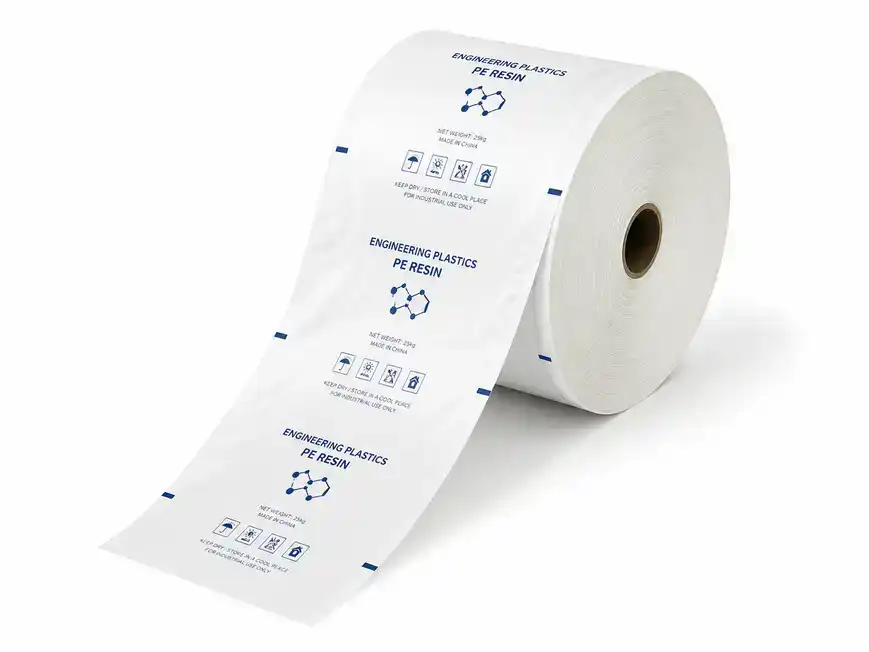
VIDEPAK Polyethylene tubular FFS films Product Analysis
This article focus the discussion like: first, define what Polyethylene tubular FFS films are; second, explain why multi-layer co-extrusion matters; third, break down the practical options that change line speed, sealing quality, and pallet stability; and finally, show why VIDEPAK is positioned as a reliable manufacturing partner for industrial packaging buyers. The result is not empty marketing language. It is a product analysis built around process logic, packaging performance, and real plant needs.
Quick take: good Polyethylene tubular FFS films are not “just film on a roll.” They are a packaging system. They must run cleanly on the machine, vent air when needed, seal under real factory conditions, hold shape after filling, and stay stable through warehousing and transport. This system view is exactly why multi-layer co-extrusion, micro-perforation, embossing strip, and gusset design matter so much.
What Polyethylene tubular FFS films really are
Polyethylene tubular FFS films are continuous tubes of polyethylene supplied on rolls for automatic form-fill-seal packing lines. In practical terms, the bag is not delivered as a finished empty sack. Instead, the roll is fed into a packaging line, the bag length is formed from the tube, the product is filled, and the top is sealed in one repeated process. That closed and continuous path reduces manual handling, lowers dust escape, improves consistency, and supports better line control. In factories handling powders, granules, pellets, fillers, salts, fertilizers, resins, and other flowable industrial goods, that difference is not small. It is operational.
The “tubular” part matters. A blown-film line creates a bubble, cools it, and collapses it into a flat tube. That means the tube geometry is native to the production process, not added later as an afterthought. The “FFS” part matters just as much. It means the material is intended for automated bag formation, product filling, and heat sealing at industrial speed. When buyers evaluate Polyethylene tubular FFS films, they are therefore not simply evaluating appearance or thickness. They are evaluating whether that roll can become a stable, sealed, stackable bag again and again, hour after hour, without forcing the operator to slow the line.
Continuous roll format
A single roll feeds the machine continuously, which supports cleaner automation and more consistent bag making.
System performance
Sealability, puncture resistance, friction control, and shape stability must work together, not alone.
Industrial end uses
Typical applications include fertilizers, salts, mineral fillers, plastic resins, masterbatch, pet food, and many dusty or abrasive materials.
Why is polyethylene the base material so often used here? Because it offers a useful balance: toughness, processability, chemical resistance, moisture protection, sealability, and recyclability potential when the structure stays mainly mono-material. Heavy-duty sack applications especially benefit from LDPE and LLDPE families because they can be tuned for tear strength, puncture resistance, seal performance, and film processability in blown-film co-extrusion. In short, polyethylene is not chosen by accident. It is chosen because the packaging line needs a material that can bend, stretch, seal, and survive.
Why multi-layer co-extrusion is the heart of the product
If one sentence captures the engineering logic of modern Polyethylene tubular FFS films, it is this: one layer alone cannot do every job well. That is why heavy-duty tubular FFS films are commonly made by multi-layer co-extrusion. In this process, multiple molten polymer streams are extruded at the same time and combined into one layered film . The purpose is simple, but powerful. Different layers can do different jobs. One layer can favor printing. One can favor puncture resistance. One can favor sealing. That is not decoration. That is design.
A typical three-layer logic is widely described in industrial practice: an outer layer designed for printability and controlled slip, a middle or core layer designed for toughness and impact resistance, and an inner layer designed for a low seal-initiation temperature and stable heat sealing. This division of labor makes multi-layer co-extrusion especially suitable for high-speed bagging, because the film no longer depends on one resin grade to do everything at once. The film becomes more balanced, more repeatable, and easier to match to a real packaging line.
Process flow from resin to finished bag
The tube is formed during blown-film production, then later converted on the packing line into finished sacks .
This structure-focused approach also explains why multi-layer co-extrusion is often paired with standardized testing. Tensile properties of thin plastic film are commonly checked by ASTM D882. Dart impact is checked by ASTM D1709. Tear resistance is checked by ASTM D1922. Seal strength is measured by ASTM F88. Coefficient of friction is measured by ASTM D1894. Water vapor transmission can be evaluated through ASTM E96/E96M methods. These tests do not replace real machine trials, but they turn vague claims into measurable targets. For procurement teams, QA teams, and plant engineers, that matters. It shortens the distance between “looks good on paper” and “works on line.”
There is another reason multi-layer co-extrusion keeps showing up in serious industrial packaging discussions: downgauging with control. Stronger resin systems and better layer allocation can reduce unnecessary thickness while still protecting the product. That does not mean every application should be made thinner. It means smarter structure can often do more than simple bulk. Less wasteful, more efficient, still robust. Not thinner for the sake of thinner, but thinner where the structure allows it.
The options buyers ask for most: micro-perforation, embossing strip, and gusset
In industrial packaging, optional details often decide whether the line runs smoothly or fights back. Among the most common custom choices for Polyethylene tubular FFS films are micro-perforation, embossing strip, and gusset design. These features are common because each one solves a very specific problem. One controls trapped air. One controls friction. One controls shape. Three options. Three different jobs. One better bag.
How micro-perforation works
Micro-perforation is used when trapped air becomes the enemy. During high-speed filling, especially with fine powders, air can stay inside the bag body and cause ballooning. Ballooning is not just ugly. It can contaminate the seal area, create unstable bag shape, slow settling, and widen weight variation. The purpose of micro-perforation is to give that trapped air a calibrated escape path while keeping product loss under control. Industrial references describe equivalent perforation diameters commonly around 50–150 microns, with the pattern tuned to product behavior and line speed.
Done correctly, micro-perforation supports faster deaeration, cleaner top seals, and better bag shape. Done carelessly, it can work against moisture protection. That is why high-quality specification matters. For free-flowing products, selective venting can improve filling efficiency; for highly hygroscopic or moisture-sensitive products, vent zones may need to be limited to low-risk panels or replaced by machine-side degassing instead. In other words, micro-perforation is not a yes-or-no feature. It is a controlled feature. Precision is the point.
SEO buyer insight: when a buyer searches for Polyethylene tubular FFS films with micro-perforation, the real buying intent is usually not “I want holes.” It is “I want faster settling, cleaner seals, and less rework on powder packaging.” The content should therefore explain the problem first and the feature second.
How an embossing strip changes pallet stability
An embossing strip is a local surface texture placed where friction is needed most. It does not try to make the whole web rough. That would be a mistake, because the bag still needs to travel smoothly across rollers, shoulders, and machine parts. Instead, narrow textured lanes are created on selected parts of the film. Industrial references commonly describe one or two lanes per face, often around 5–8 cm wide, and positioned outside the main print area. This creates what smart packaging always seeks: friction where needed, glide where needed, beauty where needed.
The logic is beautifully practical. Too little friction and pallets shift. Too much friction and the web drags on the machine. An embossing strip lets the specification split those needs rather than average them. ASTM D1894 is commonly used to measure the coefficient of friction, and industry guidance often discusses smoother field values and higher textured-lane values as separate targets. For the customer, the result is visible: more secure stacking, less pallet sliding, lower logistics risk, and no need to sacrifice print quality on the entire bag face.
Why gusset geometry matters more than it seems
A gusset is a side fold built into the tube so the finished bag can expand in a more controlled way. Compared with a flat pillow-style tube, a gusset can improve bag shape, increase usable volume, and help the pack form a more rectangular footprint on the pallet. For many granular products, that difference directly affects stackability. A bag that stacks like a brick is easier to palletize, easier to wrap, easier to ship, and easier to trust.
Buyers sometimes assume a gusset is a cosmetic format choice. It is not. It is a logistics choice. More stable pack geometry usually means better pallet cube, fewer leaning layers, and better warehouse safety. At the same time, not every application needs it. Flat tubular formats can still be right when simplicity, clean tracking, and stable product flow are the priority. The right answer is driven by material behavior, fill density, and stacking requirements, not by habit. Said another way: choose the gusset when shape stability creates value, and skip it when simplicity does.
Deep product analysis for real purchasing and packaging decisions
Following the logic of the original page, the next question is not merely “what is the product,” but “what should a buyer actually look at when specifying it?” For Polyethylene tubular FFS films, the most useful specification ranges discussed in industrial practice include lay-flat widths typically around 300–650 mm, common heavy-duty thicknesses often around 100–200 μm, and higher gauges up to roughly 250 μm where handling abuse is more severe. Printing options, textured lanes, and selective venting can all be integrated according to application. These are practical ranges, not magic numbers, and final validation should always happen on the actual customer line with the actual customer product.
From a performance angle, good Polyethylene tubular FFS films should be understood as a balance of five properties. First, sealability: the inner side must give a broad enough heat seal window to tolerate real-world line variation. Second, toughness: the structure must resist puncture, impact, and tear. Third, friction control: the outside must behave well both on the machine and on the pallet. Fourth, barrier logic: the film must provide suitable moisture protection for the product category. Fifth, shape control: after filling, the bag should settle well, seal well, and stack well. Each of these targets points back to structure choices, especially multi-layer co-extrusion and the use of features such as micro-perforation, embossing strip, and gusset.
The application range also tells the story. Dow notes that FFS sacks are used across agriculture, polymers, chemicals, minerals, and food-related uses, and that high-speed machines can reach up to 2,400 bags per hour in some contexts. VIDEPAK’s own related technical content points to cement, mortar, adhesives, mineral fillers, fertilizers, salts, plastic resins, masterbatch, animal nutrition, and selected food ingredients. This wide range is precisely why buyers ask for customization. A dusty fertilizer line does not need exactly the same film recipe as a premium pet food line or a mineral filler export program. The format may look similar. The specification should not be lazy.
Sustainability and compliance should also be discussed honestly, not casually. Mono-material polyethylene-based flexible packaging is generally preferred over mixed-material structures when recyclability is a key target, and guidance from CEFLEX highlights mono-PE as preferable for sortability and recycling quality. CEFLEX also notes that mono-material PE flexible packaging can be mechanically recycled when design conditions are appropriate. RecyClass provides dedicated evaluation protocols for compatibility with the post-consumer PE film recycling stream. That does not mean every industrial bag is automatically recyclable everywhere. It means design choices strongly affect the realism of recovery. And that is exactly why a mono-material polyethylene route, built with disciplined multi-layer co-extrusion rather than needless material mixing, is commercially attractive.
What smart buyers usually ask before approving a film
Can it seal cleanly at my real machine speed?
Will the bag vent air without hurting product protection?
Will pallet layers slide during storage or transport?
Is the structure auditable under ASTM and EN testing logic?
Can the supplier reproduce the same recipe consistently, roll after roll?
Why choose VIDEPAK
For an industrial buyer, supplier selection should be as disciplined as product selection. VIDEPAK’s positioning is clear across its public materials. The company says it was founded in 2008, produces multiple categories of industrial bags including PE FFS sacks , and highlights global standards such as ASTM and EN in addition to ISO 9001:2015. On product pages, VIDEPAK also presents “17 Years” of production experience and “300 Million pcs” of manufacturing capacity. Put simply, the company does not position itself as a small workshop selling generic film. It positions itself as a scaled industrial manufacturer with standardized quality language and export-oriented production.
Experience
VIDEPAK highlights 17 years of production experience on its product pages, while its company page also states the factory was established in 2008 and is backed by deeper team-level industrial experience.
German equipment
VIDEPAK states that it runs with German W&H equipment, and W&H itself describes its expertise across extrusion, printing, and converting for flexible packaging.
Scale
VIDEPAK repeatedly promotes a capacity around 300 million pcs, which is important because industrial bag buyers care about repeatability, not only first-sample quality.
The manufacturing argument is stronger when scale meets discipline. VIDEPAK states that it uses ASTM-compliant raw-material checks and produces and tests products according to ISO 9001, ASTM, EN, and JIS standards. That matters because Polyethylene tubular FFS films are only as good as process control allows them to be. Thickness variation, seal inconsistency, unstable surface friction, poor venting precision, or weak roll-to-roll repeatability can all erase the benefits of a good design. Structured testing and standardized production reduce that risk. For B2B buyers, especially international buyers, that language signals seriousness.
There is also a strategic brand reason to choose a supplier like VIDEPAK for this product line. A strong FFS film supplier should be able to discuss not only the film itself, but also the full conversion result: how the bag forms, how the product settles, how the seal behaves under line variation, how the pallet performs after wrapping, and how the structure aligns with documentation needs. VIDEPAK’s related content already frames packaging as a system and discusses line efficiency, friction control, venting, typical test methods, and design-for-recycling logic. That system-level communication is valuable, because the buyer is not truly buying a roll. The buyer is buying a stable packaging outcome.
VIDEPAK value summary
Not only production experience, but production continuity.
Not only German equipment, but process stability.
Not only large capacity, but repeatable quality control.
Not only compliant language, but ASTM- and EN-oriented manufacturing discipline.
Final perspective
Polyethylene tubular FFS films succeed because they bring structure, speed, and control into one packaging solution. The strongest versions are built through multi-layer co-extrusion, then tuned with options that solve real plant problems: micro-perforation for deaeration, embossing strip technology for friction management, and gusset geometry for bag shape and pallet stability. When these choices are matched correctly to product flow, machine conditions, and logistics demands, the film becomes more than packaging. It becomes production support.
That is the core reason this product category continues to matter. It protects contents, yes. But more importantly, it protects throughput, sealing quality, stackability, and operational confidence. And that is exactly the space where VIDEPAK aims to compete: with public claims around 17 years of manufacturing experience, German W&H equipment, capacity around 300 million pieces, and production aligned with ASTM and EN standards. For buyers looking for a supplier of Polyethylene tubular FFS films that can speak both the language of the factory and the language of procurement, that combination is compelling. Strong film. Clean seals. Stable pallets. Scalable supply. That is the value proposition.
- VIDEPAK Polyethylene tubular FFS films Product Analysis
- What Polyethylene tubular FFS films really are
- Why multi-layer co-extrusion is the heart of the product
- The options buyers ask for most: micro-perforation, embossing strip, and gusset
- Deep product analysis for real purchasing and packaging decisions
- Why choose VIDEPAK
- Final perspective
- VIDEPAK manufacturing approach for tubular FFS films
- Reference:
Polyethylene FFS Film For 50kg
High-performance PE FFS film designed for 50kg industrial packaging with strong sealing and durability.
Check More →Heavy-Duty Polyethylene Bags
Durable heavy-duty PE bags ideal for industrial use, matching with tubular FFS film packaging systems.
Check More →Polyethylene FFS Films From Videpak
Premium PE FFS films with stable quality, suitable for automatic form fill seal packaging lines.
Check More →25kg Polyethylene Tubular FFS Films
Professional 25kg PE tubular FFS films with excellent tensile strength and packaging efficiency.
Check More →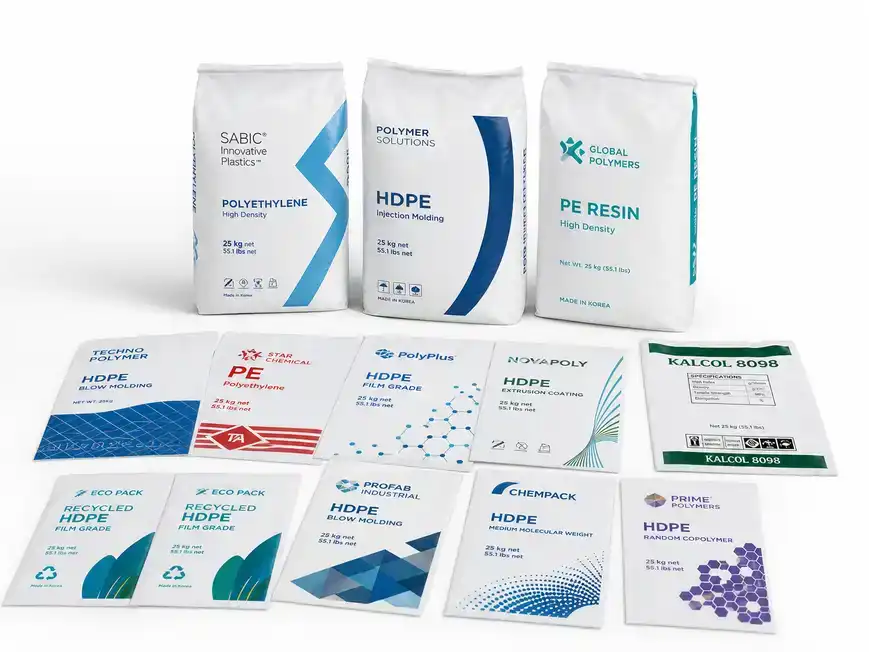
VIDEPAK manufacturing approach for tubular FFS films
A product introduction is incomplete if it describes only the film and not the system behind it. Because in heavy‑duty packaging, consistency is not a slogan; it is a capability built by material sourcing, by equipment choice, by standards discipline, and by inspection before shipment.
It also publishes a 25 kg‑relevant specification set for its PE FFS film offering—including width, thickness, roll diameter, and printing colors—making it easier for buyers to align film selection with equipment requirements.
Raw materials: why sourcing is part of performance
Film performance starts long before extrusion; it starts with resin selection and lot control. VidePak’s manufacturing narrative emphasizes premium or virgin material sourcing and ties resin lot qualification to international test standards such as ASTM/ISO.
In particular, VidePak describes sourcing virgin PP/PE resins from leading suppliers such as BASF, Sinopec, and Yangzi Petrochemical, with resin lots certified (e.g., melt flow, density) to ASTM/ISO standards. For buyers, the implication is direct: better control of inputs supports better repeatability of outputs—thickness, sealing, friction, and mechanical performance.
Equipment: why the line matters as much as the recipe
VIDEPAK frames its equipment strategy around European machinery and identifies equipment from W&H as part of its manufacturing approach for industrial bag production.
Standards and inspection: how “good film” becomes “approved film”
VIDEPAK describes designing and testing products per ASTM/ISO standards and highlights both in‑line metrology and final inspections as part of its quality approach.
Table: A practical quality checklist for 25 kg tubular FFS films and sacks (ASTM‑aligned examples)
| Performance area | Why it matters in 25 kg bagging | Example test standard commonly used in industry |
| Tensile strength & elongation | Controls basic film strength, stretching behavior, and handling robustness | ASTM D882 (tensile properties of thin plastic films) |
| Impact resistance | Correlates with resistance to sudden shocks and handling impacts | ASTM D1709 (dart impact resistance of plastic films) |
| Tear propagation resistance | Helps prevent small nicks from becoming catastrophic tears | ASTM D1922 / ASTM D1938 (film tear resistance methods) |
| Coefficient of friction | Direct lever for pallet stability and sack‑to‑sack slippage | ASTM D1894 (COF of plastic film and sheeting) |
| Hot tack / seal robustness at speed | Prevents seal failures during high‑speed vertical FFS where product drops soon after sealing | Hot tack defined as seal strength while hot; important in vertical FFS contexts |
| Dangerous goods compliance (when needed) | Enables regulated transport pathways and customer compliance | UN/ADR frameworks specify packaging construction/testing requirements; UN‑spec packaging required for most air DG shipments |
No single test “guarantees” success. But together, these tests build a disciplined picture: does the film behave the same today as it did last month, on the fastest line, under the toughest conditions, with the harshest product? That is the real definition of qualification.
Reference:
https://www.wh.group/int/en/our_products/extrusion/blown_film_lines/varex_ii/
https://www.wh.group/int/en/our_products/extrusion/blown_film_lines/
https://www.sciencedirect.com/topics/materials-science/coextrusion
https://patents.google.com/patent/WO2014110657A1/en
https://www.pp-wovenbags.com/pe-heavy-duty-form-fill-seal-tubular-roll-polyethylene-bags/
https://unece.org/DAM/trans/danger/publi/adr/adr2009/English/Part6.pdf
https://www.faa.gov/hazmat/safecargo/how_to_ship/package_for_shipping
https://www.unece.org/fileadmin/DAM/trans/danger/publi/unrec/rev21/ST-SG-AC10-1r21e_Vol1_WEB.pdf
https://www.ddltesting.com/package-testing/film-testing/?utm_source=chatgpt.com
https://www.qualitester.com/dart-impact-testing-of-polyethylene-film/?utm_source=chatgpt.com
https://www.sciencedirect.com/topics/engineering/hot-tack