
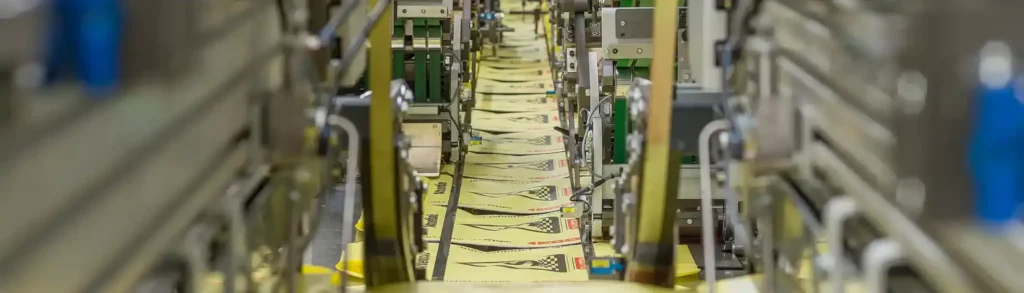
Product Analysis: A Scientific Approach to Chemical Packaging with HDPE Woven Bags
Chemical raw materials do not simply need a bag. They need a controlled packaging system that can contain fine particles, resist moisture, survive repeated handling, run smoothly on filling lines, support stable pallet loads, and preserve clear product identification from the factory to the final user.
That is the market role of VIDEPAK’s HDPE Woven Bags. Made from woven high-density polyethylene tapes and configured with optional coatings, liners, gussets, valves, heat-sealable layers, and customized printing, these industrial sacks can be adapted for powdered, granular, and crystalline materials. The woven body carries the load. The coating closes fabric gaps. The liner manages moisture and contamination. The closure controls the final escape path. Each part has a separate job, yet every part must work together.
From a market perspective, this system approach is important. A buyer searching for an hdpe fabric bags supplier is rarely buying fabric alone. The buyer is trying to reduce dust around the filling machine, prevent caking during humid transport, avoid broken bags in a warehouse, maintain a straight pallet, and lower the total cost per delivered ton. A low bag price may look attractive on a quotation, but poor containment, slow filling, excess rejects, and product loss can quickly erase that saving.
VIDEPAK MARKET INSIGHT: The most expensive package is not always the package with the highest unit price. It is the package that leaks, tears, absorbs moisture, slows the packing line, or allows valuable chemical material to arrive in an unusable condition.
VIDEPAK therefore evaluates HDPE Woven Bags through four connected questions: What is the product being packed? How will it be filled? What conditions will it face? What failure would create the greatest commercial risk? This product analysis follows that sequence, moving from material science to containment design, from technical parameters to real applications, and from laboratory testing to delivered value.
The Packaging Logic Behind HDPE Woven Systems
HDPE Woven Bags begin with polyethylene resin that is melted, formed into film, cut into narrow tapes, stretched, and woven in two directions. Stretching aligns the polymer structure along the tape, increasing tensile performance while the woven pattern spreads force across many intersecting tapes. Commercial HDPE tape grades are specifically designed for stretching processes and can provide a useful balance of tensile strength, elongation, fabric behavior, and resistance to tape splitting.
From Polymer to Load-Bearing Fabric
High-density polyethylene has a relatively linear molecular structure and greater hardness and tensile strength than lower-density polyethylene forms. Its comparatively high density and crystallinity contribute to stiffness, low water absorption, and resistance to many common chemical environments. However, the final behavior of a woven sack depends on much more than the basic resin name. Tape width, tape thickness, stretch ratio, weaving tension, fabric weight, coating bond, fold geometry, and seam construction all influence performance.
This distinction matters when selecting an hdpe fabric bags supplier. Two sacks may both be described as 25-kilogram HDPE Woven Bags, yet one may use stronger tapes, a denser weave, a more uniform coating, a better-designed valve, and tighter dimensional control. On paper, they appear similar. On a high-speed filling line, they may behave very differently.
Woven Strength
The crossed tape structure distributes weight in both directions and helps resist tearing, puncture, and repeated handling.
Low Package Weight
Oriented tapes can provide high carrying strength without requiring a thick, heavy package body.
Flexible Engineering
Fabric weight, coating, liner, closure, printing, size, and surface friction can be adjusted for the packed product.
Supply-Chain Fit
Square bag shapes, controlled dimensions, and suitable panel friction support filling, conveying, palletizing, and transport.
Uncoated fabric can allow air to pass through the weave, which may help some filling or product-breathing applications. For fine chemical powders, however, open fabric spaces can become leakage paths. Coating or lamination is therefore commonly added to improve dust retention, moisture resistance, print quality, and surface durability. An internal polyethylene liner may provide another level of protection where moisture sensitivity, purity, or extremely small particles create higher risk.
The essential design principle is simple: strength and barrier are related, but they are not identical. Heavier fabric does not automatically provide better moisture protection. A thicker liner does not automatically fix a poor closure. A dense weave does not correct an incorrectly sized valve. The right hdpe fabric bags supplier must connect each technical feature to a defined packaging problem rather than adding material without purpose.
Chemical Powder Risks That Drive Bag Design
Powdered chemicals can challenge packaging in several ways at once. A fine particle may move through a small fabric opening. A hygroscopic material may absorb water vapor and form hard lumps. A dense mineral may place high stress on the bottom seam during a drop. An aerated powder may create pressure during fast filling. A combustible dust may also develop electrostatic charge while it is transferred or mixed. Effective HDPE Woven Bags must respond to the actual combination of risks, not to a generic description such as “chemical powder.”
Why Leakage and Moisture Are System Problems
Visible powder around a pallet is often described as a fabric problem, but the root cause may be elsewhere. Leakage can occur through weave openings, needle holes, valve corners, bottom folds, coating cracks, liner punctures, or poorly sealed mouths. The powder itself also matters. Particle size, particle shape, bulk density, flow behavior, and air content determine how easily the material searches for an escape path.
A reliable hdpe fabric bags supplier should therefore ask for product data before recommending a structure. Is the material free-flowing or sticky? Does it release trapped air after filling? Is it abrasive? Is it sensitive to humidity? Does the customer need a nearly dust-free filling area? Will the bag remain outdoors? Will it travel through cold ports, hot containers, or tropical warehouses? Each answer changes the best design.
Moisture control deserves special attention because the phrase “moisture-resistant bag” is not precise enough for engineering decisions. A coated woven sack can slow vapor movement, but the final protection depends on coating continuity, liner construction, closure quality, test climate, storage time, and handling damage. ASTM guidance for water-vapor transmission also states that a result measured under one condition may not represent behavior under a different condition; test temperature and humidity should therefore reflect the intended use.
Static risk must be handled with equal care. Dry powders can accumulate electrical charge during transfer and mixing, while airborne fine dust can become an explosion hazard when an ignition source and suitable concentration are present. Packaging is only one part of the control plan. Grounding, bonding, dust collection, housekeeping, ventilation, equipment classification, and operating procedures remain essential. VIDEPAK consequently treats antistatic features as an application-specific option, not as a universal safety claim.
SAFETY CALLOUT: No packaging material should be selected for a combustible or reactive powder by bag description alone. The packed product’s safety data, dust properties, filling environment, transport rules, and site hazard analysis must guide the final specification.
VIDEPAK Containment Architecture
The strongest product offer from an experienced hdpe fabric bags supplier is not one fixed model. It is a design platform. VIDEPAK can combine the woven body, barrier layer, internal liner, closure, venting pattern, surface treatment, printing system, and pallet format according to the customer’s material and packing process.
particle size, density, moisture sensitivity
open mouth, valve, manual, automatic
fabric, coating, liner, closure
fill, drop, seal, stack, transport
limits, tolerances, inspection plan
External coating or lamination: A polyolefin layer covers the woven surface and helps close the small spaces between tapes. It can improve particle retention, resistance to outside humidity, print appearance, and protection of the woven structure. Coating weight must remain controlled. Too little can leave weak areas or pinholes; too much can increase stiffness, complicate folding, and add unnecessary material.
Internal polyethylene liner: A liner provides a separate film barrier inside the load-bearing sack. This division of work is useful: the woven body manages weight and impact, while the liner manages vapor, purity, and very fine particles. Liner thickness, dimensions, attachment method, sealing behavior, and resistance to puncture should match the filling spout and product. An oversized liner may wrinkle or block a valve. An undersized liner may pull away from the top or tear during filling.
Tight and uniform weaving: A closer weave reduces open space and supports coating continuity, but “tighter” is not automatically “better.” Very dense fabric can restrict air release during high-speed powder filling. If air cannot escape in a controlled way, the bag may inflate, slow the filler, create dust at the valve, or produce rounded packages that stack poorly. The correct design balances containment and de-aeration.
Closure selection: Sewn open-mouth bags are flexible and widely used, but needle holes may require a liner, sealing tape, or sift-resistant construction for fine powders. Heat-sealed liner mouths improve barrier performance when the product and filling method permit sealing. Pinch-bottom designs can offer a clean, stitch-free closure. Valve HDPE Woven Bags support rapid filling and compact pallet shapes, but the valve width, sleeve material, length, and venting must match the filling lance and powder flow.
Surface friction and pallet behavior: A package must move through conveyors and bag placers without sticking, yet it must not slide freely after stacking. ASTM D1894 measures static and kinetic coefficients of friction for plastic films, but it also notes that friction can change with surface condition, processing method, temperature, aging, and the movement of slip additives. Laboratory friction data should therefore be connected to real conveyor and pallet trials.
DESIGN RULE: Do not add fabric weight when the true problem is a leaking valve. Do not add liner thickness when the true problem is a sharp fold. Do not increase surface friction when the true problem is inconsistent bag length. Diagnose first. Design second. Validate third.
This is where VIDEPAK’s role as an hdpe fabric bags supplier becomes more valuable than simple bag conversion. The objective is to create the lightest practical structure that passes the customer’s performance tests with a reasonable safety margin. Less material, when properly engineered, can lower packaging weight and cost. More control, meanwhile, can lower rejects, dust, product loss, and logistics risk.
Technical Parameter Framework
The following table presents practical starting ranges for standard 25–50 kilogram HDPE Woven Bags. These figures are not universal guarantees. Final values should be adjusted to the material’s bulk density, particle size, filling speed, drop requirement, transport route, pallet height, closure type, and required shelf life. The original VIDEPAK product framework similarly identifies fabric weight, coating, tape denier, seam performance, friction, drop behavior, vapor transmission, and optional antistatic performance as linked design variables.
| Parameter | Illustrative Starting Range | Commercial Importance | Adjustment Logic |
|---|---|---|---|
| Nominal filling weight | Commonly 10–50 kg; custom formats available | Controls bag volume, handling, pallet layout, and filling equipment fit | Set using bulk density and target headspace, not product weight alone |
| Uncoated fabric weight | Approximately 70–100 g/m² | Influences tensile strength, puncture resistance, stiffness, and cost | Increase for higher load, rough handling, sharp particles, or greater drop severity |
| Extrusion coating | Approximately 15–30 g/m² | Improves sift resistance, moisture moderation, printing, and fabric protection | Set after leakage, fold, adhesion, and climate tests |
| Tape denier | Approximately 600–1,200 denier | Affects tape strength, tear behavior, fabric flexibility, and weaving efficiency | Balance tape strength with fold performance and fabric uniformity |
| PE liner thickness | Often 40–100 μm, application dependent | Supports moisture, dust, purity, and closure performance | Select by barrier need, puncture risk, seal process, and filling geometry |
| Fabric construction | Customized tape count and weave density | Controls load distribution, porosity, coating base, and air release | Match particle size and filling pressure without blocking needed venting |
| Seam efficiency | Common target: at least 70–85% of fabric strength | Prevents the seam from becoming the first failure point | Confirm by closure type, thread, welding energy, fold geometry, and product load |
| Printing | Single or multicolor, according to design and bag structure | Supports brand visibility, hazard communication, lot coding, and traceability | Validate adhesion, rub resistance, barcode contrast, and storage exposure |
Drop-test requirements should be defined by the actual distribution hazard rather than copied blindly from another application. ISO 7965-2 describes vertical impact testing in which a filled sack is raised and released onto a rigid surface under preset conditions, including drop height and package position. For industrial qualification, VIDEPAK recommends testing the filled bag on its flat face, edge, bottom, and vulnerable corners, using the customer’s real or representative material.
Dimensions also deserve firm control. A small change in bag width, cut length, gusset depth, or valve position can influence fill weight, valve engagement, package shape, pallet footprint, and automatic bag placement. Buyers evaluating an hdpe fabric bags supplier should request stated tolerances and inspection methods rather than accepting only nominal dimensions.
PARAMETER CALLOUT: A specification becomes useful only when it includes a test method, test condition, sampling plan, and pass criterion. “High strength” is a description. “Passes the agreed filled-bag drop sequence without rupture or unacceptable sifting” is a controllable requirement.
Application Matching and Customization
The chemical market includes products with very different physical behavior. Titanium dioxide is extremely fine and can create visible dust. Silica powders may flow through weak closure points. Zinc sulfate and several fertilizer salts can absorb moisture. Polymer pellets are larger and easier to contain, but they still require clean filling, strong handling performance, and stable pallets. One structure cannot optimize every application.
| Material Group | Primary Packaging Challenge | Recommended Starting Structure | Key Trial |
|---|---|---|---|
| Titanium dioxide and pigments | Very fine particles, dust visibility, contamination control | Coated HDPE Woven Bags with PE liner and sift-resistant valve or sealed mouth | High-speed filling with dust observation and valve-corner inspection |
| Silica and mineral powders | Fine particles, abrasion, trapped air, pallet shape | Tight woven body, controlled coating, liner where required, engineered vent path | Filling-time, air-release, leakage, and filled-bag drop tests |
| Zinc sulfate and hygroscopic salts | Moisture absorption, caking, closure integrity | Laminated sack with moisture-resistant liner and heat-sealed or pinch-style closure | Humidity aging, liner seal, storage, and compression trials |
| Fertilizers and agricultural chemicals | Seasonal high volume, outdoor exposure, variable handling | UV-stabilized coated sack, optional liner, suitable valve or open-mouth closure | Outdoor exposure, stacking, print durability, and transport simulation |
| Polymer resins and additives | Fast filling, clean discharge, shape consistency, static review | Block-bottom or valve HDPE Woven Bags with controlled friction and optional antistatic design | Filler-spout fit, discharge, conveyor behavior, and pallet stability |
Customization should begin with volume. A 25-kilogram bag of a light powder needs more internal space than a 25-kilogram bag of a dense mineral. Using only the target weight can produce too much headspace, insufficient valve closure, a rounded bag, or an unstable pallet. VIDEPAK calculates dimensions from bulk density, target fill weight, desired package shape, filling method, and closure allowance.
Customization then moves to barrier and handling. Humid export routes may justify a stronger moisture-control structure than short domestic deliveries. Outdoor storage may require UV stabilization because prolonged light exposure can embrittle unstabilized HDPE and reduce elongation. Cold routes may require attention to fold toughness and drop performance at lower temperatures.
Brand communication is another functional layer. Chemical packaging may need product names, grades, hazard symbols, handling instructions, manufacturing codes, destination languages, barcodes, and customer graphics. Good printing is not only decorative; it reduces identification errors and supports traceability. A professional hdpe fabric bags supplier should check artwork dimensions, color targets, surface treatment, ink adhesion, rub resistance, and code readability before mass production.
VIDEPAK can also adjust bag color, transparency, gussets, anti-slip treatment, liner color, valve type, easy-open features, micro-perforation, and pallet packing. The best configuration is not the one with the longest feature list. It is the one in which every feature has a measurable reason.
For Purchasing Teams
Compare total delivered risk, specification clarity, consistency, traceability, service, and change control—not only cost per thousand bags.
For Production Teams
Focus on bag opening, spout fit, air release, closure reliability, fill speed, conveyor movement, and reject frequency.
For Quality Teams
Define measurable limits for dimensions, fabric weight, tensile behavior, seam strength, coating, liner, printing, drop tests, and traceability.
Manufacturing, Validation, and Commercial Value
Reliable HDPE Woven Bags are created through a linked manufacturing sequence: resin control, tape extrusion, tape stretching, weaving, coating or lamination, printing, cutting, liner insertion, valve or bottom formation, closure construction, inspection, bundling, and palletizing. Variation introduced early can appear later as weak tapes, uneven fabric, coating defects, poor print registration, inconsistent dimensions, or unstable seams.
VIDEPAK CONTROL CHAIN
Approved Resin → Stable Tape Drawing → Uniform Weaving → Controlled Coating → Accurate Printing → Precise Conversion → Finished-Bag Testing → Lot Traceability
Incoming controls may cover resin identification, melt-flow consistency, masterbatch dispersion, film or liner thickness, and supplier documentation. During production, operators can monitor tape dimensions, broken tapes, fabric weight, weaving density, web tension, coating weight, print registration, cut length, valve position, fold alignment, and closure settings. Finished-bag checks can include visual inspection, dimensions, tensile behavior, seam strength, drop performance, coating adhesion, printing rub resistance, liner integrity, and pallet packing.
A disciplined hdpe fabric bags supplier should also retain samples and link finished batches to raw materials and production records. Traceability does not prevent every problem, but it makes investigation faster and corrective action more precise. It helps answer practical questions: Which resin lot was used? Which weaving line produced the fabric? What were the coating conditions? Which conversion batch formed the valves? Which inspection results released the shipment?
Validation should move in stages. Laboratory tests screen material and structural risks. Pilot production confirms that the bag can be made repeatedly. A customer filling trial reveals spout fit, dust, air release, fill speed, and closure behavior. Distribution simulation evaluates impact, vibration, compression, and pallet lean. Finally, a controlled commercial shipment confirms performance in the real route.
| Validation Stage | Main Question | Typical Evidence |
|---|---|---|
| Laboratory | Does the material structure meet basic strength, barrier, friction, and adhesion targets? | Tensile, seam, coating, COF, liner, WVTR, and print tests |
| Pilot Production | Can the selected design be produced with stable dimensions and construction? | Several controlled lots, dimensional data, process records, sample comparison |
| Filling Trial | Does the bag work on the customer’s actual equipment and operating speed? | Packs per minute, dust level, rejects, weight accuracy, valve and seal behavior |
| Distribution Trial | Will the filled package survive stacking, handling, vibration, and impact? | Drop results, pallet lean, compression, vibration, leakage, and visual condition |
| Commercial Release | Is the specification stable enough for repeat orders? | Approved sample, signed specification, inspection plan, artwork, and change-control rules |
Commercial value emerges from the full system. Well-designed HDPE Woven Bags can support cleaner filling, fewer manual interventions, better pallet shape, less product loss, clearer branding, and more predictable transport performance. These gains may be worth more than a small reduction in the initial bag price.
For example, a valve design that reduces dust but fills too slowly is not fully optimized. A highly slippery surface that runs quickly on a conveyor but creates pallet movement is not fully optimized. A very heavy fabric that passes every drop test but uses more resin than needed is not fully optimized. Good industrial packaging is the art of controlled balance: strong but not wasteful, protective but not difficult to fill, stable but not sticky, customized but still repeatable.
WHAT BUYERS SHOULD EXPECT FROM VIDEPAK
A clear product questionnaire, structure recommendations linked to actual risks, documented specifications, pre-production samples, filling-trial support, measurable quality limits, lot traceability, controlled artwork, and responsive adjustment when the customer’s material, equipment, or logistics route changes.
VIDEPAK positions itself not merely as an hdpe fabric bags supplier, but as an industrial packaging partner able to connect product protection with production efficiency. Its wider manufacturing platform includes heavy-duty industrial sacks, valve formats, laminated woven packaging, polyethylene packaging, and bulk solutions, while its published company profile emphasizes virgin raw materials, advanced equipment, international supply experience, and large-scale production capability.
This broad manufacturing view is useful because customers’ needs can change. A material initially packed in sewn HDPE Woven Bags may later move to valve filling. A domestic product may enter a humid export market and require a stronger liner. A printed industrial sack may need improved barcode control. A growing production line may require tighter tolerances for automatic bag placement. The bag specification must remain controlled, but the supplier relationship must remain flexible.
Ultimately, the value of HDPE Woven Bags lies in their ability to combine a strong woven skeleton with adjustable barrier, closure, handling, and communication features. For titanium dioxide, silica, zinc sulfate, fertilizers, polymer materials, mineral powders, and other dry chemical products, this flexibility allows the package to be built around the cargo rather than forcing the cargo into a standard package.
When selecting an hdpe fabric bags supplier, buyers should ask one final question: Can the supplier explain why every layer, every dimension, every closure, and every test is included? VIDEPAK’s product approach is designed to answer that question with a practical chain of evidence—understand the material, engineer the structure, verify the process, test the filled bag, and protect the delivered product.
Contain the powder. Control the moisture. Carry the load. Protect the value.
- Product Analysis: A Scientific Approach to Chemical Packaging with HDPE Woven Bags
- The Packaging Logic Behind HDPE Woven Systems
- Chemical Powder Risks That Drive Bag Design
- VIDEPAK Containment Architecture
- Technical Parameter Framework
- Application Matching and Customization
- Manufacturing, Validation, and Commercial Value
- Understanding HDPE Fabric Bags
- Packaging Chemical Raw Materials: Special Considerations
- Techniques to Prevent Powder Leakage
- Applications of HDPE Fabric Bags in the Chemical Industry
- Customizing HDPE Fabric Bags for Specific Needs
- Conclusion
Packaging solutions for industrial use, especially for chemicals, require specialized materials that ensure the safety and containment of products. HDPE Fabric Bags have emerged as an essential solution, offering excellent durability, flexibility, and containment properties for various powdered chemicals. Industries dealing with raw materials such as titanium dioxide, calcium titanate, silica powder, latex powder, zinc sulfate, and other fine powders depend on high-quality woven fabric bags to prevent leakage, contamination, and environmental exposure.
PP Woven Bags Manufacturer
Professional production of industrial woven packaging bags for chemical and raw material storage.
Check More →Woven Fabric PP Bags Features
Explore durable, corrosion-resistant woven fabric bag properties for chemical packaging scenarios.
Check More →Breathable PP Woven Bags Supplier
High-performance breathable woven bags suitable for various chemical raw material packaging.
Check More →Breathable PP Woven Bags Factory
Factory direct sales of woven packaging solutions tailored for industrial chemical materials.
Check More →In this article, we’ll explore the science behind HDPE (High-Density Polyethylene) Fabric Bags, their unique features, and how they address challenges in packaging fine chemical powders. We’ll also delve into various technical methods used to ensure that powder particles remain contained, from external lamination to internal bag linings and advanced weaving techniques.
Understanding HDPE Fabric Bags
HDPE Fabric Bags are woven from strands of high-density polyethylene, providing a balance of strength, flexibility, and resistance to wear and tear. These bags are ideal for holding bulk chemical powders, which require strong packaging to prevent leakage, contamination, and loss of product.
The structure of HDPE woven fabric consists of a network of woven strands, which can be engineered for various densities and weights. These bags are often laminated or lined with internal layers to further enhance their barrier properties. The major advantage of HDPE fabric bags is their versatility in protecting sensitive chemical products during transportation and storage.
Key Characteristics of HDPE Fabric Bags
- Strength and Durability: HDPE fabric has a high tensile strength, making these bags resistant to tearing or breaking, even when holding heavy or dense materials.
- Moisture Resistance: These bags provide excellent moisture resistance, which is crucial for powders that can degrade or clump when exposed to moisture.
- Customizability: HDPE fabric bags can be customized in terms of size, design, lamination, and the addition of internal liners for specific applications.
- Cost-Effectiveness: Compared to other types of bags like paper or PET bags, HDPE fabric bags offer a more durable and reusable solution at a lower cost.
Packaging Chemical Raw Materials: Special Considerations
When packaging fine chemical powders like titanium dioxide, zinc sulfate, and other chemicals, it’s essential to address several concerns, including:
- Preventing Powder Leakage: Chemical powders are fine particles that can escape from even the smallest openings. Thus, the bag must be airtight or at least very finely woven.
- Moisture Protection: Some chemicals, such as sodium carbonate, are hygroscopic and can absorb moisture from the environment, leading to quality degradation.
- Chemical Compatibility: The packaging material must be inert and non-reactive to prevent any chemical reaction between the contents and the packaging.
- Durability During Transport: Chemical powders are often transported over long distances. The packaging must be strong enough to withstand rough handling without compromising the integrity of the material inside.
Let’s explore how HDPE Fabric Bags solve these challenges in packaging powdered chemicals.
Techniques to Prevent Powder Leakage
1. Lamination of Outer Layer
Lamination refers to the application of a thin protective layer over the surface of the woven fabric. In the case of Woven Fabric Bags, lamination is often applied to improve both moisture resistance and particle retention. This process involves covering the bag’s surface with a film of PP (Polypropylene) or PE (Polyethylene).
- Benefits of Lamination: The lamination layer acts as a barrier that blocks small particles from escaping through the pores of the woven fabric. It also enhances the bag’s resistance to environmental elements like humidity, rain, and dust.
2. Internal Liners for Extra Protection
An additional method for preventing powder leakage is incorporating internal liners inside the HDPE Fabric Bags. These liners are typically made from plastic films such as LDPE (Low-Density Polyethylene). The liner fits snugly within the woven outer bag, providing an extra layer of security.
- Inner Bag Application: This technique is commonly used when handling ultra-fine or highly reactive powders. The inner liner can be heat-sealed or tied off to create a nearly airtight seal, preventing even the finest particles from escaping.
3. Tight Weaving for Increased Density
The fabric’s weave is another critical factor in preventing powder leakage. In Fabric Woven Bags, tighter weaving creates a more compact material that minimizes gaps between the woven fibers.
- Weaving Technology: HDPE woven fabrics can be produced with different mesh densities depending on the required use. For chemical powders, a tight weave with minimal spacing between the fibers is preferable. This ensures that the powder remains contained without excessive reliance on external lamination.
4. Advanced Sealing Techniques
Proper sealing of the bags’ openings is crucial for ensuring that no powder escapes once the bag is filled. There are various sealing techniques used in the production of Woven Fabric sacks:
- Heat Sealing: A common method where heat is applied to fuse the edges of the plastic liner, creating an airtight closure.
- Sewn Closure: For certain applications, sewing the bag shut is an effective method, especially when used in combination with internal liners. Using fine-threaded stitches helps maintain the integrity of the closure.
- Block Bottom and Valve Closures: In bags designed for easier filling and stacking, such as Block Bottom Bags, valve closures can be used. These closures provide a secure seal that prevents leakage.
Key Product Parameters
Below is a table summarizing the primary product parameters and features discussed in this article:
| Parameter | Details |
|---|---|
| Material | HDPE Fabric (High-Density Polyethylene) |
| Lamination | Optional PP/PE lamination for enhanced particle retention |
| Inner Liner | LDPE or similar plastic liner for extra protection |
| Weave Density | Tight weaving for fine powders |
| Sealing Options | Heat sealing, sewing, block bottom valve closures |
| Weight Capacity | Customizable, typically up to 50 kg or more |
| Moisture Resistance | High, with lamination or inner liner |
| Applications | Chemical powders (titanium dioxide, silica, zinc sulfate) |
Applications of HDPE Fabric Bags in the Chemical Industry
The packaging of powdered chemicals requires specialized solutions due to the unique characteristics of these materials. Here are some examples of how HDPE Fabric Bags are used in the chemical industry.
Titanium Dioxide (TiO₂)
Titanium dioxide is widely used in the manufacturing of paints, coatings, and plastics. Its fine powder consistency makes it challenging to package without leakage. HDPE fabric bags with lamination and internal liners are ideal for containing this material and protecting it from moisture contamination.
Silica Powder
Silica powder is another example of a fine chemical material that can easily escape through improperly sealed packaging. With Woven Fabric Bags that incorporate tight weaving and internal liners, silica powder can be securely packaged for transportation.
Zinc Sulfate
Zinc sulfate is hygroscopic, meaning it can easily absorb moisture from the air. For this reason, it must be packaged in bags that offer both high moisture resistance and excellent particle containment. HDPE fabric bags with laminated surfaces and inner linings meet these requirements.
Customizing HDPE Fabric Bags for Specific Needs
The design of HDPE fabric bags can be tailored to meet the specific needs of the customer. For instance, the size, thickness, and lamination options can all be adjusted based on the type of material being packaged. Additionally, the printing of logos or other information on the bag surface can be done using various techniques that ensure durability and visibility.
Conclusion
In summary, HDPE Fabric Bags are an excellent packaging solution for the chemical industry, particularly when dealing with fine powders that require airtight containment and protection from moisture. Through the use of lamination, internal liners, tight weaving, and advanced sealing techniques, these bags provide a reliable and cost-effective way to package chemical raw materials.
By understanding the key parameters and options available, companies can select the right type of Woven Fabric sacks to meet their packaging needs, ensuring both the safety and quality of their products. Whether for titanium dioxide, silica powder, or zinc sulfate, HDPE Fabric Bags offer the durability, customization, and protective features required in the modern chemical industry.