
VIDEPAK Product Analysis of Multiwall Paper Bags
Key message: a buyer does not really purchase only a sack; a buyer purchases packability, shelf life, dust control, stack stability, transport safety, and brand presentation in one package. That is precisely why Multiwall Paper Bags remain important in food ingredients, animal nutrition, chemicals, minerals, fertilizers, and building materials. Industry sources describe them as multi-ply sacks for powders, granules, and small particulates, commonly in the 5–50 kg class, with open-mouth or valve constructions and optional liners or barrier layers.
Why Multiwall Paper Bags Matter Now
In plain language, Multiwall Paper Bags are engineered paper-based industrial sacks made from two or more plies of kraft paper, often combined with coatings, liners, or films when moisture, dust, grease, or aroma control matters. PSSMA defines the “multiwall” concept as more than one ply of paper or protective barrier, while a major sack handbook notes that the two principal families are open-mouth sacks and valve sacks, each available in one or more plies and with optional barriers.
The market logic behind Multiwall Paper Bags is stronger in 2026 than it was a few years ago. The European Union’s Packaging and Packaging Waste Regulation entered into force in February 2025 and generally applies from August 2026, setting requirements for composition, recoverability, and the packaging life cycle. At the same time, Europe’s paper recycling rate for all paper and board reached 79.3% in 2023, while the U.S. paper recycling rate in 2024 stood at 60%–64%. In other words, the commercial conversation has moved: buyers now ask about performance and circularity in the same meeting, not in separate ones.
Scale also matters. EUROSAC reports that its members produce more than 5 billion paper sacks per year in 60 plants across 20 countries. That volume does not suggest a niche product. It suggests a mature, highly optimized packaging category that continues to evolve in response to filling technology, logistics discipline, food safety expectations, and sustainability pressure.
Commercial value of Multiwall Paper Bags
Strong print surface, better shelf language, and stable pallet form make Multiwall Paper Bags attractive not only for industrial transport, but also for premium retail-adjacent products.
Operations of Open Mouth
Valve and open mouth variants let the same packaging family fit both high-speed automatic lines and more flexible manual or semi-automatic filling lines.
Risk-control value
Optional liners, coatings, and closure choices help manage moisture uptake, dust leakage, wicking, and pallet slide, which are the real cost drivers after filling.
What Multiwall Paper Bags Are in Practical Terms
A good way to read Multiwall Paper Bags is to read them layer by layer. The outer ply is not just decoration; it carries brand graphics, resists scuff, and helps tune friction. The middle ply or plies contribute tear-path control and column stiffness. The inner ply supports glue holdout and bonding. Then, if the product or route demands more protection, coatings or films lower water-vapor transmission and improve hygiene or heat sealing. That is why a properly designed sack behaves like a small packaging system, not like a sheet folded into a tube.
Layer logic inside Multiwall Paper Bags
Outer ply
Print, appearance, rub resistance, and friction tuning.
Middle wall
Strength, tear control, and shape retention under stack load.
Inner ply
Supports pasting, cleanliness, and film adhesion when a liner is used.
Barrier option
PE liner, coated paper, or specialty film for moisture, dust, grease, or odor management.
The industry’s basic grammar is simple. Open-mouth sacks are factory closed at one end and left open for filling and later closure; valve sacks are factory closed on top and bottom except for a valve opening in one corner. That distinction sounds small, but it changes everything—machine interface, filling speed, deaeration path, dust behavior, closure method, and downstream pallet form.
Structure choices are equally practical. A VCI packaging handbook states that paper bags most often consist of two or three layers of paper, with or without a thin plastic liner for moisture resistance, and that valve bottom paper bags are commonly designed with two layers, with the option of a PE inner bag or PE middle layer when more protection is required. That means “more walls” is not automatically “better”; what matters is matching the wall count and barrier level to the content, the route, and the filler.
VIDEPAK marketing insight
Customers often ask for the “strongest” sack. The smarter question is different: which failure do you want to remove—dusting, caking, wet-seam damage, odor loss, poor pallet shape, or slow filling? The best Multiwall Paper Bags are not the heaviest bags; they are the bags whose structure is tightly aligned with the actual risk map. This selection logic is consistent with VIDEPAK’s own published engineering narrative.
Selection flow for Multiwall Paper Bags
powder, granule, feed, chemical
humidity, dust, grease, aroma
2 wall, 3 wall, 4 wall + liner
Pasted Valve, Pinch Bottom Open Mouth, Block Bottom Open Mouth
This sequence reflects established sack selection criteria: product properties, filling technique, storage load, transport load, and palletizing conditions.
Common Types of Multiwall Paper Bags
Pinch Bottom Open Mouth
The industry definition is clear: Pinch Bottom Open Mouth is an open-mouth bag with adhesive applied to an extended lip, usually on a stepped-end top. After filling, heat reactivates the adhesive and the lip is folded and pinched shut. This gives a clean, tight-looking closure and strong sift resistance, which is why Pinch Bottom Open Mouth designs are favored for fine powders, pet food, food ingredients, chemicals, and other products where appearance and closure quality matter at the same time.
From a marketing angle, Pinch Bottom Open Mouth is the format that often best balances protection and brand presence. It gives a neater top profile than a sewn closure, reduces stitch-hole leakage risk, and keeps the bag looking premium on the shelf and on the pallet. It is not always the cheapest option. But when spill prevention, clean graphics, and a box-like finished shape matter, the value story is strong.
Pasted Valve
A Pasted Valve sack is factory closed on both ends except for a valve opening, usually in one corner. The filler introduces product through a spout, and the pressure of the filled product helps the valve close. Industry guides describe this design as especially useful for dry, flowable products and note its strengths in high-speed filling, good pallet form, and flexible sealing options.
This is the workhorse format for fast industrial lines. When powder flow is high and line efficiency is king, Pasted Valve often becomes the natural choice. A sack handbook also explains that high-porous paper can reduce strain during filling, speed up air escape, and even allow a 4%–10% reduction in sack size in some cases. That is not only a technical win; it is a logistics win and a cost win.
Block Bottom Open Mouth
Block Bottom Open Mouth refers, in buyer language, to an open-mouth sack with a block-shaped base that stands well, stacks well, and presents well. Industry references describe open-mouth block-bottom sacks as up to four layers, with a strong double-folded bottom and a top sealed after filling, often with a heat-applied PE strip. They are well suited to automatic high-speed packing lines and create square, stable pallet loads.
The distinction matters: open mouth versus valve refers mainly to filling method, while block bottom versus pinch bottom refers more to geometry and closure behavior. So Block Bottom Open Mouth is not merely a shape; it is a combination of formatting and filling logic. For feed, grains, flour, and products that benefit from self-supporting presentation, it is one of the most commercially attractive styles in the current paper sack family.
Pinch bottom with tapes
In real buying conversations, Pinch bottom with tapes usually describes a reinforced closure concept rather than a completely separate sack family. Industry glossaries define tape over stitching and tape-top closures as tape-based systems used to cover stitch lines, reduce sifting, and improve barrier performance. Market practice also shows that over-tape can help reduce contamination from sewing thread in sensitive applications. From that evidence, it is reasonable to read Pinch bottom with tapes as a closure-enhanced, dust-conscious, barrier-conscious variant used where ordinary stitching is not enough, but a full specialty build may not be necessary.
Commercially, Pinch bottom with tapes is attractive because it turns a closure line—a common weak point—into a selling point. It can support finer powders, reduce leakage complaints, and improve the “clean bag” impression that end users notice immediately. It is a small detail. Yet small details often decide whether a customer experiences a sack as professional or as problematic.
Gusset
A Gusset is the side or bottom portion of an open-mouth bag that creates volume. It is not a minor accessory; it is the geometric feature that lets the bag expand, carry more product, and form a more stable shape. PSSMA ordering practice even places the face width, then the Gusset, then the finished length in standard size descriptions for certain sack styles, which shows how central the Gusset is to specification.
For VIDEPAK, the selling message is simple: a well-designed Gusset improves cube, pallet alignment, filling behavior, and perceived quality. A poor Gusset, by contrast, introduces weak side folds, uneven filling, and unstable stacking. Geometry is easy to overlook on a drawing. It is impossible to overlook in a warehouse.
The matrix above synthesizes definitions and functional guidance from multiwall sack glossaries, handbooks, and current industry product references.
Common Structures in Multiwall Paper Bags
Wall count is one of the most misunderstood topics in Multiwall Paper Bags. Buyers often assume that more plies always mean better packaging. That is only partly true. Industry references show that two- and three-layer paper sacks are common, while more complex structures add liners, coatings, or specialty films only when the application justifies them. So the right structure is a cost-performance decision, not a beauty contest.
Two wall structure
A two-wall construction is often enough for dry, stable products moving through controlled inland routes. VCI guidelines describe valve paper bags as commonly designed with two layers, with more layers added only if necessary. In practical market terms, this structure works when the product is not highly hygroscopic, not especially greasy, and not exposed to harsh humidity swings. It lowers material use, keeps the bag lighter, and often improves cost efficiency at scale.
Three wall structure
A three-wall construction is the mainstream “balanced” build in many sectors. EUROSAC notes that paper sacks for food are typically made as open-mouth or valve sacks with two to three layers of paper, often combined with a PE free-film tube inliner or coated paper when required. That tells us why three-wall designs remain so popular: they offer a stronger body, better puncture margin, improved handling feel, and more room for barrier tuning without moving immediately into over-engineering.
Four wall with PE inner bag
A four-wall build with a PE inner bag sits in the premium protection zone. Open-mouth block-bottom references describe sacks of up to four layers with PE-sealable top features, while broader industry references confirm that PE inliners, metalized plies, and aluminum-coated plies are used when stronger barrier performance is needed. From VIDEPAK’s perspective, this structure is not the default. It is the answer for products that face coastal climates, long export routes, splash exposure, stronger aroma retention needs, or higher complaint risk if humidity enters the pack.
The central lesson is this: structure should start from product sensitivity and route abuse, not from habit. A well-chosen 3-wall bag can outperform a poorly specified 4-wall bag if the closure, deaeration, and pallet behavior are better matched to reality.
How VIDEPAK Explains Market Adaptation
The strongest idea in VIDEPAK’s original product logic is adaptation. The same family of Multiwall Paper Bags can be configured for high-speed filling, low dust, strong shelf presentation, moisture defense, or better pallet friction. Adaptation, then, is not a vague marketing phrase. It is the disciplined act of changing closure, wall count, liner, surface, and geometry according to content, climate, filling equipment, and customer expectation.
Take food powders and starches as one example. EUROSAC explains that some such products need to interact with air and moisture to reduce mold risk, and that paper’s natural porosity helps the contents “breathe” while still protecting them from outside influences. In these cases, a paper sack is not chosen despite its porosity but because of it. This is a fine example of market adaptation: the right barrier is sometimes a controlled barrier, not the maximum barrier.
Take high-speed powder filling as another example. Valve sacks gain real advantage when the line demands fast deaeration, clean spout performance, and better warehouse geometry. The sack handbook’s discussion of porous papers shows why: faster air escape means less stress during filling, less need for perforation, and potentially smaller sack dimensions. In the right application, Pasted Valve is not just faster than open-mouth filling; it is more stable as a total packing system.
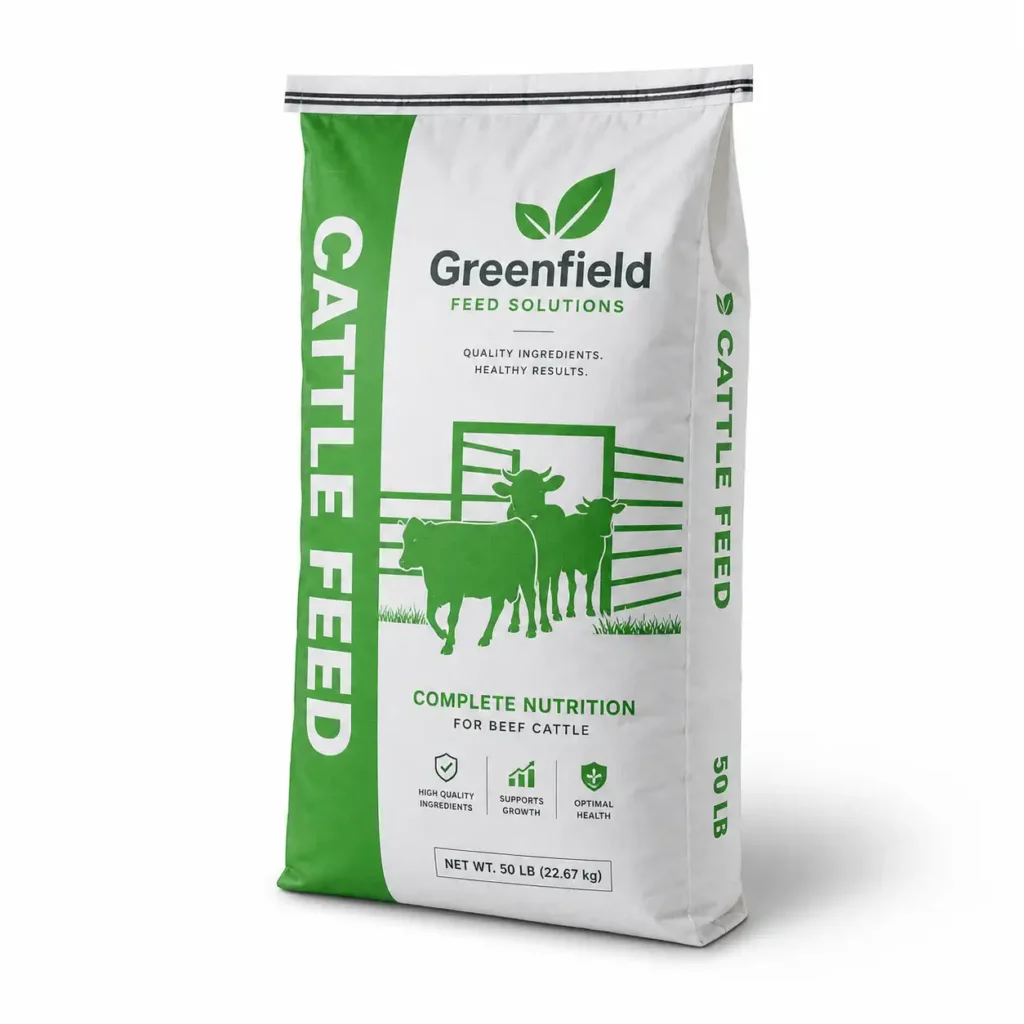
Take feed, pet food, and animal nutrition. Open-mouth and block-bottom systems are attractive because they combine better presentation, easier filling, and the option to add liners for aroma, fat, or moisture management. Open-mouth references emphasize stable palletization, self-supporting display, and the possibility of special barrier plies such as PE inliners or coated structures. That combination matters in sectors where the package must work in both warehouse logic and retail logic.
Then there is climate. A bag that performs well in a dry inland distribution chain may not perform equally well in a coastal route or in a monsoon season. VIDEPAK’s published engineering discussion repeatedly links route, season, liner thickness, and seam design. That is sound logic. Moisture ingress, seam wicking, and caking are not academic issues; they are claims, returns, and damaged customer trust. When humidity rises, the choice may shift from a simpler open-mouth design toward Pinch Bottom Open Mouth, Block Bottom Open Mouth with better top sealing, or Pasted Valve with stronger barrier support.
A practical VIDEPAK market map
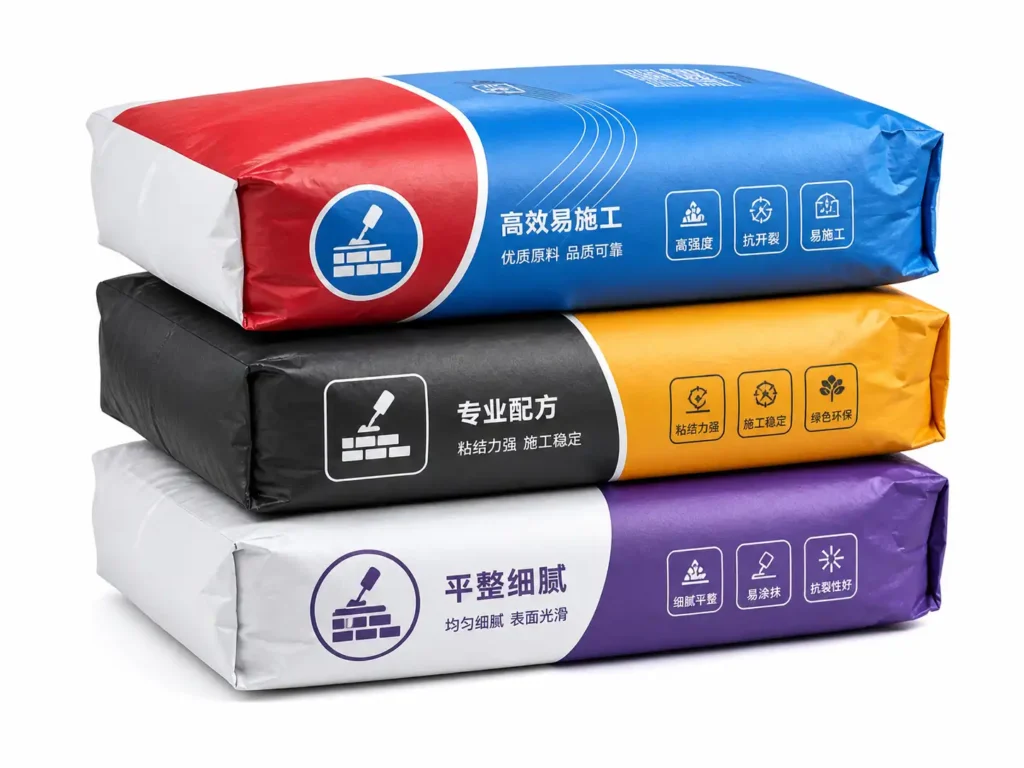
Building materials: favor Pasted Valve when the line is automated, throughput is high, and pallet order is critical.
Food ingredients and specialty powders: favor Pinch Bottom Open Mouth or Block Bottom Open Mouth when appearance, cleanliness, and tighter top closure are part of the value case.
Feed and pet nutrition: use a strong body, good print, and liner options where aroma, fat, or humidity matter.
Fine powders with leakage sensitivity: move toward Pinch bottom with tapes logic or other taped closure concepts when stitch-line control matters.
Sustainability adds a second layer to adaptation. Paper and board recycling data, together with phase-in rules under the EU packaging regulation, push buyers to ask not only whether a bag protects the product, but also whether the package fits circular-economy expectations. Yet the answer cannot be simplistic. Hybrid structures with PE liners may complicate end-of-life compared with all-paper structures, but they may also prevent far larger environmental losses by protecting high-value contents from spoilage or contamination. The most credible sustainability sale is therefore honest and balanced: use no extra material without reason, but use enough material to protect the product.
VIDEPAK’s Positioning Message
From a marketing department perspective, the right message is neither “one bag fits all” nor “more layers solve every problem.” The right message is more disciplined, and more persuasive: VIDEPAK can position Multiwall Paper Bags as a configurable packaging platform built around a buyer’s real operating conditions. That means explaining, in simple terms, why Pasted Valve fits fast powder lines, why Pinch Bottom Open Mouth fits neat premium closures, why Block Bottom Open Mouth fits cube stability and display value, why a properly sized Gusset improves pallet order, and why Pinch bottom with tapes can help when closure cleanliness becomes a complaint driver.
That positioning is strongest when backed by test logic: water-vapor control, drop resistance, compression performance, venting behavior, and seam integrity. VIDEPAK’s published material emphasizes incoming checks, in-process inspection, finished-goods testing, and lot-level traceability. For customers, that is powerful. It moves the conversation away from promises and toward repeatability. Not a bag that looks good in a sample room. A bag that behaves well after filling, after palletizing, after transport, and after storage.
Final conclusion
The future of Multiwall Paper Bags will not be decided by one single feature. It will be decided by fit: fit to product, fit to machine, fit to climate, fit to regulation, fit to brand positioning, and fit to total delivered cost. For that reason, the best sales story for VIDEPAK is also the most factual one: we do not promote a generic sack; we promote a well-matched solution
This expanded analysis is grounded in the logic of VIDEPAK’s earlier article and supported by industry association guidance, technical sack handbooks, packaging regulations, and recycling data.
- VIDEPAK Product Analysis of Multiwall Paper Bags
- Why Multiwall Paper Bags Matter Now
- What Multiwall Paper Bags Are in Practical Terms
- Common Types of Multiwall Paper Bags
- Common Structures in Multiwall Paper Bags
- How VIDEPAK Explains Market Adaptation
- VIDEPAK’s Positioning Message
- Multiwall Paper Valve Bags Manufacturing
- Multiwall Paper Bags Manufacturer
- Laminated Kraft Paper Sacks
- Kraft Paper Valve Bags Solutions
- 1. Introduction to Multiwall Paper Bags: Design and Functionality
- 2. Applications in Livestock and Poultry Feed Packaging
- 3. How to Choose the Right Multiwall Bag: A Data-Driven Guide
- 4. VidePak’s Capabilities: Engineering Excellence Since 2008
- 5. FAQs: Answering Client Concerns
- 6. Market Trends and VidePak’s Innovations
Opening Dialogue: Tackling Critical Client Needs
Client: “We need packaging for livestock and poultry feed that balances cost, durability, and safety. How do your multiwall paper bags address these challenges?”
VidePak: “Multiwall paper bags offer unmatched structural integrity, moisture resistance, and breathability—critical for preserving feed quality. At VidePak, we tailor solutions using 100% food-grade materials, advanced anti-microbial coatings, and customizable designs to meet diverse agricultural demands. Our 16-year expertise ensures your feed stays fresh, safe, and cost-effective.”
1. Introduction to Multiwall Paper Bags: Design and Functionality
Multiwall paper bags consist of 2–6 layers of kraft paper, laminated or stitched together, providing exceptional strength and barrier properties. Widely used in agriculture, these bags protect feed ingredients like grains, additives, and premixes from environmental hazards. The global animal feed packaging market, valued at $15.2 billion in 2023, is projected to grow at 4.8% CAGR through 2030, driven by rising livestock production and stringent safety regulations.
Key Structural Features:
- Layered Construction: Enhances tear resistance (up to 50% stronger than single-ply bags).
- Barrier Coatings: PE or PP lamination prevents moisture ingress (humidity resistance >90%).
- Breathable Design: Reduces condensation, critical for preventing mold in poultry feed.
2. Applications in Livestock and Poultry Feed Packaging
Multiwall bags are indispensable for safeguarding:
- Dry Feed: Pig, chicken, and turkey feed requiring long-term storage.
- Aquafeed: Fish and shrimp pellets prone to humidity-induced spoilage.
- Premixes and Additives: Sensitive blends needing UV and oxygen barriers.
Case Study: A Vietnamese aquafeed producer reduced spoilage rates by 30% after switching to VidePak’s 4-ply PE-coated bags with anti-fungal treatments.
3. How to Choose the Right Multiwall Bag: A Data-Driven Guide
Selecting optimal packaging involves evaluating five factors:
3.1 Cost vs. Performance
| Bag Type | Cost (USD/1,000 bags) | Max Load (kg) | Shelf Life |
|---|---|---|---|
| 2-Ply Uncoated | $120 | 25 | 6 months |
| 3-Ply PE-Laminated | $180 | 40 | 12 months |
| 4-Ply PP-Laminated | $240 | 50 | 18 months |
Insight: For humid climates (e.g., Southeast Asia), 4-ply PP bags reduce long-term losses despite higher upfront costs.
3.2 Safety and Hygiene
- Anti-Microbial Treatments: Silver-ion coatings inhibit bacterial growth (99.9% reduction in Salmonella).
- Food-Grade Inks: Compliant with FDA 21 CFR for direct contact.
3.3 Technical Parameters
- Thickness: 150–300 GSM (higher GSM for abrasive feeds like minerals).
- Inner Liners: Foil or PE liners for fatty additives (e.g., fish oil premixes).
- Size Customization: Bags sized to fit automated filling lines (e.g., 50 kg for poultry, 25 kg for aquaculture).
4. VidePak’s Capabilities: Engineering Excellence Since 2008
Founded by CEO Ray Chiang, VidePak combines 30+ years of industry knowledge with cutting-edge Austrian Starlinger machinery. Our 568-employee facility produces 120 million bags annually, serving clients across 60+ countries.
Production Highlights:
- Material Integrity: 100% virgin PP and FDA-compliant adhesives.
- Custom Printing: 8-color CMYK/Pantone matching for brand visibility.
- Certifications: ISO 9001, BRCGS, and HACCP for feed safety.
For specialized solutions, explore our livestock feed packaging innovations and sustainable multiwall designs.
5. FAQs: Answering Client Concerns
Q1: What is the MOQ for custom-printed multiwall bags?
A: MOQ starts at 20,000 units, with volume discounts beyond 100,000 units.
Q2: How do your bags perform in high-humidity environments?
A: Our 4-ply PP-laminated bags maintain <5% moisture absorption even at 85% RH.
Q3: Are VidePak’s inks safe for animal feed?
A: Yes, all inks meet EU Regulation (EC) No 1935/2004 for food contact.
6. Market Trends and VidePak’s Innovations
The shift toward sustainable and traceable packaging is reshaping agriculture. VidePak’s R&D team is pioneering:
- Biodegradable Liners: Corn-starch-based films decomposing in 180 days.
- Smart Labels: QR codes for tracking batch-specific storage conditions.
References
- Food and Agriculture Organization (FAO). Global Livestock Feed Safety Standards.
- Smithers Pira. Animal Feed Packaging Market Analysis 2024.
- VidePak Sustainability Report (2024).
Contact Us:
Website: www.pp-wovenbags.com
Email: info@pp-wovenbags.com
VidePak—Your Partner in Safe, Sustainable Feed Packaging.