
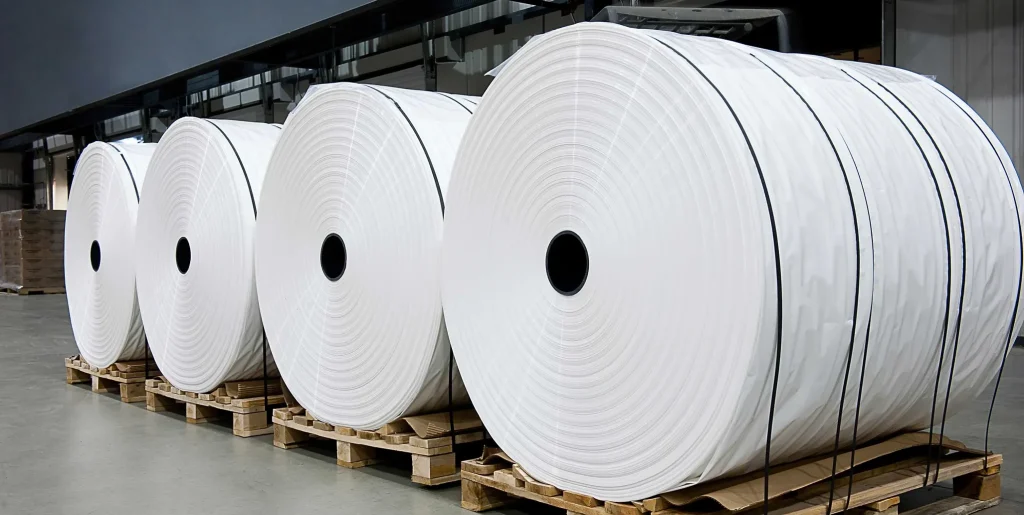
What are Poly‑BOPP Bags and why do they matter now?
When packaging must be light yet strong, vibrant yet durable, economical yet premium, the answer that repeatedly surfaces is Poly‑BOPP Bags. Built on a woven polypropylene backbone and protected by a biaxially oriented polypropylene face, Poly‑BOPP Bags (also called BOPP Woven Bags, Poly‑BOPP Sacks, Laminated Woven Bags, Waterproof Woven Bags, and Leakproof Woven Bags) fuse structural integrity with photographic graphics. They are engineered to carry rice and pulses, feeds and fertilizers, construction powders and specialty minerals—yet they also carry brands, stories, and regulations without smudge or fade. Why does this hybrid matter now? Because global logistics are harsher, consumer expectations are higher, and sustainability goals are stricter. The format that can negotiate all three will win. Frequently, that format is the Poly‑BOPP Bag.
Key aliases you may encounter in quotations, RFQs, and supplier spec sheets: BOPP‑laminated PP woven bags, reverse‑printed laminated woven sacks, matte/gloss BOPP laminated woven rice bags, pinch‑bottom BOPP woven sacks, valve Poly‑BOPP sacks, moisture‑resistant laminated fertilizer bags. Each refers to the same core architecture: woven PP fabric + reverse‑printed BOPP face + secure bonding + conversion into a bag format matched to your filler.
Material system of Poly‑BOPP Bags: from resin physics to unit economics
A Poly‑BOPP Bag is not one material but a tuned system. Each layer contributes mechanics, optics, or operability, and the bill of materials determines both performance and cost. The backbone is woven PP—extruded, slit, drawn into tapes, then woven into fabric. The face is BOPP—stretched in two directions to achieve clarity, stiffness, and printability—reverse‑printed so inks are locked beneath the film. Between them sits a melt tie layer that bonds hard peaks and valleys of the fabric to the smooth film. Around them sit inks, varnishes, additives, and, finally, the conversion features that make a bag a bag: valves, gussets, pinch seals, and stitched or sealed closures.
Woven PP fabric
Virgin isotactic PP grades, optimized for tape extrusion and draw, create the load path for tensile, tear, and drop energy. Denier control and pick density govern strength and sifting behavior. Down‑gauging reduces resin cost but must respect stacked‑load safety factors.
BOPP film face
The biaxially oriented layer offers clarity, gloss or engineered matte, scuff resistance, and excellent print receptivity. Reverse printing protects color; matte windows improve legibility; gloss zones amplify imagery. Typical thickness: 15–35 μm.
Tie / lamination layer
Extrusion lamination with PP‑based melts and, where needed, modified polyolefin tie resins. Coat weight and nip conditions determine peel strength, flatness, and cutting performance. The mono‑polyolefin approach aids recyclability.
Inks and protective varnishes
Solvent rotogravure or low‑VOC flexo inks tuned for adhesion to treated BOPP; over‑print varnishes raise rub resistance and chemical fastness. Color tolerance (ΔE), registration, and lightfastness protect brand equity in the field.
Additives & masterbatches
UV stabilizers for sun exposure, anti‑slip textures for stacking, antistats for powders, and color masterbatch for visible tapes—small percentages that prevent big failures.
Conversion features
Open‑mouth sewn, pinch‑bottom heat‑seal, or valve configurations; gussets for cube efficiency; micro‑venting for fast fillers; easy‑open options for user ergonomics.
Why does this particular stack work? Because the woven substrate carries the weight, the BOPP skin carries the brand, the tie layer carries the bond. Remove any one and you compromise safety, legibility, or longevity. Keep all three tuned, and Poly‑BOPP Sacks perform across climates, conveyors, and campaign cycles.
Signature features of Poly‑BOPP Bags: what differentiates the format
Consider the contrast. Paper sacks present beautiful prints but scuff; plain woven polypropylene is tough but lacks polish; coextruded PE films seal well but stretch under load. Poly‑BOPP Bags thread the needle: strength at low gsm, moisture moderation without liners in many cases, and reverse‑printed graphics that stay sharp. They stack with confidence because the surface coefficient of friction can be tuned. They fill fast because air escapes through controlled venting. They sell because the face tells a story in gloss, in matte, in color that pops even from a distance.
- Strength‑to‑weight advantage: woven PP tapes oriented for tensile and tear, enabling down‑gauge without gambling with safety margins.
- Print quality that persuades: reverse‑printed BOPP protects pigments; photographic imagery survives warehousing and handling.
- Moisture and dust control: lamination reduces ingress; seam formats tame sifting of fine powders.
- Clean handling and stacking: engineer COF windows to stabilize pallets; add anti‑slip microtextures when needed.
- Process‑friendly engineering: micro‑vents, valve ports, and pinch‑bottom geometry align with high‑speed fillers.
- Sustainability alignment: mono‑polyolefin construction, scrap recirculation, and lightweighting strategies.
If your current complaints include pallet slippage, label rub‑off, or humidity‑driven caking, the vector of change is clear: shift to Laminated Woven Bags. If your priority is photoreal branding for retail rice or pet food, the answer is identical: choose BOPP Woven Bags. Different pains, same prescription.
From resin to retail: the manufacturing journey under Starlinger and W&H
Manufacturing is a relay race. If extrusion misses the handoff to weaving, or if printing outruns lamination, the final bag will show it—in delamination, in registration drift, in weak seams. That is why VidePak favors Austrian Starlinger for extrusion, weaving, and coating/lamination, and German W&H for printing and converting. Equipment pedigree concentrates precision where it matters: denier control, web flatness, coat weight stability, and registration fidelity. The result is fewer stoppages, narrower spec windows, lower scrap, and a steadier total cost of ownership.
| Stage | Key controls | Impact on Poly‑BOPP Bags |
|---|---|---|
| Tape extrusion & draw (Starlinger) | Melt flow, quench, slit uniformity, draw ratio | Sets tensile/tear; governs fabric gsm and yield |
| Weaving (Starlinger circular/flat) | Pick density, tension, edge uniformity | Controls sifting, lamination contact area, stiffness |
| Reverse printing (W&H gravure/flexo) | Registration, ΔE color tolerance, web tension | Preserves graphics; enables matte/gloss zoning |
| Extrusion lamination (Starlinger) | Coat weight, nip pressure, chill roll profile | Delamination resistance; cut/crease flatness |
| Conversion (cut, gusset, sew/valve/pinch) | Dimensional tolerance, seam energy, leak checks | Bag geometry; sifting‑tight closures; line speed |
Why insist on this lineup? Because consistency is not an accident. Starlinger stabilizes substrate and bond; W&H stabilizes image and registration. When the substrate is even and the image is locked, Laminated Woven Bags achieve repeatability that shows up as fewer claims and more confident launches.
Upstream controls: materials selection and verification
Start with virgin PP for tape. Verify melt flow index to ensure drawability; target a narrow window so loom performance is stable across shifts. Select BOPP films in 15–35 μm with pre‑treatment for ink adhesion. Choose ink systems with proven adhesion, rub resistance, and low migration for indirect food contact. Masterbatches—UV stabilizers, antistats, anti‑slip—are chosen to the climate and application. Every lot is inspected for incoming quality; the paperwork must match the pellets and films you can actually touch.
Standards anchor these choices. Typical references include ISO 1133 for melt flow, ISO 8295 for film COF, ASTM D1709 for dart impact on films, and ISO 2859‑1 for sampling plans. The point is not to decorate certificates; the point is to predict performance and then verify it with disciplined evidence.
In‑process quality gates: catching variance before it leaves the line
In practice, the most expensive defect is the one that escapes. That is why in‑line checks target the variables most likely to drift: tape denier and tenacity, fabric gsm and pick counts, lamination peel strength, film surface energy, web tension, and color. Camera systems measure registration; friction tests check COF windows for both conveyor glide and pallet grip. Any deviation triggers a containment plan before it becomes a shipment.
| Metric | Typical method | Why it matters to Poly‑BOPP Bags |
|---|---|---|
| COF window | ISO 8295 | Stability on pallets, controlled glide on conveyors |
| Peel strength | 180° peel at ambient and humidity soak | Resistance to delamination in hot/cold chains |
| Color tolerance | ΔE tracking against master standard | Brand fidelity, barcode/QR readability |
| Dart impact (film) | ASTM D1709 | Abrasion and puncture resistance on face |
Downstream release: final inspection and traceability
Before a pallet leaves the dock, samples are pulled to verify seam strength, dimensional tolerances, moisture uptake, and drop resistance on filled bags using the actual product. Acceptance criteria are agreed in advance. Defects are classified into critical, major, and minor, with AQL sampling plans defining lot disposition. Every pallet receives a traceable identifier linking back to resin lots, film lots, ink systems, instruments, and operators. This is how repeatability becomes auditability.
Result: instead of chasing defects at the customer site, the process constrains variance on the line. The consequence is visible—more stable fillers, fewer claims, and Poly‑BOPP Bags that behave the same in January and in July.
Use cases by industry: where Poly‑BOPP Bags excel
Because not all products behave alike, bag architecture must respond to density, particle size, grease content, and distribution environment. The following mapping offers a practical starting point.
| Sector | Pain points | Recommended bag design |
|---|---|---|
| Rice & grains | Abrasion in transport; shelf appeal | Gloss/matte BOPP Woven Bags with micro‑vents and tuned COF |
| Flour & sugar | Dusting; bakery handling | Pinch‑bottom Laminated Woven Bags with easy‑open |
| Animal feed & pet food | SKU differentiation; warehouse abrasion | Reverse‑printed Poly‑BOPP Bags with anti‑slip texture |
| Seeds & agrochemicals | UV exposure; tamper integrity | UV‑stabilized Poly‑BOPP Sacks with security features |
| Fertilizers & soil amendments | Crystalline sifting; impact | Sifting‑tight pinch‑bottom with robust laminate |
| Construction powders | Puncture; multi‑language text | Heavy‑duty Waterproof Woven Bags with matte text windows |
For readers exploring adjacent formats, consider these related resources: advanced retail and storage strategies with BOPP laminates, valve woven bags for high‑speed powder filling, and custom‑engineered woven poly solutions for warehouse efficiency.
Design heuristics: from artwork to pallet stability
Great Poly‑BOPP Bags begin long before resin melts. They begin on a designer’s canvas and a process engineer’s checklist. Alternate long sentences with short, simple checks; ask direct questions and answer them; compare tradeoffs explicitly. The heuristics below distill that practice.
Artwork & color
Reverse‑print beneath BOPP. Specify ΔE ≤ 2 on brand colors. Use matte blocks for dense regulatory text to reduce glare. Protect barcodes with quiet zones clear of gusset folds.
Format fit
Valve for fine powders and line speed; pinch‑bottom for retail presence and sift control; open‑mouth sewn for universality and simplicity.
Stack behavior
Engineer COF; test with your wrap recipe; tune gusset depth to cube out on standard pallets without “mushrooming.”
Human factors
Easy‑open cues beneath film; comfortable handles on small sizes; minimized sharp corners via tuned pinch folds.
System thinking: decomposing the buyer’s challenge and re‑assembling a plan
Packaging is not one decision; it is a web of interlocking constraints. Ask: do we want cheaper bags or fewer claims? Faster filling or better stacking? Brighter prints or more legible warnings? The best answer is rarely either–or. Instead, break the problem into sub‑problems and couple each to a lever we can control.
- Mechanical reliability vs. weight: map safety factors to actual fill densities and stacking times; down‑gauge with data, not hope.
- Dust/mist vs. cleanliness: pick pinch‑bottom or valve formats; add venting that releases air but not value.
- Graphics vs. abrasion: keep inks protected under BOPP; combine matte windows for micro‑text with gloss for hero images.
- Line speed vs. control: tune vent density, mouth geometry, and bag stiffness to your filler rhythm.
- Pallet stability vs. mobility: target a COF band that allows conveyors to glide yet pallets to hold.
- Sustainability vs. performance: maintain mono‑polyolefin design, recirculate edge trims, and publish composition and energy mix.
Once the sub‑problems have owners and metrics, we recombine them into a living specification: a named bill of materials, a process window, a test plan, and a review cadence. Every quarter, we compare reality to plan—breakage rate, filler OEE, moisture complaints, pallet incidents, shelf wear—and we adjust. Not annually, not “when it hurts,” but routinely. That is how Poly‑BOPP Bags become an operational advantage rather than a quiet liability.
Cost engineering: lowering total cost, not just unit price
Price per bag is not the whole story. It never was. What matters is the total cost per ton delivered in saleable condition, with compliance intact and brand unscathed. Poly‑BOPP Sacks contribute in five ways: resin down‑gauging via better draw control; reduced stoppages through stable web handling; correct printing technology selection by SKU volatility; pallet density through gusset tuning; and fewer complaint costs through moisture and sifting control. This is how a bag “pays for itself.”
Curious how alternative formats compare on cost, speed, and risk? Explore related analyses of FFS woven systems for retail and storage, FIBC bulk handling strategies, and pasted valve solutions for diverse markets.
Sustainability and circularity: practical moves, measurable gains
Sustainability is often framed as a moral imperative, but it is also a design discipline. The mono‑polyolefin architecture of Poly‑BOPP Bags supports mainstream PP/PE recycling streams where available. Reverse printing keeps pigments away from direct contact. Lightweighting strategies reduce resin usage without cutting into safety margins. Solar‑powered operations and scrap recirculation lower embedded emissions and cost. None of this is abstract—it is traceable in energy mix statements, mass‑balance records, and waste dashboards.
Comparative matrix: choosing among competing formats
| Use case | Poly‑BOPP Bags | Paper sacks | Plain PP woven | PE FFS |
|---|---|---|---|---|
| Print quality | Photographic (reverse‑print BOPP) | High but rub‑prone | Low to medium | Medium to high |
| Moisture control | High | Medium | Low | High |
| Strength at low gsm | High | Medium | High | Medium |
| Recyclability | Mono‑polyolefin path | Fiber stream (varies) | Strong | Strong |
Quality governance at VidePak: four pillars that actually hold
First, standards. Design and verification align to widely recognized frameworks: ISO 9001/14001 for management systems; ISO 527/ISO 6383 for tensile and tear; ISO 8295 for friction; ISO 1133 for melt flow; ISO 2836 for print resistance; ASTM D882 for film tensile; ASTM D1709 for dart impact; AQL sampling per ISO 2859‑1. Second, raw materials. Resin, film, and ink suppliers are qualified and lot‑matched by certificate and in‑house testing; virgin PP is mandated for structural integrity and predictable bonding. Third, equipment. All‑Starlinger for tape, weaving, coating, and lamination; W&H for high‑accuracy gravure and flexo printing and modern converting. Fourth, inspection. Incoming, in‑line, and final testing with documented traceability—moisture, MFI, COF, peel, ΔE, seam, drop, and more.
When those pillars hold, Poly‑BOPP Bags behave predictably on the line and across seasons. When any pillar weakens, defects do not just add cost—they subtract confidence. And confidence, once lost, is hard to buy back.
Risk catalogue and mitigations: what can go wrong—and what to do
- Delamination under humidity cycling: raise coat weight; optimize nip; verify film surface energy; re‑spec tie resin.
- Registration drift in long runs: lock web tension; calibrate vision systems; validate cylinder/plate condition.
- Pallet slippage: tune COF windows; consider micro‑texture; adjust wrap pattern and pallet interlocks.
- Dust sifting: move to pinch‑bottom or valve; increase seam energy; test with actual product fines.
- Moisture uptake: verify BOPP thickness/varnish; add thin PE liner only if barrier gap remains.
Keyword matrix and long‑tail phrasing for clarity and discovery
| Primary keyword | Close variants | Usage in text |
|---|---|---|
| Poly‑BOPP Bags | reverse‑printed BOPP laminated woven sacks; matte/gloss laminated PP woven bags | Appears in definitions, features, QA sections |
| BOPP Woven Bags | BOPP‑laminated PP woven bags; laminated woven rice bags | Appears in applications and comparative tables |
| Laminated Woven Bags | pinch‑bottom laminated woven sacks; valve laminated woven sacks | Appears in process and risk mitigation sections |
| Poly‑BOPP Sacks | leakproof woven sacks; waterproof woven sacks | Appears in cost engineering and sustainability sections |
Adjacent formats and knowledge pathways
Packaging strategy is rarely about one SKU, one size, one substrate. It is a portfolio conversation. To widen that lens, see these additional discussions: innovations in poly‑paper hybrids and how pasted valve constructions meet diverse market needs. For continuous improvements inside warehouses, study customized woven poly programs that enhance efficiency. For retail dynamics, consider why BOPP‑laminated woven packaging wins in store and in storage.
Frequently asked questions for buyers and engineers
Are Poly‑BOPP Bags food‑safe? With suitable ink and varnish systems and good manufacturing practices, they can be configured for indirect food contact. Provide your regulatory endpoints and we will align materials and documentation accordingly.
Do they always need an inner liner? No. For many applications, the BOPP laminate and seam design suffice. For extremely fine or moisture‑sensitive powders, a thin PE liner may be added.
Will glossy films slip on pallets? Only if we let them. COF can be engineered via film finish, varnish, and anti‑slip patches—then validated with your wrap recipe.
Can we combine matte and gloss? Yes. Matte improves small‑text legibility; gloss elevates imagery. Mix intentionally.
Are Poly‑BOPP Sacks recyclable? They are mono‑polyolefin (PP + BOPP) and compatible with many PP/PE streams where available. Local rules vary—document the destination and we will support labeling accordingly.
Engagement model with VidePak: from discovery to ongoing optimization
- Discovery and data: fill product, filler type and speed, pallet scheme, warehouse climate, shelf duration, complaint history.
- Prototype menu: two or three candidate routes (sewn OM, pinch‑bottom, valve) with gsm/film/finish variants and clear cost deltas.
- Press proofs and pilot: validate color, readability, venting, seam integrity on your actual lines.
- Field trials and KPIs: track breakage, OEE, moisture ingress, and pallet incidents—agree thresholds before launch.
- Final spec and control plan: lock BOM, process windows, and test schedule; define AQL and certificate packages.
- Ongoing optimization: quarterly reviews; seasonal UV or artwork updates; measured down‑gauge opportunities.
Looking beyond single‑SKU bags? For retail and storage ecosystems, extend your reading with FFS woven applications and FIBC strategies for scaling markets.
Glossary for faster cross‑team conversations
- BOPP: biaxially oriented polypropylene; the reverse‑printed face film that delivers clarity, stiffness, and scuff resistance.
- COF: coefficient of friction; a tunable property that determines conveyor glide and pallet grip.
- Pinch‑bottom: a square‑ish, sifting‑tight closure created with heat‑activated adhesives and precise folds.
- Valve bag: a tubular body with a valve sleeve that speeds powder filling and self‑seals under product pressure.
- AQL: acceptable quality level; a statistical sampling discipline for lot release.
2025-11-26
Advanced material science: why the architecture works under stress
Strength is not only a number; it is a narrative written in polymer chains. Woven PP tapes are drawn to align molecules, increasing modulus and tensile performance at low gauge. BOPP films are stretched in both machine and transverse directions, producing flatness, clarity, and a stiffness that resists scuff while welcoming ink. The lamination tie seeks the high points of the fabric weave and wets them with energy and pressure; as it cools, it freezes a three‑dimensional grip. That micro‑mechanical interlock, plus chemical affinity, explains why Poly‑BOPP Bags endure the push and pull of conveyors, the squeeze of stretch wrap, and the humidity cycles of coastal climates.
Orientation
Tape draw aligns chains → higher tensile and tear. Film biaxial stretch → clarity, stiffness, and barrier consistency. Together: weight reduced, safety retained.
Surface energy
Corona treatment raises dyne level so inks wet out and the tie layer bonds consistently across web width.
Friction tuning
COF too low? Pallets slip. COF too high? Conveyors grab. Engineering a window protects both speed and safety.
Process parameters: practical ranges and their tradeoffs
| Step | Typical settings | Tradeoffs |
|---|---|---|
| Tape extrusion | MFI ~6–8 g/10 min; quench uniform; draw ratio 5–7× | Higher draw improves tensile but can amplify variability if MFI scatters. |
| Weaving | 10×10 to 14×14 picks; balanced warp/weft tension | Denser weave reduces sifting but raises stiffness and cost. |
| Reverse printing | ΔE ≤ 2; register within ±0.1 mm; viscosity in spec | Tighter registration reveals cylinder wear sooner—plan maintenance. |
| Extrusion lamination | Coat 18–30 g/m²; nip 2–5 bar; chill roll at 15–20°C | Too low coat → delam risk; too high → stiffness/cost penalty. |
| Conversion | Seam energies tuned; valve/sleeve geometry matched to filler | Over‑tight mouths slow filling; too open leaks. |
Case narrative 1: retail rice, premium shelf, strict logistics
A rice miller wants premium imagery without premium breakage. The current paper sack scuffs on pallets, barcodes lose contrast, and returns rise in humid months. The remedy: BOPP Woven Bags with a 25 μm matte/gloss hybrid face, micro‑venting to avoid ballooning on fast fillers, and COF tuned to 0.38–0.44 for pallet security. After launch, damage claims fall by half, shelf presence improves (measured by eye‑tracking heatmaps), and the brand introduces seasonal prints without changing the substrate—only the cylinders. Cost per bag drops slightly from down‑gauging; total cost per sellable ton drops materially by shrinking the returns line.
Case narrative 2: fertilizer crystals, sifting complaints, seasonal sun
A regional fertilizer brand suffers leakage and fading sacks after summer storage. We migrate to pinch‑bottom Laminated Woven Bags with UV‑stabilized BOPP and improved seam energy. The micro‑texture face reduces slip on dusty deck boards. Leak complaints decline; legibility of multi‑language handling text improves; pallet tips abate. Marketing finally trusts the bag surface for QR‑driven promotions that require durable codes.
Case narrative 3: building adhesives, puncture risk, dense text
Construction adhesives demand strength and clarity simultaneously: jobsite abuse meets regulatory paragraphs. We specify heavy‑duty Waterproof Woven Bags at higher gsm, matte windows behind all micro‑text, and gloss for hero imagery. We add an easy‑open feature for one‑handed access. The site crews notice: fewer tears when unloading, faster ID of SKUs, and fewer safety complaints about unreadable warnings.
Lab protocols: how evidence replaces opinion
Run tests that predict field behavior. Not vanity metrics. Melt flow index checks gate resin quality. Dart impact correlates with face toughness. Peel tests simulate bond survival. COF determines how safely pallets reach stores. Use AQL to control risk, not to hide it. Publish the results in shipment packets with traceable instrument IDs and calibration records. Opinion will always exist, but numbers should decide.
FMEA snapshot: failure modes, effects, and actions
| Failure mode | Effect | Cause | Action |
|---|---|---|---|
| Delamination | Graphics blister, bag soft spots | Low coat, poor nip, low dyne | Increase coat; recalibrate nip; re‑treat film |
| Registration drift | Blurry edges, misaligned text | Web tension variation; worn cylinders | Stabilize tension; replace/repair cylinders |
| Sifting | Loss, mess, complaints | Loose weave; weak seams; wrong format | Denser weave; stronger seams; pinch/valve |
Digital traceability and data loop: closing the feedback gap
Every pallet should be a data point. Lot codes linked to resin batches, film rolls, ink systems, operators, machine IDs, and test results turn anecdote into analysis. When a complaint occurs, trace it backward, not to blame but to learn. Then push the lesson forward into the next spec. This is how Poly‑BOPP Bags improve over time rather than age into mediocrity.
Future vectors: where packaging, printing, and policy are heading
Expect further integration of digital print modules for short runs and personalization, continued gains in solvent recovery and low‑VOC ink chemistries, broader adoption of recycled content where performance allows, and sharper policy on labeling for recyclability. A plausible future is not one monolith but a modular system where substrate, print tech, and logistics software align dynamically. In that future, the adaptable format—Poly‑BOPP Sacks with tunable films, finishes, and formats—remains a first‑choice platform.
2025-11-26
- What are Poly‑BOPP Bags and why do they matter now?
- Material system of Poly‑BOPP Bags: from resin physics to unit economics
- Signature features of Poly‑BOPP Bags: what differentiates the format
- From resin to retail: the manufacturing journey under Starlinger and W&H
- Upstream controls: materials selection and verification
- In‑process quality gates: catching variance before it leaves the line
- Downstream release: final inspection and traceability
- Use cases by industry: where Poly‑BOPP Bags excel
- Design heuristics: from artwork to pallet stability
- System thinking: decomposing the buyer’s challenge and re‑assembling a plan
- Cost engineering: lowering total cost, not just unit price
- Sustainability and circularity: practical moves, measurable gains
- Comparative matrix: choosing among competing formats
- Quality governance at VidePak: four pillars that actually hold
- Risk catalogue and mitigations: what can go wrong—and what to do
- Keyword matrix and long‑tail phrasing for clarity and discovery
- Adjacent formats and knowledge pathways
- Frequently asked questions for buyers and engineers
- Engagement model with VidePak: from discovery to ongoing optimization
- Glossary for faster cross‑team conversations
- Advanced material science: why the architecture works under stress
- Process parameters: practical ranges and their tradeoffs
- Case narrative 1: retail rice, premium shelf, strict logistics
- Case narrative 2: fertilizer crystals, sifting complaints, seasonal sun
- Case narrative 3: building adhesives, puncture risk, dense text
- Lab protocols: how evidence replaces opinion
- FMEA snapshot: failure modes, effects, and actions
- Digital traceability and data loop: closing the feedback gap
- Future vectors: where packaging, printing, and policy are heading
**In this article, we answer a pivotal question for global packaging buyers: *How can businesses balance durability, cost-efficiency, and environmental responsibility in bulk packaging?* The answer lies in three pillars: [1] *Starlinger’s cutting-edge machinery*, [2] *strict adherence to eco-friendly practices*, and [3] **uncompromising material quality. Backed by VidePak’s 16-year expertise and ISO-certified workflows, we provide validated data, technical benchmarks, and real-world case studies to empower your purchasing strategy.
1. Starlinger Technology: Engineering Unmatched Consistency
1.1 Precision-Driven Production
VidePak’s Austrian Starlinger ADURA® looms and CXtreme extrusion lines ensure:
- Seam Strength: ≥80 N/cm (EN ISO 13935-2), 40% higher than industry averages.
- Print Accuracy: 10-color rotogravure printing with ΔE ≤1.2 (Pantone), resistant to UV fading (≥5,000 cycles, ASTM G154).
- Output Efficiency: 1,500 bags/hour with <0.05% defect rates, validated by 2023 internal audits.
Case Study: A European fertilizer company reduced repackaging costs by 35% after switching to VidePak’s 90 g/m² Poly-BOPP bags.
1.2 Material Excellence
- Virgin PP Granules: Sourced from BASF and Sinopec, MFI 6–8 g/10 min (ISO 1133).
- Thickness Control: 0.08–0.12 mm (±0.005 mm tolerance), exceeding ASTM D6988 standards.
2. Sustainability in Action: Reducing Carbon Footprints
2.1 Solar-Powered Manufacturing
VidePak’s 2 MW rooftop solar array powers 65% of production, achieving:
BOPP PP Woven Bags Solutions
Professional customized BOPP and PP woven packaging solutions for industrial transportation and storage.
Check More →BOPP Woven Bags VS PP Woven Bags
Detailed comparison of performance, material and applicable scenarios for two common woven bag types.
Check More →Localizing BOPP Woven Bags
Optimize production and quality control of localized BOPP woven bags with advanced equipment.
Check More →BOPP Laminated PP Woven Bags
High-quality laminated composite bags manufactured by professional production equipment.
Check More →- Annual Energy Savings: 2.4 GWh, equivalent to 1,800 tons of CO₂ reduction.
- Grid Contribution: Surplus energy sold to the national grid offsets 450 households’ annual consumption.
2.2 Recyclability and Waste Reduction
- Post-Industrial PP Reuse: 25% recycled content in non-food bags (certified by UL ECOLOGO).
- Zero-Landfill Policy: 98% production scrap recycled via closed-loop systems.
| Parameter | VidePak Standard | Industry Average |
|---|---|---|
| Tensile Strength (MD) | ≥40 N/cm² | ≥30 N/cm² |
| Moisture Barrier | ≤1.5% absorption (24h) | ≤3% |
| Print Durability | Grade 5 (ISO 2836) | Grade 3 |
| Carbon Footprint | 1.2 kg CO₂/bag | 2.5 kg CO₂/bag |
3. Rigorous Quality Assurance: From Lab to Field
3.1 In-House Testing Protocols
- Burst Pressure: ≥400 kPa (ISO 2758) for 99% of batches.
- Chemical Resistance: 72h immersion in 15% sulfuric acid (ASTM D543) with no degradation.
- Abrasion Testing: 10,000 rub cycles (Taber Abraser) with ≤5% ink loss.
3.2 Global Compliance
- FDA 21 CFR: Compliant for indirect food contact.
- REACH SVHC: 0% detectable restricted substances.
Case Study: A Vietnamese coffee exporter reported zero bag failures during maritime shipping after adopting VidePak’s UV-stabilized BOPP laminates.
4. FAQs: Addressing Key Buyer Concerns
Q1: How does solar energy reduce bag costs?
A1: Our solar infrastructure cuts energy expenses by 30%, enabling competitive pricing at $0.18–$0.25/unit (MOQ 50,000).
Q2: Are your bags suitable for humid climates?
A2: Yes. PE-coated variants achieve ≤2% moisture uptake (ASTM D6701) at 90% RH for 96h.
Q3: What certifications validate your eco-claims?
A3: ISO 14001 (Environmental Management) and UL ECOLOGO certify our sustainable practices.
5. Conclusion
Poly-BOPP bags are a strategic asset for businesses prioritizing performance and planetary responsibility. VidePak’s Starlinger-powered precision and solar-driven sustainability set new industry benchmarks. For bulk orders or technical support, contact info@pp-wovenbags.com.
References
- VidePak Sustainability Report (2024).
- ASTM International Standards for Polypropylene Testing.
- Starlinger ADURA® Machinery Technical Manuals.
External Links
- Explore our BOPP laminated woven bags for enhanced durability.
- Learn about eco-friendly packaging innovations in our sustainability portfolio.
Contact
Website: https://www.pp-wovenbags.com/
Email: info@pp-wovenbags.com
Data validated as of August 2024. Specifications subject to customization.