
VIDEPAK Product Report on Bleached and Unbleached Kraft Paper for Industrial Bags
This article is mainly the discussion around Bleached White Kraft Paper, Unbleached Natural Kraft Paper, and their use in Industrial Kraft Paper Bags, especially Valve Paper Bags, multiwall sacks, and paper laminated woven bags. The key conclusion is simple but important: white and brown kraft are not rivals in a winner-takes-all race; they are tools for different jobs, different channels, and different filling systems.
Key Decision Callout
Choose Bleached White Kraft Paper when brand image, print contrast, hygiene perception, code readability, and shelf-facing presentation matter most. Choose Unbleached Natural Kraft Paper when rugged industrial appearance, lower material cost, and transport-first performance matter most. Choose a mixed or composite structure when you need both.
For Valve Paper Bags, the question is not only “white or brown,” but also “porous or barrier,” “self-closing or ultrasonically sealed,” and “paper-only or paper-plus-reinforcement.” For Industrial Kraft Paper Bags in demanding logistics, structure decides as much as color.
Executive Perspective
The source article correctly frames kraft selection as a matter of fit, not fashion. That framing is valuable for VIDEPAK because the company’s kraft portfolio already spans brown, white, multiwall, coated, valve, and laminated formats, with options for open-top or valve execution, PE liners, paper tape stitching, heat-sealed tape stitching, block bottoms, and several valve geometries. In other words, VIDEPAK is not selling one bag with two colors; it is selling a configurable packaging system in which paper shade, fiber choice, closure design, liner choice, and structural format work together. The commercial meaning is clear: the paper color is visible, but the paper architecture is decisive.
Market-Facing Message
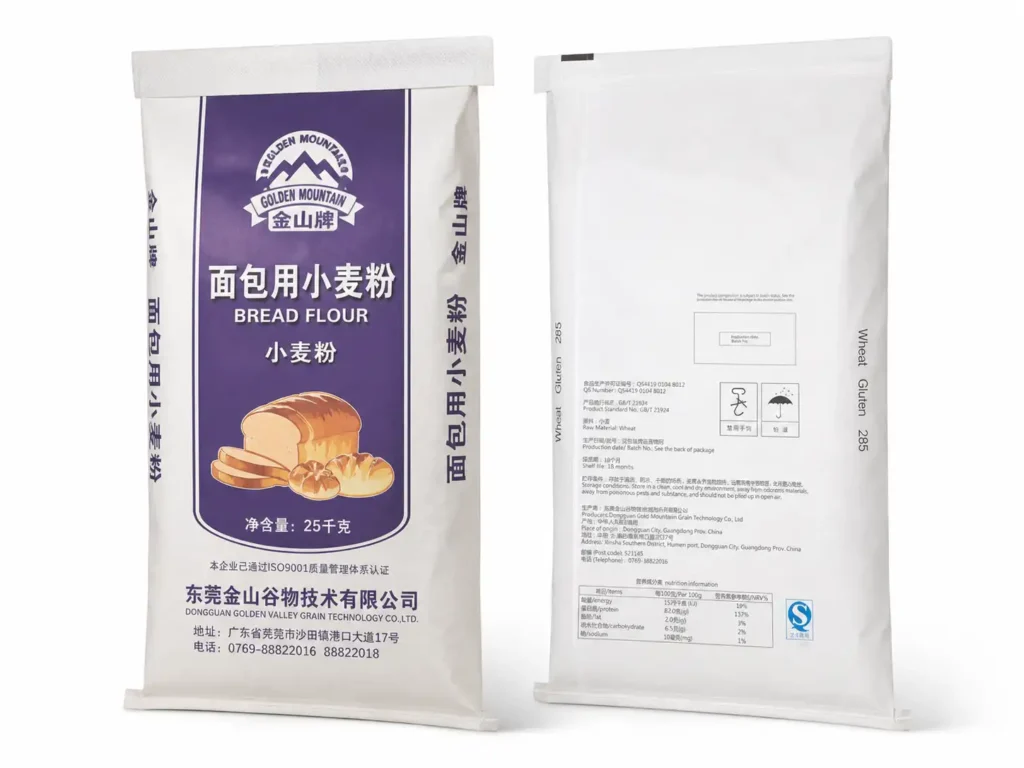
Bleached White Kraft Paper Bags create a bright, clean surface for logos, labels, and retail-facing graphics, which is why white grades are repeatedly linked with print fidelity and premium presentation.
Operations Message
Unbleached Brown Kraft Paper Bags remain highly attractive for cement, minerals, fertilizer, and many chemical or feed applications because the natural brown look brings no penalty in industrial channels while the simplified production route supports lower cost.
Engineering Message
In heavy-duty packaging, color alone never solves moisture, dust, abrasion, or filling-speed challenges. Those outcomes depend on ply count, porosity, liner or film use, seam design, and whether the bag is a paper-only sack or a paper-laminated woven composite.
That is why this report treats Bleached White Kraft Paper and Unbleached Natural Kraft Paper not as simple substitutes, but as specification choices inside a broader packaging program. In one case, the paper must sell; in another, it must survive; in the most demanding cases, it must do both at once. Short journey or long journey. Consumer shelf or dusty plant. Dry product or moisture-sensitive product. Manual filling or automated valve filling. The right answer changes as these conditions change.
How the Two Kraft Papers Are Made
Both papers begin with the same kraft pulping foundation. Wood chips are cooked in an alkaline chemical system so that lignin is dissolved and long cellulose fibers are released. The kraft route is used because it yields strong packaging paper, and official sack-paper sources continue to describe modern sack kraft as a material built on strength, porosity, and mechanical consistency derived from long fibers. The divergence comes after pulping: Unbleached Natural Kraft Paper moves forward with its brown tone largely intact, while Bleached White Kraft Paper passes through extra whitening stages that remove more residual color and produce a brighter surface.
For procurement and product planning, that extra bleaching step matters in three practical ways. First, it raises brightness and visual cleanliness. Second, it increases chemical intensity in production. Third, it usually raises production cost. One market-tracking source cited by the source article states that bleached kraft papers can be more than 20% costlier to produce than unbleached grades and can consume about 2.8 times more in chemical spend during production. That does not make white paper a poor option; it simply means that whiteness is a feature with a real manufacturing price behind it.
Table note: The values above are typical market guidance rather than a single fixed SKU specification. Final bag performance depends on ply count, paper grade, fiber recipe, lamination, liner design, and closure construction.
For VIDEPAK, this production difference is important because customers rarely buy “paper” in the abstract; they buy a finished bag against a target use. A buyer selecting Bleached White Kraft Paper Bags is often paying for visibility, clearer codes, cleaner brand presentation, and a white outer ply that performs well in print. A buyer selecting Unbleached Brown Kraft Paper Bags is often paying for efficiency, honest industrial appearance, and a broad fit for building products, fertilizers, and transport-led bulk packing. Same family. Different role.
What Changes in Performance
Strength, stiffness, and handling behavior
Kraft paper is valued because it is strong. Industry references consistently describe sack kraft as a high-strength packaging paper with excellent tensile, tear, burst, stiffness, and puncture behavior, and paper-sack associations further note that long, strong fibers and better fiber arrangement enable paper sacks to protect heavy contents while keeping damage rates low. That is why both Bleached White Kraft Paper and Unbleached Natural Kraft Paper remain viable for industrial sacks. Brown grades are often preferred when buyers want maximum “workhorse” signaling, but modern white sack papers also serve valve and open-mouth applications with strong machine performance. The right comparison is not “strong versus weak”; it is “strong with a rugged face” versus “strong with a clean face.”
Printability, visual cleanliness, and code readability
This is where Bleached White Kraft Paper Bags take their clearest advantage. White paper gives stronger contrast, better color accuracy, better barcode readability, and a more premium-looking print platform. Official sack-paper product pages repeatedly pair white and brown grades with strength, but they reserve the strongest print-language for white or premium open-mouth applications. By contrast, Unbleached Brown Kraft Paper Bags still print well, but the brown base naturally mutes light colors and often pushes converters toward darker inks or simpler graphics. Said another way: white paper amplifies image; brown paper carries image. Both work, but they do not speak with the same voice.
Practical Print Callout
If the bag must do branding heavy lifting—strong logos, clean panels, multilingual claims, traceability coding, product instructions, or premium export presentation—Bleached White Kraft Paper usually gives the safer visual result. If the bag will live mainly in a plant, on a pallet, in a warehouse, or on a contractor site, Unbleached Natural Kraft Paper often delivers the smarter cost-performance balance.
Porosity, barrier logic, and sustainability reality
Neither brown nor white kraft paper becomes a moisture or oxygen barrier merely because of its color. Plain kraft is naturally porous, and that porosity can be an advantage in some dry food or powdered applications because it allows products to breathe and allows air to leave the sack during filling. Yet when the product is moisture-sensitive, grease-sensitive, leak-prone, or long-haul exposed, barrier performance must be engineered through coatings, liners, films, or special constructions. Industry sources note that moisture-proof sacks often use two-ply paper with an intermediate PE or bioplastic film, while VIDEPAK also offers PE-coated bags, PE-lined bags, aluminum-laminated formats, and kraft-laminated woven structures. Sustainability follows the same logic: simple, lower-plastic constructions are generally easier to recycle; more complex composites solve functional problems, but they raise design-for-recycling questions.
Table note: The table simplifies common market behavior; final performance depends on grade quality, fiber selection, basis weight, and bag construction.
Applications in Industrial Bag Formats
Valve Paper Bags
Valve Paper Bags are designed for fast, automated filling through a valve opening, and that single fact shapes the whole material discussion. Official sack-paper sources highlight white and brown papers for valve sacks, while VIDEPAK describes its own valve formats as self-closing, fast, clean, and suitable for cement, minerals, chemicals, and other powder products. Industry association guidance adds that valve sacks can be ultrasonically sealed for cleaner filling, lower dust nuisance, and tighter closure without a meaningful loss of line speed. In practice, Unbleached Brown Kraft Paper Bags dominate classic cement, mortar, gypsum, and mineral powder valve applications because these sectors care first about filling rate, dust control, pallet flow, and delivered cost. Yet Bleached White Kraft Paper Bags become highly attractive when the same valve format is used for flour, starch, sugar, pet food, or other products where print clarity and hygiene perception count.
For VIDEPAK, the deeper selling point is flexibility. The company lists paper insert, sonic seal, tuck-in, and poly-lock valve options, which means the right question for the customer is not only “Do you want brown or white?” but also “What is your filler type, your valve spout, your acceptable dust level, your sealing expectation, and your product flow behavior?” A well-specified white valve sack can present a premium face without giving up industrial function; a well-specified brown valve sack can deliver rugged economy without looking outdated. If the product is dusty, use a tighter valve solution. If the product is sensitive, add barrier design. If the product is brand-led, consider white on the outer ply. Spec first, color second.
Multiwall Kraft Paper Bags
Industrial Kraft Paper Bags are often most clearly represented by the multiwall format. VIDEPAK describes these bags as two-to-five-layer constructions used to build stiffness, burst strength, puncture resistance, and stackability for powders and granules, while wider industry references commonly describe multiwall sacks as two or more plies—often three to five plies—depending on the use case. This format is ideal when the package must endure stacking, transport pressure, filling shocks, and warehouse handling over long supply chains. It is also the format where mixed logic becomes especially useful: an outer white ply for appearance, inner brown plies for cost and toughness, or an all-brown setup for industrial economy. That is why multiwall sacks remain central to sectors ranging from cement and agricultural inputs to flour, sugar, feed, and dry chemical products.
The white-versus-brown decision inside multiwall bags depends strongly on sales channel. For building products, fertilizer, and many non-retail industrial materials, Unbleached Natural Kraft Paper is often the natural choice because the bag’s job is to move, stack, and survive. For food ingredients or consumer-visible powders, Bleached White Kraft Paper adds value because the pack must not only protect content but also communicate trust, cleanliness, and label clarity. There is also a middle road. A mixed-ply bag lets VIDEPAK keep the outer appearance clean while using more cost-sensitive internal structure. This is not compromise in a negative sense; it is engineering in a positive sense. Not either-or, but both-and.
Kraft Paper Laminated Woven Bags
Kraft Paper Laminated Woven Bags are where the material conversation becomes most strategic. VIDEPAK defines them as poly-paper bags that combine kraft paper with woven polypropylene, and the company’s broader technical discussion explains why: the kraft face gives paper-like printability and shelf appearance, while the woven reinforcement adds load-bearing strength, tear resistance, shape retention, and tougher handling behavior. This hybrid structure is especially useful for heavy dry goods, rough logistics, export routes, high-abrasion products, or customers who want a paper look with a stronger mechanical spine. It is not just a bag; it is a division of labor inside a bag. Paper outside for message. Woven core for muscle. Optional liner or film for barrier.
Here, both Bleached White Kraft Paper and Unbleached Natural Kraft Paper have a role. A white-faced laminated woven bag is highly compelling for premium chemical ingredients, food-related dry mixes, pet products, or export goods that need strong branding and better handling at the same time. A brown-faced laminated woven bag fits cost-sensitive industrial products that still need more robustness than a plain multiwall paper sack can comfortably provide in rough conditions. The trade-off is recyclability complexity: industry guidance suggests that simpler constructions and lower non-fiber content usually give better paper-recycling performance. So when VIDEPAK recommends a paper-laminated woven structure, it should be because the application truly benefits from the hybrid format—higher puncture risk, higher abrasion risk, stronger load, rougher handling, or a need to blend paper appearance with woven performance.
How to Choose the Right Kraft Paper
Choosing between Bleached White Kraft Paper and Unbleached Natural Kraft Paper for Industrial Kraft Paper Bags is best treated as a multi-factor decision. The first factor is market visibility. If the bag must speak loudly on shelf, carry precise artwork, or present food and pet products with a strong cleanliness cue, white deserves serious consideration. The second factor is product behavior. If the product is dense, abrasive, dusty, or sold in a plant-to-plant industrial channel, brown often provides the better cost story. The third factor is moisture and leak risk. If the contents are humidity-sensitive or fine enough to sift, color is secondary; barrier layers, liners, and closure design take priority. The fourth factor is filling system. High-speed valve filling, open-mouth sewing, pinch-bottom sealing, and satchel-bottom conversion each change what the paper must do.
Food-contact and compliance questions must also be addressed carefully. Official U.S. food-contact regulations cover components of paper and paperboard for contact with aqueous, fatty, and dry foods, while paper-sack industry guidance emphasizes that hygienic sack construction depends not only on the paper itself, but also on the chosen inks, glues, multilayer composition, storage conditions, and migration assessment. This matters because buyers sometimes assume that “white means food-safe” and “brown means industrial.” That is too simple. Both white and brown papers can be food-contact compliant when correctly produced and specified. The real question is whether the full pack design—paper, adhesive, barrier, ink, and process control—matches the regulatory and hygiene need.
Selection Rule of Thumb
If the bag sells the product, start with Bleached White Kraft Paper Bags. If the bag mainly moves the product, start with Unbleached Brown Kraft Paper Bags. If the bag must both sell and survive under rough logistics, evaluate a mixed-ply or Kraft Paper Laminated Woven Bag solution.
Table note: “Better starting point” means the first option to evaluate, not the only acceptable choice. Real projects should confirm loading weight, bulk density, humidity exposure, filling line type, and desired print coverage before final approval.
There is one more factor that often gets overlooked: buyer psychology. Brown kraft often communicates authenticity, economy, and a more natural or low-processed feel. White kraft often communicates order, cleanliness, and premium control. Those signals are not trivial. They shape how purchasing teams, distributors, and end users read the product before the sack is even opened. In packaging, appearance is never the whole story. But it is always part of the story.
VIDEPAK Configuration Guidance
VIDEPAK is well positioned to turn this material discussion into a product recommendation because its kraft program already covers the main industrial routes: Valve Paper Bags, multiwall sacks, PE-coated sacks, PE-lined sacks, aluminum-laminated sacks, and Kraft Paper Laminated Woven Bags, with capacities broadly stated from 2 kg to 60 kg and with multiple opening, bottom, and sealing options. That means the company can offer not only white versus brown, but also open-top versus valve, paper-only versus composite, stitched versus pasted bottom, and breathable versus barrier-led designs. This scope is commercially useful because customers usually come with a product problem, not a paper theory.
A practical recommendation map for VIDEPAK can therefore be stated as follows. For cement, mortar, gypsum, minerals, and many fertilizer or basic chemical powders, lead with Unbleached Brown Kraft Paper Bags in a multiwall or valve design, then refine closure and barrier only if dust, rain storage, or leak risk requires it. For flour, sugar, starch, feed sold through branded channels, and pet-food-adjacent applications, lead with Bleached White Kraft Paper Bags or a mixed-ply structure with a white outer face. For products that face harsh logistics, abrasion, or stronger handling stress—especially export dry bulk—evaluate Kraft Paper Laminated Woven Bags with either white or brown kraft depending on branding need. For fine or moisture-sensitive powders, shift the discussion quickly toward liners, coatings, or composite barriers, because barrier design matters more than paper color.
Best Fit for Brown
Unbleached Brown Kraft Paper Bags are the natural lead choice for bulk building materials, industrial minerals, fertilizers, and other transport-first applications where cost discipline and rugged appearance matter more than bright graphics.
Best Fit for White
Bleached White Kraft Paper Bags are the stronger lead choice when the pack must look clean, premium, retail-ready, or code-heavy, especially for food-linked powders and brand-visible sacks.
Best Fit for Hybrid
Kraft Paper Laminated Woven Bags or mixed-ply sacks are the stronger route when the customer refuses to sacrifice either appearance or handling durability. They cost more in complexity, but they solve more demanding jobs.
The final commercial message for VIDEPAK should therefore be confident, but not absolute. Bleached White Kraft Paper is not inherently better than Unbleached Natural Kraft Paper. Unbleached Brown Kraft Paper Bags are not inherently more industrial just because they are brown. And Valve Paper Bags are not automatically the right answer simply because the product is powder. Good specification demands a fuller dialogue: product density, product sensitivity, print demand, filling speed, closure type, transport route, and end-market position. When that dialogue is handled well, VIDEPAK can recommend not just a bag, but the right bag. Not only a package, but a packaging strategy. That is the difference between supplying cartons of sacks and delivering engineering value.
In summary, the strongest positioning is this: VIDEPAK offers a broad system of Industrial Kraft Paper Bags in which Bleached White Kraft Paper Bags, Unbleached Brown Kraft Paper Bags, multiwall constructions, Valve Paper Bags, and Kraft Paper Laminated Woven Bags can be matched to real operating conditions. White when clarity must win. Brown when efficiency must win. Hybrid when both must win together. Clear logic. Clear application. Clear value.
- VIDEPAK Product Report on Bleached and Unbleached Kraft Paper for Industrial Bags
Kraft Paper Woven Bags Producer
Professional producer of bleached and unbleached kraft paper woven bags with premium material properties and industrial applications.
Check More →Laminated Kraft Paper Sacks
High-performance laminated kraft paper sacks using bleached and unbleached kraft paper for enhanced durability and industrial use.
Check More →Pasted Paper Valve Bags
Premium pasted paper valve bags made from quality bleached and unbleached kraft paper with excellent strength and packaging performance.
Check More →Multiwall Paper Bags Manufacturer
Leading manufacturer of multiwall paper bags utilizing bleached and unbleached kraft paper for heavy-duty industrial packaging solutions.
Check More →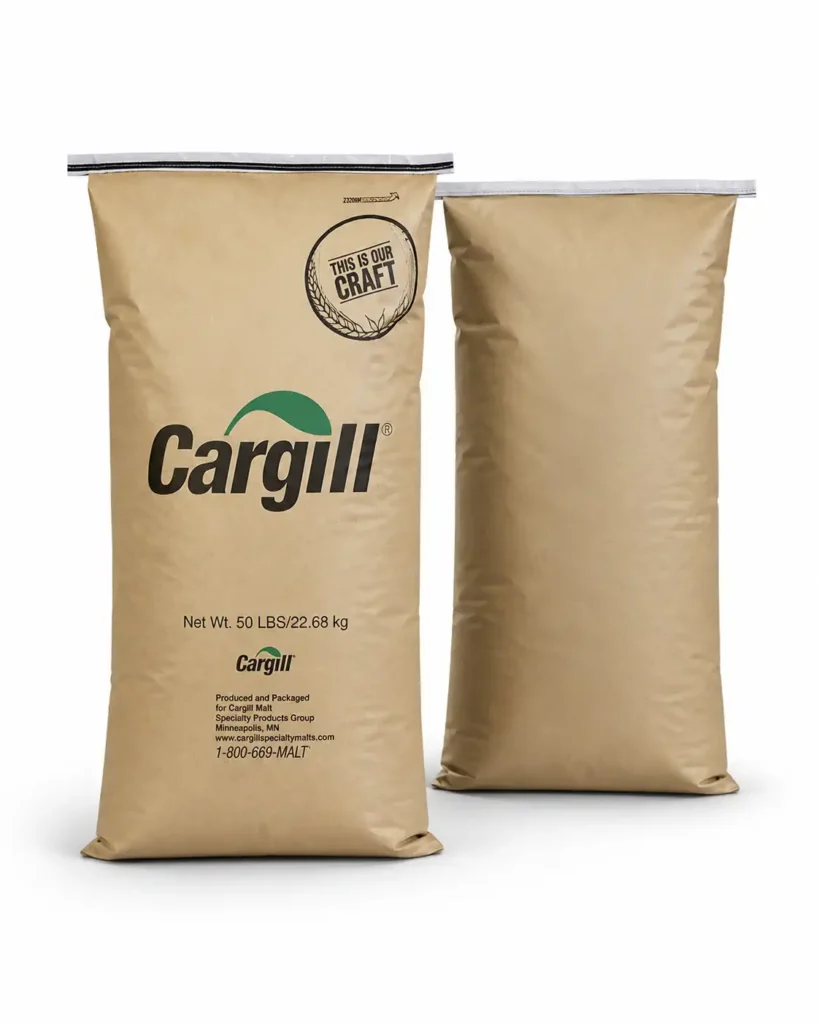
Applications in Multiwall and Valve Bags
Multiwall Paper Bags
Multiwall bags (also called multi-layer kraft bags or multi-ply sacks) are heavy-duty bags made from two or more plies of kraft paper laminated together. They are used worldwide for bulk packaging of powders and granules. Typical contents include cement, sand, fertilizer, grains, flour, sugar, animal feed, chemicals and more. The multiple paper layers give multiwall bags their strength, puncture resistance and stackability. For example, VidePak notes that “multiwall kraft paper bags use two to five layers of kraft paper to build stiffness and burst strength, offering reliable stackability and puncture resistance for powders and granules”.
Multiwall bags can be closed in various ways (sewn ends, pasted ends, pinch bottoms, etc.), but in every case the choice of paper is crucial. Often the outer ply is bleached or unbleached based on the intended market. Packaging manufacturers list both bleached kraft and natural (unbleached) kraft among their standard stocks for multiwall sacks. For example, a construction aggregate bag might use brown unbleached kraft for all plies (maximizing strength and minimizing cost), while a food-grade flour bag might use white bleached kraft at least on the outer ply (for print clarity and a clean look).
Valve Paper Bags
Valve bags are a subtype of multiwall bag designed for fast, automated filling. They have a small self-closing filling valve (usually at one bottom corner) so that bulk materials can be blown or poured in without manual handling. This design is very popular in the cement, mineral, chemical, and even some food industries. VidePak explains: “Kraft Paper Valve Bags are engineered with a self-closing valve for fast, clean, dust-controlled filling… an especially common choice for cement, minerals, chemicals, and other powder products where filling speed and cleanliness matter most”.
Like flat-bottom multiwall bags, valve bags can be made from bleached or unbleached paper. The paper choice again depends on product and customer preference. For example, cement valve bags typically use unbleached brown kraft (it can withstand rough handling and is cost-effective), whereas a pet food or flour valve bag might use bleached white kraft on the outside (to allow crisp logos and suggest hygiene). In practice, the inner plies could even mix grades (e.g. a white ply for printing bonded to brown plies for strength), but often a single grade suffices. In either case, all valve bags must be constructed with the right number of plies and possibly inner liners to meet strength and barrier needs, regardless of paper color.
| Product / Commodity | Bag Type | Preferred Kraft Grade |
|---|---|---|
| Cement, Mortar, Gypsum | Multiwall/Valve | Unbleached (brown) |
| Flour, Sugar | Multiwall/Valve | Bleached (white) |
| Animal Feed, Seeds | Multiwall | Often Bleached (for retail sales) or Unbleached (for cost) |
| Fertilizer, Minerals | Multiwall/Valve | Unbleached (brown) |
| Pet Food, Snacks | Multiwall | Bleached (white) |