
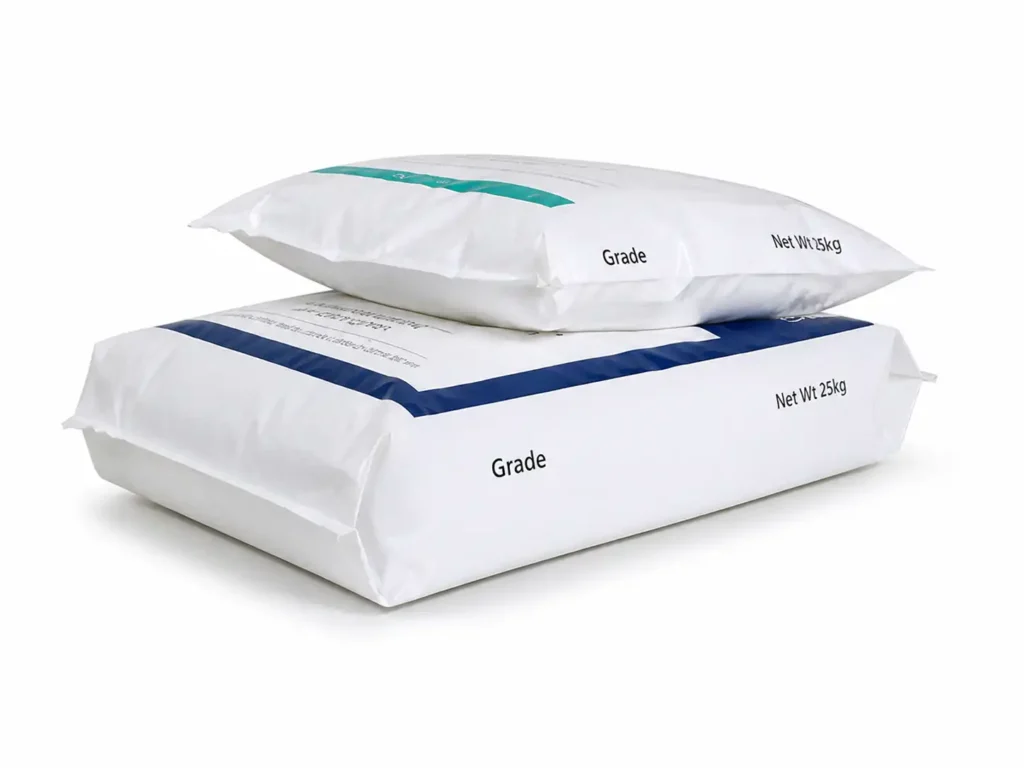
VIDEPAK Product Guide: Co-extruded Polyethylene Industrial Bags
Industrial packaging has a simple job that becomes difficult very quickly: hold the product, protect the product, move efficiently through the filling line, stack safely on a pallet, and arrive looking as controlled as it did when it left the factory. For powders, granules, food ingredients, chemical materials, fertilizers, minerals, polymer resins, and other dry bulk products, the bag is therefore not just a container. It is part of the production system.
VIDEPAK develops heavy-duty multi-layer polyethylene packaging around that system-level view. Founded in Shanghai in 2008, VIDEPAK describes itself as a Chinese industrial bag manufacturer serving customers in more than 70 countries, with more than 500 employees and a product portfolio that includes heavy-duty polyethylene sacks alongside woven, paper, valve, and bulk packaging. Its polyethylene program uses German W&H multi-layer blown-film equipment, and VIDEPAK states that its heavy-duty PE bags are produced through multi-layer co-extrusion to deliver controlled film thickness, strength, sealing performance, and functional flexibility.
VIDEPAK as a Chinese Co-extruded Polyethylene Bag Manufacturer
The core idea behind Co-extruded polyethylene film is straightforward: instead of asking one layer of polyethylene to do every job, several molten layers are formed together into one unified film. Each layer can be tuned toward a different role—such as toughness, stiffness, sealing, surface behavior, or processing stability—while the complete structure behaves as one bag wall. This is why multi-layer technology matters in heavy-duty sacks. A bag must be soft enough to survive impact, stiff enough to run cleanly, sealable enough to protect the contents, and consistent enough to perform at production speed. One material property cannot solve every problem, but a well-designed layer structure can balance several of them at once.
VIDEPAK states that it can manufacture up to nine-layer Co-extruded polyethylene bags and tubular films. Published product information lists a typical width range of about 35–65 cm, thickness of about 0.10–0.25 mm, customized length, and printing of up to 10 colors. The same product information lists flat sides or M-type gussets, heat-seal construction, micro-perforation, air-valve options, and an anti-slip embossing strip. These figures are useful starting points, but the final specification should always be matched to the product density, particle size, filling temperature, closing method, pallet pattern, transport route, and required bag weight.
Packaging principle: Do not buy thickness alone. Buy performance. A thicker film with the wrong seal layer, vent pattern, friction level, or bag geometry can run worse than a better-engineered structure at a lower gauge. The right specification connects film architecture, filling behavior, closure design, and pallet performance.
Scale also matters because industrial buyers need repeatability across many shipments, not one good sample. VIDEPAK’s current polyethylene product page states annual output of more than 500 million PE bags for heavy-duty applications of 5 kg and above. At that scale, dimensional control, film consistency, seal behavior, and converting repeatability become commercial issues as much as technical ones: a small variation repeated over millions of bags can become downtime, waste, poor pallet shape, or extra labor at the customer’s plant. VIDEPAK’s company information also states that its products are manufactured with reference to ASTM, JIS, EN, and ISO standards and that the company operates an ISO 9001:2015 quality-management system. For procurement teams, these points help frame supplier evaluation around documented process control rather than appearance alone.
The application range is intentionally broad. VIDEPAK positions heavy-duty polyethylene packaging for chemicals, food-related products, building materials, and other industrial dry goods, where the same bag may face very different stresses: sharp granules can challenge puncture resistance, fine powder can challenge dust control and venting, moisture-sensitive ingredients can challenge seal integrity, and dense materials can challenge drop performance. The advantage of a Co-extruded structure is not that every bag uses the same recipe; it is that the film architecture can be adjusted around the job. One platform, many performance priorities.
German W&H technology is relevant because blown-film quality begins before a bag is cut, folded, or sealed. W&H describes blown-film extrusion as the foundation for later printing and converting, and its current platform includes multilayer systems for demanding flexible packaging as well as equipment designed specifically for heavy-duty Form-Fill-Seal sack applications. For VIDEPAK, using this type of equipment supports a manufacturing approach in which film formation and bag conversion are treated as connected stages rather than isolated operations. Consistency starts in the bubble; reliability is proven on the filling line.
Top and Filling Interfaces: Valve, Open Mouth, PBOM, and EasyOpen Mouth
The top of a heavy-duty PE bag decides how product enters, how air leaves, how the package closes, and how much labor the line needs. That is why the choice between polyethylene valve bags, standard polyethylene Open Mouth bags, PBOM formats, and EasyOpen Mouth designs should be made from the filling process backward. The bag should fit the machine and the product—not force the machine and product to work around the bag. VIDEPAK’s published polyethylene range includes both open-mouth and valve solutions, while its broader technical guidance describes valve, open-mouth, pinch-style, vented, and easy-opening concepts for industrial sacks.
Valve and Standard Open Mouth: Two Different Paths to the Same Filled Bag
Valve top — built for controlled spout filling. Polyethylene valve bags use a relatively small filling sleeve or valve opening, normally positioned near a corner. The bag is placed on a filling spout, product enters through the valve, and the filled product helps the valve flatten or close as internal pressure builds. Depending on the design and protection level, the valve can rely on self-closing geometry or can receive an additional heat or ultrasonic sealing step. VIDEPAK’s technical material also discusses internal valves, tuck-in sleeves, sealable sleeves, and reduced valve openings as practical ways to tune filling and closure behavior.
For fine powder, fast filling creates a second problem: air. Product entering at speed carries air into the package, and if that air cannot leave, the bag swells like a pillow. That can slow the packer, stress the valve area, create dust at the cut-off point, and produce soft pallets. For this reason, polyethylene valve bags are often specified together with controlled venting such as micro-perforation, vent channels, or other deaeration features. The objective is balance: let air out quickly enough for line speed while keeping powder in and limiting unnecessary moisture exchange.
Standard open mouth — built for access and flexibility. Polyethylene Open Mouth bags are supplied with one end already closed and the top left fully open for filling. After the target weight is reached, the mouth can be heat sealed or otherwise closed according to the selected structure and line. The wide opening accepts a broad range of product flow behaviors and can fit manual, semi-automatic, or automated filling arrangements. It is direct, familiar, and adaptable.
That simplicity is valuable when a plant handles several SKUs, frequently changes filling settings, or needs a bag that is easy to present to a filling head. Standard polyethylene Open Mouth bags also give the buyer more freedom to combine the mouth with flat or gusseted sides, heat sealing, venting, anti-slip texture, and different bottom constructions. In other words, “open mouth” describes the filling interface; it does not limit the rest of the package.
PBOM and EasyOpen Mouth: When Closure Quality and Opening Experience Matter
Pinch Bottom Open Mouth (PBOM) combines an open filling mouth with a pre-formed, tightly closed bottom. In the general PBOM principle, the manufacturer closes the bottom before shipment, while the packer fills through the open top and then creates the final top closure. Traditional pinch formats often use a heat-activated sealing system; for polyethylene constructions, the exact closing method can be engineered around thermally sealable PE layers and compatible converting equipment. The practical goal is the same: create a flat, neat closure with fewer uncontrolled pathways for fine product to escape.
PBOM is attractive when appearance and closure integrity are both important. A pinch-style package presents clean faces for printing, forms a compact top after closing, and can suit dry powders or granules that benefit from a tighter sealed edge. It also creates a clear line of responsibility in the packing process: VIDEPAK supplies the bag with the bottom already finished; the customer fills through the open mouth; the customer’s closing station completes the package. Fast in sequence, disciplined in geometry.
EasyOpen Mouth adds controlled opening to the package life cycle. Instead of asking the end user to cut randomly across the film, the bag can incorporate a designed tear path, pull feature, easy-opening zip, or related opening aid according to the final specification. VIDEPAK’s polyethylene product information lists an easy-opening option, while its technical discussion describes easy-open designs as controlled tear systems intended to open where planned rather than at the weakest accidental point. The advantage is not only convenience. A predictable opening can reduce product spills, improve dosing from the opened sack, and help the package look deliberate from factory to final use.
Bottom Geometry: Block Bottom and Pinch Bottom
The bottom of the bag does quiet work. It absorbs impact when the filled sack drops from the packer, influences how the package spreads under load, determines whether the bag stands or rolls, and affects how much empty space remains between neighboring bags on the pallet. A top design may control filling, but bottom geometry controls much of what happens after filling.
Comparing Block Bottom Stability with Pinch Bottom Simplicity
Block Bottom
A Block Bottom is formed so the base opens into a flatter, more rectangular footprint after filling. The result is a bag that behaves more like a brick than a pillow. VIDEPAK’s polyethylene guidance highlights Block Bottom construction for self-standing stability, while its technical analysis describes square or form-stable bottoms as useful for pallet packing because the filled shape is more controlled.
That geometry is valuable when pallet cube, automatic palletizing, warehouse presentation, or shelf-facing shape matters. Straighter sides can improve contact between neighboring sacks, and the flatter base can make filled bags easier to arrange in regular layers. For polyethylene valve bags, the combination of valve filling and Block Bottom geometry can support a compact industrial package: fast product entry above, stable footprint below.
Pinch Bottom
A Pinch Bottom uses a folded, flattened end that is closed across a defined sealing area. Compared with the more three-dimensional base of a Block Bottom, the Pinch Bottom concept can offer a simpler profile while still providing a secure pre-closed end for open-mouth filling. In pinch-style packaging, the quality of the fold, sealing surface, temperature window, and material compatibility all influence the finished seal.
The format can be useful where buyers prioritize a neat sealed edge, compact empty-bag storage, and strong closure logic over a fully squared base. For PBOM applications, the Pinch Bottom is already completed before the bag reaches the customer’s filling station, leaving the upper mouth ready for product and final closure. Simple in appearance, precise in execution.
Selection shortcut: choose Block Bottom when filled shape, stand-up behavior, and pallet geometry are primary goals. Choose Pinch Bottom when a controlled folded seal, compact profile, and open-mouth packing logic are more important. Neither is universally “better.” The better bottom is the one that solves the downstream problem your product actually creates.
Bottom type should also be considered together with gusset depth, bag width, fill level, and product bulk density. A very deep gusset with the wrong fill volume can produce excess folds; a square bottom with too much headspace can still create a soft package; and a tight Pinch Bottom cannot compensate for trapped air that should have been removed during filling. Bag geometry is a system. One dimension changes the behavior of the others. This is why VIDEPAK’s published technical guidance repeatedly connects bottom design, venting, dimensions, and pallet stability rather than treating each feature as a separate checkbox.
Optional Engineering Features: Gussets, Micro Perforations, Air Valve, and Anti-Slip Embossing Strip
The final performance of a heavy-duty bag is often decided by the options that look smallest on the drawing. A gusset changes volume. A field of tiny holes changes filling speed. An air valve changes how the package settles. An embossing strip changes how one bag grips another. These are not decorative extras; they are tuning tools. VIDEPAK lists gussets, micro-perforation, air valves, and surface texturing among the available options for its heavy-duty polyethylene packaging.
How the Four Options Change Filling, Shape, Airflow, and Pallet Behavior
Gusset. A gusset is a folded section of the bag wall that opens as product enters. Flat bags are simple, but side gussets or M-type gussets create additional volume without requiring a proportionally wider flat bag. More importantly, a properly engineered gusset helps guide the filled sack toward a rectangular cross-section. VIDEPAK’s product information lists flat-side and M-gusset options, and its technical guidance links gusset geometry with “brick-like” packages and better pallet use. For buyers, gusset depth should be selected together with bulk density and target fill weight, because the same 25 kg product can occupy very different volume depending on whether it is a dense mineral or a light granular material.
Micro perforations. Tiny, controlled openings allow trapped air to escape during and after filling. This matters most for fine powders and products that entrain a large amount of air. Faster air release can help the bag settle sooner, reduce ballooning, and create a denser, more regular package for conveyors and pallets. But perforation is always a trade-off: every opening that releases air also changes the barrier of the film. The correct question is therefore not “Do we need holes?” but “How much air must leave, how fast, from which area, while still controlling product loss and moisture exposure?” VIDEPAK’s technical material repeatedly presents micro-perforation as a calibrated deaeration feature rather than random punching.
Air valve. An air valve is different from the filling valve on polyethylene valve bags. Its job is not to receive product; its job is to release trapped air. VIDEPAK offers air-valve configurations for heavy-duty PE packaging, including bag-roll applications. In a suitable design, the valve opens under a pressure difference so air can leave as the filled bag settles. This can reduce the “pillow” effect, help bags move more cleanly through downstream handling, and improve pallet compactness. Whether an air valve is needed depends on product behavior and line design; in many applications, micro-perforations provide the simpler venting route, while a dedicated valve is useful when more controlled air release is required.
Anti-slip embossing strip. Smooth polyethylene can slide against smooth polyethylene, especially when bags are stacked in tall pallet loads, moved by forklift, or exposed to vibration in road transport. An anti-slip embossing strip creates a localized textured lane to increase mechanical grip where adjacent bags contact each other. VIDEPAK’s polyethylene materials describe anti-slip texturing and embossing strip options as tools for pallet stability. Localizing the texture is useful because the whole bag does not need to be rough: the engineer can preserve clean print areas and seal zones while adding friction where friction has value.
From product data to bag specification
Product
Bulk density, particle size, dust, moisture sensitivity, fill temperature
→
Filling
Open mouth or valve, manual or automatic, target speed, air entrainment
→
Bag Geometry
Width, length, gusset, Block Bottom or Pinch Bottom
→
Functions
Micro perforations, air valve, embossing strip, print and easy-open feature
→
Validation
Fill trial, seal check, drop behavior, pallet stability, transport fit
The workflow combines VIDEPAK’s published guidance on product family, top and bottom construction, venting, gussets, and surface treatment.
For a buyer, this workflow prevents the most common specification mistake: choosing a bag by nominal size and weight alone. The better approach starts with the packed product and the filling line, then works outward. A dusty powder may point toward polyethylene valve bags with engineered venting. A plant that values flexibility may prefer polyethylene Open Mouth bags. A customer focused on square pallet geometry may prioritize a Block Bottom and gussets. A product that must leave the sack cleanly at the destination may add EasyOpen Mouth. A slippery pallet may need an anti-slip embossing strip. Each choice answers a different question; together they create one packaging system.
VIDEPAK’s role as a manufacturer is therefore not limited to supplying a piece of polyethylene film in a requested dimension. The value of a multi-layer Co-extruded bag comes from matching film structure, top style, bottom geometry, airflow, surface friction, printing, and closure to the customer’s operation. This is where the nine-layer capability, German W&H blown-film process, broad converting choices, and application-specific options become commercially meaningful. The bag is engineered upstream so the line can run better downstream.
For industrial packaging, strength matters, but predictable strength matters more. Sealing matters, but repeatable sealing matters more. A stable pallet matters, but a stable pallet produced hour after hour matters most. VIDEPAK’s Co-extruded heavy-duty PE portfolio is designed around that chain of priorities: build the film with multiple functional layers, choose the right filling interface, close the bottom for the desired shape, release air where needed, add grip where needed, and verify the complete package under real production conditions. From polyethylene Open Mouth bags to polyethylene valve bags, from Block Bottom to Pinch Bottom, and from micro perforations to the anti-slip embossing strip, the purpose is consistent—turn a flexible bag into a reliable industrial packaging tool.