
VIDEPAK Product Analysis: FFS Roll Bags Built on Multi-layer Polyethylene Film
Core message: modern FFS Roll Bags are not simple plastic sleeves rolled into a coil. They are a machine-focused package format made from engineered Multi-layer Polyethylene Film, designed for high-speed form-fill-seal lines, stable sealing, efficient filling, clean bag shape, and safer pallet movement. In practice, the product succeeds not because one layer is strong, but because the full film structure is balanced: stiffness on the outside, toughness in the middle, sealability on the inside, and option-driven functions such as venting, grip, and shape control where the application needs them most.
What FFS Roll Bags Mean in Modern Industrial Packaging
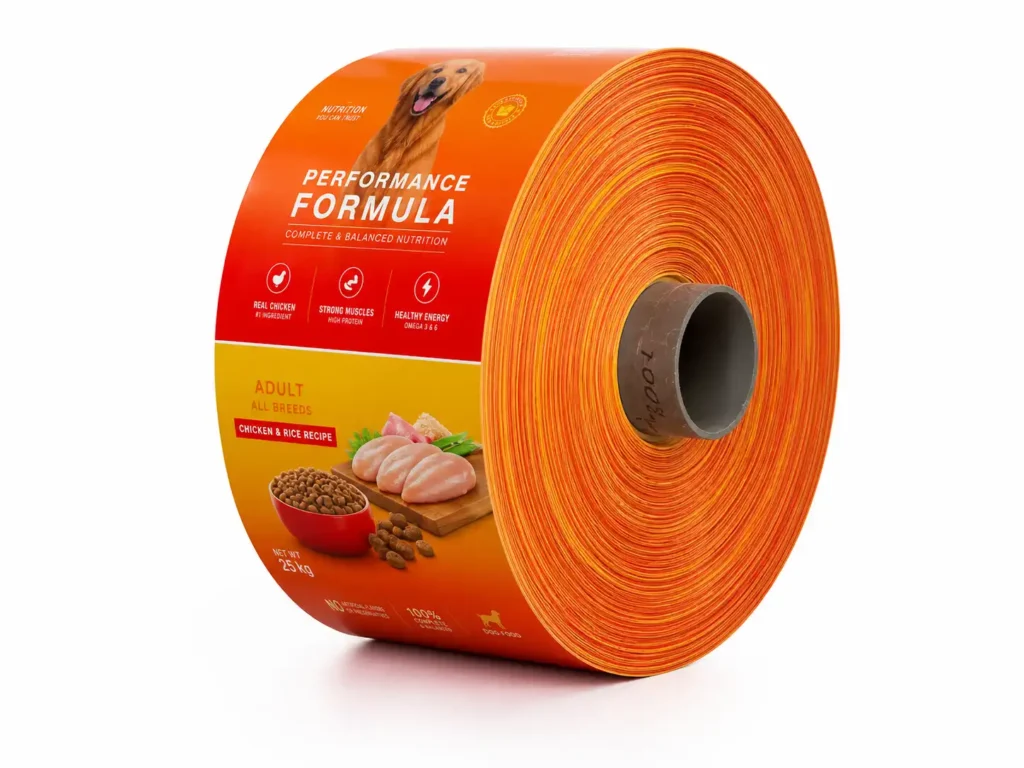
FFS Roll Bags are continuous tubular or lay-flat bagging materials supplied on rolls for automated form-fill-seal packaging. The roll is unwound, the film is formed into a bag length, product is filled, and the mouth is sealed in one linked motion. That sounds simple, yet the real value lies in the chain reaction it creates: fewer handling steps, steadier bag length, faster line speed, less dust release, and more repeatable finished packs. In other words, the PE film does not merely wrap the product; it works as part of the filling machine itself.
For heavy-duty industrial use, the film is typically based on Polyethylene, because Polyethylene combines useful moisture resistance, chemical resistance, impact toughness, and low-temperature performance with the flexibility needed for blown film processing. That combination is exactly why the format is used across fertilizers, resin pellets, minerals, feed, seeds, and powdered chemical materials. It has to run fast, seal fast, hold weight, and still behave well on a pallet. One format. Many demands. That is why structure matters so much.
From a market perspective, this is also why FFS Roll Bags continue to gain attention. Buyers are no longer judging a bag only by thickness or printed appearance. They now look at line compatibility, sealing window, roll quality, bag shape, and warehouse performance together. A bag that fills quickly but slides on the pallet is not a good bag. A film that looks glossy but vents poorly for dusty product is not a good film. Good packaging must run, hold, stack, and travel. All four conditions matter.
How the packaging flow works
Published process descriptions for heavy-duty FFS film explain this same logic: multiple resin streams are combined into one blown bubble, the tube is cooled, flattened, optionally gusseted or perforated, wound into rolls, and then converted on the customer’s automatic form-fill-seal line.
Why Co-extruded Polyethylene Matters More Than a Simple Single-Layer Bag
The technical heart of advanced FFS Roll Bags is not just that they are made from Polyethylene, but that they are made as Co-extruded structures. In a Co-extruded film, multiple resins with different properties are melted and layered in one mold to create a single film. This allows one film to combine heat sealability, flexibility, heat resistance, cold resistance, pinhole resistance, and other target functions without relying on a one-material compromise. It is a smarter build, not merely a thicker build.
That distinction is critical for industrial buyers. A monolayer film can do one or two things reasonably well, but a heavy-duty bagging line asks for more: low variation in gauge, smooth running over forming parts, dependable seal initiation, impact resistance during filling, and enough stiffness to keep bag shape under stacked load. A Multi-layer Polyethylene Film answers those mixed needs by assigning different jobs to different layers. One layer can support slip or print. Another can carry puncture resistance. Another can seal over a useful temperature window. The result is balance, and balance is what keeps the line stable.
There is another advantage as well. Compared with laminated structures, Co-extruded film is produced in a one-step process and allows more precise control of layer ratios. It also avoids the extra adhesive stage required by lamination. For packaging buyers, that means a cleaner structural logic and a more direct path from resin design to final bag performance. In market terms, it means better tuning, faster optimization, and less wasteful overdesign.
HDPE-rich role
Higher-density Polyethylene is widely valued for stiffness, creep resistance, and machine-running efficiency. In practical bag design, it often supports shape retention and top-load behavior.
LDPE-rich role
Lower-density Polyethylene is softer and more ductile, which helps heat sealing and improves flexibility where a bag must bend, conform, and close reliably.
LLDPE-rich role
Linear low-density Polyethylene is often selected for toughness, puncture resistance, and stronger film performance at lower gauge, which is why it is so important in demanding bag film.
The best FFS Roll Bags do not force these resins to compete; they make them cooperate. Stiff where line handling needs stiffness. Tough where sharp particles attack the film. Sealing where the jaws close. This is the practical meaning of advanced material design, and it explains why published heavy-duty PE film recipes often use mixed structures rather than one resin alone.
This layer-by-layer logic is consistent with published descriptions of heavy-duty sack film and coextruded multilayer film, which emphasize sealing performance, impact resistance, load stability, toughness, stiffness, precise layer-ratio control, and the ability to combine multiple functions in one film.
Common Options Buyers Should Understand Before Choosing a Roll
In the market, many bag failures do not come from the base film alone. They come from missed option choices. The standard roll may run well, but the wrong surface treatment can hurt pallet stability. The wrong venting choice can trap air. The wrong side geometry can turn a clean pallet into a soft, unstable stack. This is why the option package deserves as much attention as the base Multi-layer Polyethylene Film. Published VIDEPAK specifications specifically list micro-perforation, embossing strip, flat side or M-type gusset, heat sealing, and other bag-construction options as part of the heavy-duty PE offer.
Micro-perforation
Micro-perforation is the controlled addition of very small holes to the film. In one published heavy-duty PE reference for FFS rolls, micro-perforation is described as tiny pinholes below 100 microns that can add ventilation while still helping prevent moisture from entering. In another published FFS machine context, micro-perforation is offered specifically for powdery products. The message is simple: when the product carries trapped air, especially after fast filling, micro-perforation gives that air a path out of the bag.
Why does that matter? Because swollen bags stack badly. They look full of product, but in reality they are full of air. Air changes shape, shifts load, and weakens pallet order. For powdery or aerated products, controlled venting improves pack compactness and often reduces the soft “balloon” effect seen after filling. Yet there is a trade-off. Better air release usually means less barrier tightness. That is why micro-perforation should be selected when de-aeration matters more than maximum moisture barrier. It is not a decoration. It is a process answer to a product problem.
When micro-perforation makes sense: airy powders, dusty mineral blends, resin systems needing quicker de-aeration, and applications where a flatter final pack improves pallet safety and warehouse neatness.
Embossing strip
Embossing changes the surface texture of the film itself. In published PE FFS references, embossing is described as a way to improve the non-slip character of the bag surface. That matters more than it may seem. Industrial pallets fail quietly at first: one layer shifts, one stack leans, one bag slides half a centimeter, and then the whole unit load begins to lose order. An embossed strip helps the bags grip one another, so the stack behaves less like a pile of smooth sleeves and more like a controlled block.
From a marketing and customer-value angle, embossing is one of the most underrated details in heavy-duty packaging. It does not shout. It performs. It supports pallet stability, improves handling confidence, and can reduce the need to solve a mechanical problem with extra film thickness. Sometimes the smarter answer is not more material, but better surface engineering. This is a classic case of small detail, large effect.
Gusset
A gusset is a folded section built into the side of the tubular film. In practical terms, it gives the bag a defined fold path and more usable volume without losing a compact footprint on the roll. VIDEPAK’s published PE pages list both flat type and M-type gussets, and related engineering discussion explains why this matters: the gusset changes how the bag opens, fills, settles, and stacks. Instead of becoming a loose pillow, the bag becomes closer to a controlled block. That changes pallet density, edge definition, and top-load behavior.
The gusset is therefore not only a capacity feature; it is a logistics feature. A well-designed gusset helps the product settle evenly, supports a cleaner bag shape, and improves the visual order of the pallet. For buyers in fertilizer, resins, feed, or building materials, that matters because the warehouse sees the result every day. A bag is first bought on paper, then judged on the filling line, and finally remembered on the pallet. The gusset belongs to all three moments.
Across published heavy-duty PE bag and FFS references, these options are repeatedly tied to practical outcomes: micro perforation to venting, embossing to non-slip behavior, and gussets to organized pack growth and brick-like shape. That is why option selection should be discussed at the product stage, not after the line starts running.
How FFS Roll Bags Perform on the Line and in the Market
The original line of thinking behind this product category is clear and still relevant today: first define the bag, then explain the material, then show why stronger and more flexible film improves real packaging work. That logic remains correct, but the modern market reads it with even sharper eyes. Buyers now expect the bag to solve four linked tasks at once: run well on the machine, protect the product, deliver a stable pallet, and support brand presentation through consistent film and print quality. That is why FFS Roll Bags are best understood as a system solution, not a commodity roll.
On the line, the most important performance questions are straightforward. Does the roll unwind smoothly? Does the film hold gauge? Does the seal close over a practical temperature range? Does the filled bag drop without split risk? Does the pack settle into a stable shape? Published heavy-duty sack film references emphasize exactly these issues, highlighting sealing and hot-tack performance, impact resistance, package integrity, load stability, toughness, and stiffness as the defining benefits of advanced heavy-duty PE film.
In the warehouse and during transport, the priority changes but the science does not. Now the film must resist rubbing, puncture, creep under load, and pallet shift. A cleverly designed Multi-layer Polyethylene Film gives the bag a wider performance window: it can remain flexible enough to absorb shock while still keeping enough body to hold shape. That dual character, soft yet strong, flexible yet stable, is what buyers actually pay for. Not just grams. Not just microns. Reliable outcome.
Commercial reading of the product: a good FFS Roll Bags program lowers hidden cost in three ways at once—less downtime, fewer sealing defects, and better pallet order. That is why the right film often saves more money than a cheaper film ever can.
The sector fit is broad because the performance logic is broad. Published product pages repeatedly point to chemicals, fertilizers, food ingredients, grains, feed, seeds, resin pellets, and building materials. These sectors differ in end use, yet they challenge packaging in similar ways: weight, dust, trapped air, moisture sensitivity, rough handling, and storage load. That shared stress pattern is exactly why high-quality FFS Roll Bags remain so attractive as a packaging platform.
The figures above come from published VIDEPAK PE bag and FFS tubular film specifications, while related market references for heavy-duty FFS films show thickness windows around 100–200 microns and similar customization logic. Together, they show a product family built for industrial flexibility rather than one fixed bag recipe.
For buyers, the smartest selection method is still the simplest: begin with the product and the line, not with the artwork. If the product is airy, ask whether micro-perforation is needed. If pallet height is aggressive, ask for embossing strip and the right gusset control. If export handling is rough, prioritize toughness and seal integrity. If appearance matters for retail-adjacent industrial packaging, review print, gloss, and bag shape together. Good specification writing is not dramatic. It is disciplined. And discipline wins.
Why VIDEPAK’s FFS Roll Bags Create Product Value Beyond Basic Packaging
VIDEPAK’s published product framework positions its PE solution around advanced multilayer technology, customizable geometry, industrial-grade surface treatment options, and compatibility with high-speed automatic packaging. That matters because today’s customer is not buying film in isolation. The customer is buying uptime, seal confidence, cleaner pallets, and a bag shape that supports both logistics and brand image. In that setting, FFS Roll Bags become a product strategy, not just a packaging item.
The deeper advantage is the way the format converts material science into daily operating value. A Co-extruded build lets different Polyethylene properties work together in one roll. Multi-layer Polyethylene Film lets stiffness and flexibility live side by side. Micro-perforation controls air. Embossing strip controls grip. Gusset controls shape. Layer by layer, option by option, the package becomes more exact. Not louder. Better.
This is why the product reads so well from a market department angle. It speaks to real customer pain points in clear language: faster lines, fewer split bags, neater stacks, stronger visual presentation, and more dependable delivery performance. It also aligns with the current packaging direction toward smarter downgauging and more efficient material use, because a well-designed Co-extruded structure can often improve performance through design accuracy rather than through blind thickness increase. Stronger where it matters. Lighter where it can be. That is not only good engineering; it is good business.
Final view: the market strength of VIDEPAK’s FFS Roll Bags lies in one powerful idea—use advanced Polyethylene film design to make the whole packaging chain more stable. The roll runs better. The bag seals better. The stack stands better. And when those three things improve together, the customer sees more than a bag. The customer sees control.
- VIDEPAK Product Analysis: FFS Roll Bags Built on Multi-layer Polyethylene Film
- What FFS Roll Bags Mean in Modern Industrial Packaging
- Why Co-extruded Polyethylene Matters More Than a Simple Single-Layer Bag
- Common Options Buyers Should Understand Before Choosing a Roll
- How FFS Roll Bags Perform on the Line and in the Market
- Why VIDEPAK’s FFS Roll Bags Create Product Value Beyond Basic Packaging
In industrial packaging, FFS (Form-Fill-Seal) Roll Bags have become a pivotal solution for many sectors. These bags, whether referred to as FFS Roll sacks, Tubular Woven bags, or FFS PP Bags, serve crucial roles in packaging a wide range of products, from granular materials to bulk items. Their strength, adaptability, and efficiency in high-speed production lines have earned them widespread usage.
In addition, recent advancements in material technology—especially through collaboration with major chemical enterprises and research institutes—have significantly enhanced the structural integrity of these bags. By developing modified raw materials and introducing performance-enhancing additives, these new FFS Woven Bags offer not only improved strength but also exceptional elongation and tensile properties, making them indispensable in industrial applications.
Polyethylene FFS Film for 50kg
High-strength FFS roll bags designed for 50kg packaging, optimized for material flexibility and durability.
Check More →Polyethylene FFS Films
Advanced FFS roll bag films with upgraded composition, strength and flexibility for industrial packaging.
Check More →Heavy-Duty Polyethylene Bags
Reinforced FFS roll bags with superior material strength and flexibility for heavy-duty packaging needs.
Check More →Multi-Layer PE Valve Bags
Multi-layer composite FFS roll bags with enhanced structural composition and flexible performance.
Check More →What Are FFS Roll Bags?
FFS Roll Bags are made using advanced Tubular Woven bags technology and are designed to be used in Form-Fill-Seal (FFS) machines. This packaging system is fully automated and helps industries achieve high-speed production by continuously forming, filling, and sealing bags in a streamlined process. The bags are typically made from polypropylene (PP) woven material, which provides high tensile strength, excellent durability, and resistance to external elements.
A standard roll of FFS bags contains multiple bags connected end-to-end. The number of bags per roll can vary depending on the dimensions and application but typically ranges between 500 to 1000 bags per roll. Larger bags, especially those used for industrial purposes, tend to have fewer units per roll due to their increased size and thickness. Smaller, lightweight FFS bags, however, can contain more units per roll.
Here is an example table illustrating typical specifications of FFS Roll Bags in different industries:
| Bag Type | Bag Width (cm) | Bag Length (cm) | Bags per Roll | Weight per Bag (g) | Material Composition |
|---|---|---|---|---|---|
| FFS Roll Bags (Small) | 30 | 50 | 1000 | 45 | 100% Virgin PP |
| FFS Roll Bags (Medium) | 45 | 75 | 750 | 85 | Modified PP with Additives |
| FFS Roll Bags (Large) | 60 | 90 | 500 | 130 | Reinforced PP with Additives |
| FFS Roll Sacks | 75 | 120 | 300 | 200 | PP Woven with Strength Enhancers |
As seen in the table, the quantity of bags per roll is influenced by the bag size and weight, with larger and more robust bags being supplied in fewer quantities per roll.
Applications of FFS Roll Bags
FFS Roll Bags are versatile and widely used in various industries such as:
- Agriculture: Packaging of seeds, fertilizers, and animal feed.
- Chemicals: Containing powdery or granular materials such as fertilizers, resins, or minerals.
- Construction: For bulk materials like cement, sand, and gravel.
- Food Products: Used in bulk packaging of grains, rice, sugar, and flour.
The ability to customize FFS PP Bags, with multi-color printing and size modifications, makes them a preferred choice for branding purposes, especially in competitive industries.
Advancements in Material Science for FFS Woven Bags
The recent collaboration between leading chemical companies and research institutions has resulted in significant innovations in the materials used to produce FFS Woven Bags. This collaboration has focused on creating modified raw materials that not only maintain the traditional strength of polypropylene but also offer increased flexibility, elongation, and resistance to external stressors.
1. Enhanced Strength and Durability
One of the primary concerns for any woven bag is its strength. The mechanical properties of the FFS Woven Bags need to withstand rough handling during transportation and storage. To address this, the latest advancements include the use of additives that enhance the tensile strength of the bags.
The inclusion of high-strength fibers within the PP matrix ensures that these bags can hold significant weight without tearing or stretching excessively. In industries like construction or chemicals, where materials like cement or fertilizers are densely packed, this increased strength is invaluable.
2. Improved Elongation and Flexibility
The addition of flexible polymers and other elastomeric additives to the polypropylene material has significantly enhanced the elongation properties of these bags. Traditionally, woven bags made from standard PP are rigid and have limited flexibility, which can lead to breakage under stress. However, the new modifications allow the bags to stretch to a greater extent without tearing. This property is crucial when the bags are used to package bulky or irregularly shaped items.
3. Heat Resistance and Barrier Properties
Modified FFS Woven Bags now exhibit better resistance to heat, ensuring they maintain their structural integrity even when exposed to high temperatures during storage or transportation. This feature is especially important for sectors like chemicals, where products may be stored in variable environmental conditions.
Furthermore, barrier properties against moisture, UV light, and chemicals have been improved, ensuring that the contents remain protected from environmental degradation. By preventing moisture ingress, these bags help in maintaining the quality of the packaged materials, whether it’s agricultural produce or industrial raw materials.
4. Additive Formulations for Performance Enhancement
A key aspect of the improvements in FFS PP Bags lies in the additives used to enhance their performance. The collaboration between the chemical companies and research institutes has resulted in the development of a new range of additive formulations that address specific performance requirements, such as:
- Anti-UV Additives: Protects the bags from ultraviolet degradation, particularly important for products exposed to sunlight.
- Anti-Static Additives: Ensures that the bags do not accumulate static electricity, which is crucial for packaging sensitive products like powders or chemicals.
- Flame Retardants: These additives are used when the bags are intended to carry flammable materials, reducing the risk of combustion.
These additives are carefully chosen to ensure they meet international standards for packaging materials and maintain the recyclability of the bags. This focus on sustainability ensures that the enhanced performance of the bags does not compromise environmental safety.
Future Developments in FFS Roll Sacks Technology
Looking forward, the future of FFS Roll Sacks lies in further customization and specialization. With industries constantly evolving, the demand for packaging that can handle more specific requirements is growing. Some of the anticipated trends include:
- Biodegradable Materials: Research is ongoing into making FFS PP Bags more eco-friendly by using biodegradable or compostable materials. This is especially important in industries like food and agriculture, where there is increasing pressure to reduce plastic waste.
- Smart Packaging: Integrating technology into FFS Roll Bags, such as RFID tags or QR codes, can help track and monitor the status of products during transportation and storage.
- Lightweight Solutions: There is a drive towards making lighter yet stronger bags that can reduce shipping costs and improve handling efficiency.
Conclusion
The evolution of FFS Roll Bags, from their traditional usage to the current advancements in material science, demonstrates the importance of innovation in industrial packaging. The introduction of modified raw materials, along with enhanced additive formulations, has provided FFS Woven Bags with superior strength, flexibility, and resistance properties. These improvements make them a crucial component in various sectors, especially those requiring durable and reliable packaging solutions.
Through continued collaboration between chemical enterprises and research institutes, the future of FFS PP Bags looks promising, with more advancements aimed at addressing the specific needs of industries while keeping sustainability in focus.