
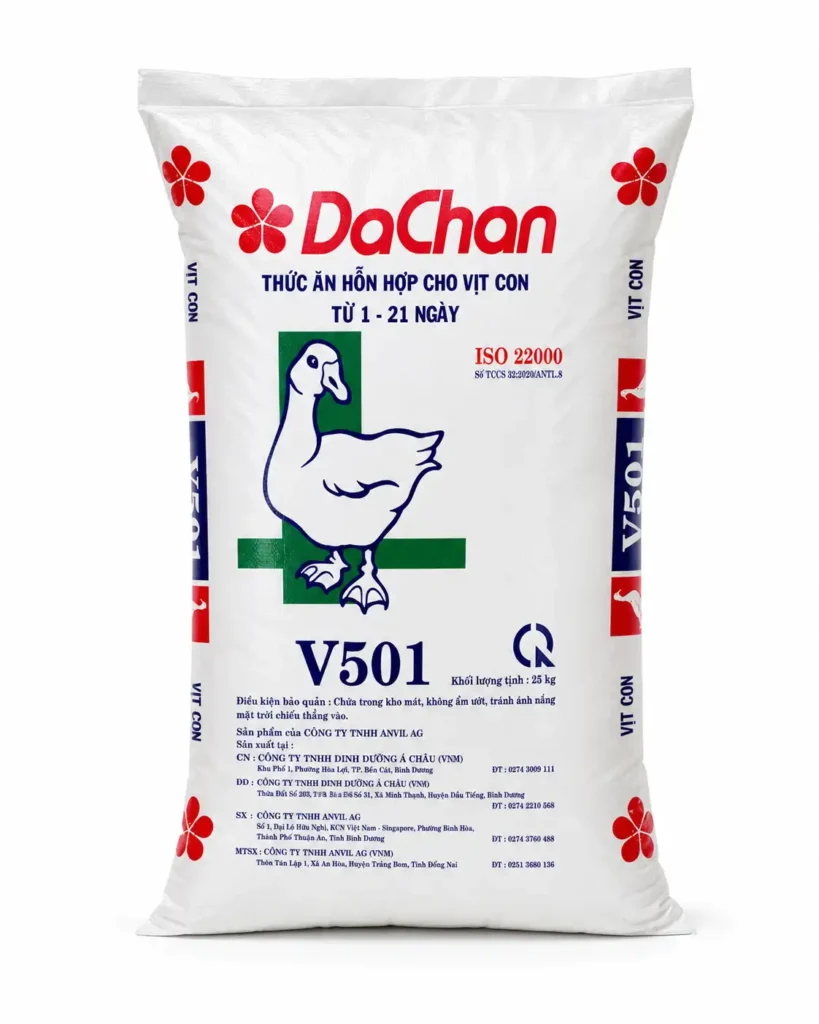
Product Analysis: Why Breathable PP Woven Bags Matter in Modern Feed Packaging
A feed bag carries far more than grain, pellets, vitamins, and minerals. It carries the value created by formulation, milling, conditioning, cooling, storage, and transport. It also carries a promise: the feed inside should arrive clean, dry, identifiable, easy to handle, and ready to support healthy animals. For this reason, selecting Breathable PP Woven Bags is not a small purchasing decision. It is a product-protection decision, a production-efficiency decision, and a brand decision at the same time.
From the market perspective of VIDEPAK, the best Feed Packaging does not chase one feature in isolation. It balances airflow with moisture control, strength with low material use, clean printing with rough logistics, and cost per bag with cost per delivered tonne. That balance is especially important in Livestock feeding and Poultry feeding, where feed may move through hot filling lines, humid warehouses, mixed transport routes, repeated manual handling, and farm environments that are very different from the controlled conditions of a feed mill.
Core product truth: breathability is not the same as waterproofing. An open woven structure can release trapped air and help a recently packed product equalize with its surroundings, but it can also exchange moisture with humid air. A strong specification therefore starts with the feed, the filling temperature, the local climate, the storage time, and the route—not with a generic claim.
VIDEPAK manufactures woven polypropylene bags from virgin resin and offers configurable size, fabric weight, coating, liner, gusset, closure, printing, anti-slip treatment, and bottom structure. Its published PP woven bag range covers common pack weights from 5 kg to 50 kg, customizable dimensions from about 40 × 60 cm to 120 × 180 cm, and typical fabric grammage from 80 to 150 GSM, with the final build set by the product and route.
The Protection Problem Behind Every Feed Bag
Dry feed looks stable, but it is never fully separated from its environment. Warm pellets can carry residual heat. Fine meals can trap air during fast filling. Grain-based formulas can absorb moisture when relative humidity rises. Oil-rich aquatic feed can be sensitive to oxygen, heat, and handling damage. Premixes may contain small-dose nutrients that need strong protection from contamination and loss. In other words, one bag may need to vent; another may need to resist vapor; a third may need both functions in carefully controlled zones.
Feed safety guidance supports this systems view. International good-practice guidance says that feed should be kept dry, protected from contamination, stored in suitable packaging, and handled in clean facilities with controlled temperature, humidity, ventilation, and pest activity. It also recommends pallets or a water-impermeable layer between bagged commodities and the floor. U.S. animal-food guidance likewise treats environmental moisture as a critical risk factor in dry processing and explains that water activity influences the ability of microorganisms to grow.
What a Breathable Woven Structure Actually Does
Breathable PP Woven Bags are made from oriented polypropylene tapes woven across one another to form a strong, flexible fabric. Small channels remain where the tapes cross. In an uncoated or selectively vented construction, these channels allow air to move through the wall more easily than it would through a continuous film. This can help release entrained air after filling, reduce bag ballooning, improve pallet shape, and support faster cooling when warm product is packed under controlled conditions.
The same structure gives the bag its mechanical value. Load is shared across many tapes, so the sack can resist pulling, flexing, and routine drops while remaining light. The woven body also tolerates repeated lifting and stacking better than a weak, brittle package. Yet the weave must be engineered. A coarse mesh can improve air exchange, but it may increase dust leakage and reduce print smoothness. A tighter mesh improves surface coverage and product retention, but it can slow air release. The design is a dial, not a switch.
Air Release
Reduces trapped-air volume after fast filling and helps the bag settle into a more stable shape.
Load Strength
Oriented tapes distribute stress through the woven body and support demanding transport cycles.
Stack Control
Gussets, anti-slip treatment, and controlled air release improve pallet geometry and reduce bag movement.
Brand Surface
Printing turns practical Feed Packaging into a clear carrier of identity, instructions, and traceability.
A common mistake is to ask the package to “breathe” and “block all moisture” at the same time. A fully open weave cannot be a complete humidity barrier. A continuous coating or sealed PE liner improves protection against outside moisture and fine-particle leakage, but it also limits free air exchange. The practical answer may be an uncoated woven sack, a lightly coated structure, a micro-perforated laminate, a loose liner, a liner with controlled venting, or a zoned design that protects the main panels while letting air escape through selected areas.
This is why VIDEPAK treats Feed Packaging as an engineered system. The question is not “Is the bag breathable?” The better questions are: How much air must leave? How quickly? Is the feed still warm? Is the formula dusty? Will the pallet enter a humid warehouse? How long will it remain there? Will the bag be opened once or used repeatedly on a farm? Those questions turn a broad product category into a fit-for-purpose specification.
How VIDEPAK Engineers the Product
The product platform begins with polypropylene resin, which is extruded into film, slit into tapes, stretched to orient the polymer, and woven into fabric. The fabric is then cut, printed, coated or laminated when required, formed with flat sides or gussets, and closed with a selected seam. Each step changes performance. Tape width affects coverage. Tape strength affects carrying ability. Mesh affects airflow and sifting. Fabric weight affects robustness. Coating affects barrier and print. Stitching affects seam integrity. The complete bag is only as strong as the least controlled step.
VIDEPAK states that its PP woven bags use virgin polypropylene and can include tear resistance, UV protection, anti-slip surfaces, PE layers, PE inner bags, several opening styles, and several bottom constructions. Its published options include flat and gusseted bags, sewn open mouth formats, block bottoms, fold-over stitching, heat-sealed tape stitching, transparent windows, and laminated surfaces for stronger graphics and improved moisture resistance.
A Parameter Matrix for Buyers and Product Teams
| Design Parameter | Published or Typical Window | Performance Role | Decision for Feed Packaging |
|---|---|---|---|
| Nominal Capacity | 5–50 kg | Sets basic geometry and handling method | Match fill weight to bulk density, headspace, and pallet pattern |
| Finished Size | About 40 × 60 cm to 120 × 180 cm, customizable | Controls volume, bag shape, and shelf face | Set from product density and desired filled dimensions, not weight alone |
| Fabric Grammage | 80–150 GSM in the published general range | Influences strength, stiffness, and material use | Raise for abrasive feed, long routes, or repeated handling; optimize for standard routes |
| Mesh Density | Common engineering band around 8 × 8 to 13 × 13 tapes per inch | Balances breathability, sifting, strength, and print laydown | Use coarser structures for easier venting; tighter structures for fines and premium graphics |
| Surface Build | Uncoated, coated, laminated, or lined | Changes air exchange, moisture resistance, dust control, and graphics | Select the minimum barrier that safely supports the product and route |
| Bag Shape | Flat, side-gusseted, or block-bottom | Affects filling, display, cubing, and pallet stability | Choose gussets for lower-density feed and a squarer filled pack |
| Closure | Sewn, taped seam, heat-assisted closure, easy-open options | Controls leakage, opening experience, and tamper evidence | Validate seam strength and sift resistance with the actual feed |
| Functional Add-ons | Anti-slip, UV stabilization, liner, window, handles, custom printing | Adapts the package to route, storage, retail, and farm use | Specify only features linked to a measured risk or commercial need |
The capacity, dimension, grammage, and construction ranges above draw on VIDEPAK’s published product information and technical guidance; final values should be confirmed through samples and performance testing with the customer’s feed and filling line.
For Breathable PP Woven Bags, mesh and surface treatment deserve special attention. A buyer packing coarse pellets may accept a more open weave because sifting risk is low. A buyer packing a fine mineral premix may need a tighter weave, a coating, or a liner because even a small leak creates dust, weight loss, and housekeeping problems. A buyer filling warm pellets may need controlled venting, but a buyer shipping through a monsoon climate may place more value on an external moisture barrier. The correct specification changes with the dominant risk.
Bag geometry is equally important. Capacity in kilograms does not define bag size because feed bulk density varies. A dense mineral blend and a light fibrous ration can have the same weight but occupy very different volumes. VIDEPAK therefore starts with target weight and bulk density, then adds practical headspace for filling, settles the filled dimensions, checks the pallet layout, and only then confirms the cut size. This approach avoids the two costly extremes: an over-large sack that looks loose and unstable, and an under-sized sack that strains the seam and slows the line.
Specification Principle
Do not buy GSM alone. Do not buy mesh alone. Do not buy a coating alone. Buy a verified system: resin + tape + weave + seam + surface + dimensions + filling behavior + pallet behavior. Strong parts can still form a weak package when they are not designed to work together.
Printing completes the product because Feed Packaging is also a communication tool. A clear surface can present the feed type, species, life stage, nutrient information, batch code, production date, storage guidance, and safe-use instructions. For premium retail packs, a laminated face supports detailed graphics and scuff resistance. For cost-focused bulk channels, direct flexographic printing can provide clear brand and regulatory information with less structure. The best choice is not the most decorative option; it is the option that stays readable after filling, stacking, transport, and farm handling.
Application Analysis Across Feed Categories
The original reason for using Breathable PP Woven Bags is simple: different feeds face different combinations of heat, moisture, dust, oil, abrasion, and storage time. The deeper market lesson is more useful: a feed bag should be selected by failure mode. What is most likely to go wrong—caking, sifting, tearing, condensation, odor change, print damage, pallet collapse, or contamination? Once the leading failure mode is clear, the bag structure becomes easier to choose.
Matching Bag Design to Livestock feeding, Poultry feeding, Aquatic Feed, and Premixes
| Feed Segment | Typical Product Behavior | Leading Packaging Risk | Suggested VIDEPAK Design Direction |
|---|---|---|---|
| Swine Feed | Meal or pellets; broad ingredient mix; often high-volume distribution | Warm-fill air, seam stress, humidity, handling damage | Strong woven body, controlled venting, reliable sewn seam, optional coating for humid routes |
| Poultry Rations | Mash, crumble, or pellets; may produce fines during handling | Sifting, caking, dust, loss of bag shape | Tighter weave or light barrier, secure seam, gusset for stable cubing, anti-slip for tall pallets |
| Cattle and Sheep Feed | Pellets, concentrates, grain mixes, or fibrous blends with varied density | Bulging, puncture, inconsistent volume, rough farm handling | Gusseted geometry, higher route strength where needed, easy-open closure, clear feeding instructions |
| Fish and Shrimp Feed | Dense pellets; often oil-rich; quality-sensitive; may travel through humid coastal regions | Moisture ingress, odor change, oil staining, pellet damage | Higher barrier structure or liner, strong print protection, low-sift seams, carefully validated venting only when required |
| Premixes and Additives | Fine, concentrated, high-value powders used at low inclusion rates | Sifting, contamination, moisture pickup, dosing loss | Tight weave plus liner or coating, sift-resistant closure, strong batch coding, controlled clean production |
| Medicated Feed | Requires clear identity, segregation, traceability, and controlled use | Mix-up, contamination, label loss, unauthorized use | High-contrast printing, secure closure, traceability space, barrier matched to the active ingredients |
For Livestock feeding, strength and usability often dominate. Swine, cattle, and sheep feed may be sold in large sacks that move from mill to distributor to farm, where bags are carried, dragged, stacked, opened, and sometimes stored in less-than-ideal conditions. A durable woven body helps protect the load, but farm use also rewards practical details: an easy-open seam, clear feeding guidance, a stable gusseted shape, and a surface that does not become dangerously slippery when pallets are high.
In Livestock feeding, the feed form changes the need for breathability. Coarse pellets release trapped air differently from fine meal. Fibrous blends may need more volume and stronger shape control. Mineral-rich concentrates can be dense and abrasive. Therefore, Breathable PP Woven Bags for Livestock feeding should not be reduced to one standard sack. The bag for a 25 kg high-density concentrate may need a different width, GSM, seam, and vent pattern than the bag for a 25 kg light, fibrous ration.
For Poultry feeding, particle control is often central. Mash can sift. Crumble can create fines. Pellets can break when bags are dropped or compressed. At the same time, high-output poultry-feed plants value fast filling and consistent pallet shape. Breathable PP Woven Bags can release fill air, but the weave must be tight enough to control fine loss. A lightly coated or selectively vented construction can provide a useful middle ground when a fully open weave is too dusty and a fully closed structure traps too much air.
Good Poultry feeding outcomes depend on far more than the bag, and packaging should never be presented as a cure for wet feed or poor storage. Feed must be dried or cooled to an appropriate condition before packing, and warehouses must remain clean, dry, ventilated, and protected from pests. The package supports those controls; it does not replace them. This distinction matters because it keeps product claims honest and gives customers a more reliable operating plan.
Aquatic feed usually shifts the balance toward barrier. Fish and shrimp pellets can contain oils and other sensitive nutrients, and many distribution routes lead through humid coastal regions. In such cases, an open weave may create more risk than value after the product has cooled. VIDEPAK may therefore recommend a coated or laminated woven sack, a PE liner, or controlled micro-venting that releases air during packing while reducing later exposure. The marketing message is not “more breathability is always better.” It is “the right breathability protects the product better.”
Premixes, additives, and medicated feeds require a different discipline. They are often fine, concentrated, and high in value per kilogram. Small losses can affect dosing accuracy, while contamination or label confusion can have larger consequences than they would for ordinary grain. Here, Feed Packaging should emphasize sift resistance, secure closure, clean materials, clear batch identification, and a barrier matched to the formula. Breathability may be limited to a controlled vent path rather than the full bag wall.
Market Positioning for VIDEPAK
The strongest value proposition is not a universal bag. It is a configurable platform that moves from open and highly breathable to coated, lined, or laminated, while keeping one woven strength base. This lets feed producers build a family of packages for different formulas without losing a consistent brand system.
This platform approach also supports portfolio clarity. A feed producer may use economical direct-printed Breathable PP Woven Bags for standard inland products, higher-barrier laminated Feed Packaging for premium aquatic formulas, lined sacks for fine premixes, and gusseted anti-slip bags for high-speed Poultry feeding products. The package changes where the risk changes, while colors, logos, coding areas, and layout remain consistent across the range.
Selection, Quality Control, and Long-Term Value
A high-performing bag program begins before production. VIDEPAK needs the target weight, bulk density, particle form, filling temperature, line type, filling speed, desired air-release time, storage climate, route length, pallet pattern, expected stacking height, printing file, and applicable contact or labeling requirements. Without these inputs, bag selection becomes guesswork. With them, it becomes a controlled development process.
A Practical Development Flow from Feed Data to Commercial Supply
weight, density, particles, temperature
moisture, air, sift, puncture, UV
mesh, GSM, liner, coating, shape
fill, vent, seal, drop, stack
limits, artwork, inspection plan
The sample trial should use real feed whenever possible. Empty-bag strength data is useful, but a filled sack creates stresses that laboratory fabric strips do not fully reproduce. The trial should observe filling speed, dust, air-release time, mouth control, seam quality, filled dimensions, pallet fit, compression, drop behavior, print scuffing, and opening. For Breathable PP Woven Bags, the team should also check whether the selected airflow remains helpful after the feed cools and enters the customer’s real humidity conditions.
Quality control then turns the approved sample into repeatable supply. VIDEPAK describes raw-material inspection, testing to recognized ISO, ASTM, EN, and JIS approaches, and checks such as tensile, impact, and UV weather resistance according to the product requirement. For a feed-bag program, practical controls may include resin identity, tape width and strength, fabric GSM, mesh count, width and length tolerance, coating weight where used, seam construction, stitch density, print registration, color consistency, bag weight, and finished-bag load tests.
Traceability also matters. Feed operations increasingly rely on hazard analysis, preventive controls, and documented corrective action. Packaging should support that system through readable batch codes, controlled artwork, material records, and clear separation of approved and rejected goods. Regulatory guidance for animal food emphasizes a risk-based approach rather than a zero-risk claim, which is the right model for packaging as well: identify foreseeable hazards, set controls, monitor results, and improve where data shows a gap.
Incoming Control
Confirm resin, additives, inks, liners, and other components against the approved specification.
Process Control
Monitor tape, weaving, coating, printing, cutting, sewing, and conversion before variation becomes waste.
Finished-Bag Control
Check dimensions, appearance, seam, load performance, stack behavior, and required documentation.
Long-term value should be measured beyond unit price. A slightly stronger or better-fitted sack may reduce line stops, rework, leakage, pallet wrap, damaged goods, claims, and brand loss. A lighter bag may reduce material use, but only when it still survives the route. A liner may protect a sensitive feed, but it adds material and can make recycling more complex. A premium printed laminate may raise shelf impact, but direct printing may be enough for an industrial channel. Good procurement compares total delivered cost and total product risk, not only the price of one empty bag.
Sustainability follows the same rule: remove what is not needed, but protect what is valuable. A failed bag wastes feed, transport energy, labor, and packaging together. At the same time, unnecessary layers add material and may reduce compatibility with recycling systems. Design-for-recycling guidance stresses that recyclability depends on the complete package, its components, and the collection and recycling system available in the target market. Therefore, VIDEPAK can support customers by favoring PP-based structures where performance allows, limiting mixed materials, optimizing bag weight through testing, and documenting the final construction—while avoiding broad recycling claims that local infrastructure may not support.
The future of Feed Packaging will be more measured and more specific. Customers will ask for lower material use, better pallet performance, clearer traceability, stronger graphics, faster filling, and better evidence. These goals can conflict. The answer is not one “future bag,” but faster development loops: collect line data, test samples, measure damage, adjust the weave or barrier, and lock the result into a controlled standard.
VIDEPAK’s Product Position
For Livestock feeding, Poultry feeding, aquatic feed, premixes, additives, and other dry nutrition products, VIDEPAK offers a configurable woven platform rather than a fixed commodity sack. The objective is clear: release air when air is the problem, resist moisture when moisture is the problem, add strength where the route demands it, and present the brand clearly from the mill to the farm.
That is the essential role of Breathable PP Woven Bags. They protect through balance. They perform through structure. They create value through fit. In well-designed Feed Packaging, strength is not separated from breathability, branding is not separated from handling, and sustainability is not separated from product protection. Each part supports the next.
For feed manufacturers, the commercial result is practical: fewer surprises on the filling line, cleaner pallets, better use of warehouse space, lower risk of bag failure, and a more consistent customer experience. For animals, the package supports the wider system that keeps feed suitable and identifiable. For VIDEPAK, the product promise is equally practical—engineer the bag around the real feed, the real climate, and the real journey.
Breathable PP Woven Bags Factory
Premium breathable woven bags specially designed for safe and fresh livestock & poultry feed packaging.
Check More →Heavy-Duty HDPE Bags with Venting
Vented breathable woven bags ideal for preserving feed quality in livestock and poultry applications.
Check More →PE Bags with Air Valve
Breathable air-valve woven bags ensuring optimal freshness for animal feed storage and transport.
Check More →Heavy-Duty Woven Bags Guide
Complete guide to breathable heavy-duty bags for efficient livestock and poultry feed packaging.
Check More →The Future of Feed Packaging with Breathable Woven Bags
As the agricultural and livestock industries continue to evolve, the demand for innovative and reliable feed packaging solutions will only grow. Breathable Woven Bags are poised to play a critical role in meeting these demands, offering a combination of durability, versatility, and protection that is unmatched by other packaging options.
At VidePak, we are dedicated to leading the way in this industry, providing our clients with the high-quality packaging solutions they need to succeed. Whether it’s for pig feed, poultry feed, aquatic feed, or any other type of livestock and poultry feed, our Breathable Woven Bags are designed to meet the unique challenges of feed storage and transportation, ensuring that feed arrives at its destination in the best possible condition.
In conclusion, Breathable Woven Bags are an essential tool in the packaging and transportation of livestock and poultry feed. Their ability to control moisture, preserve nutritional value, and protect against pests makes them the ideal choice for farmers and feed manufacturers. Combined with VidePak’s commitment to quality, innovation, and sustainability, these bags provide a reliable and efficient solution that meets the demands of modern agriculture. As we look to the future, VidePak will continue to innovate and expand our offerings, ensuring that we remain at the forefront of the feed packaging industry.