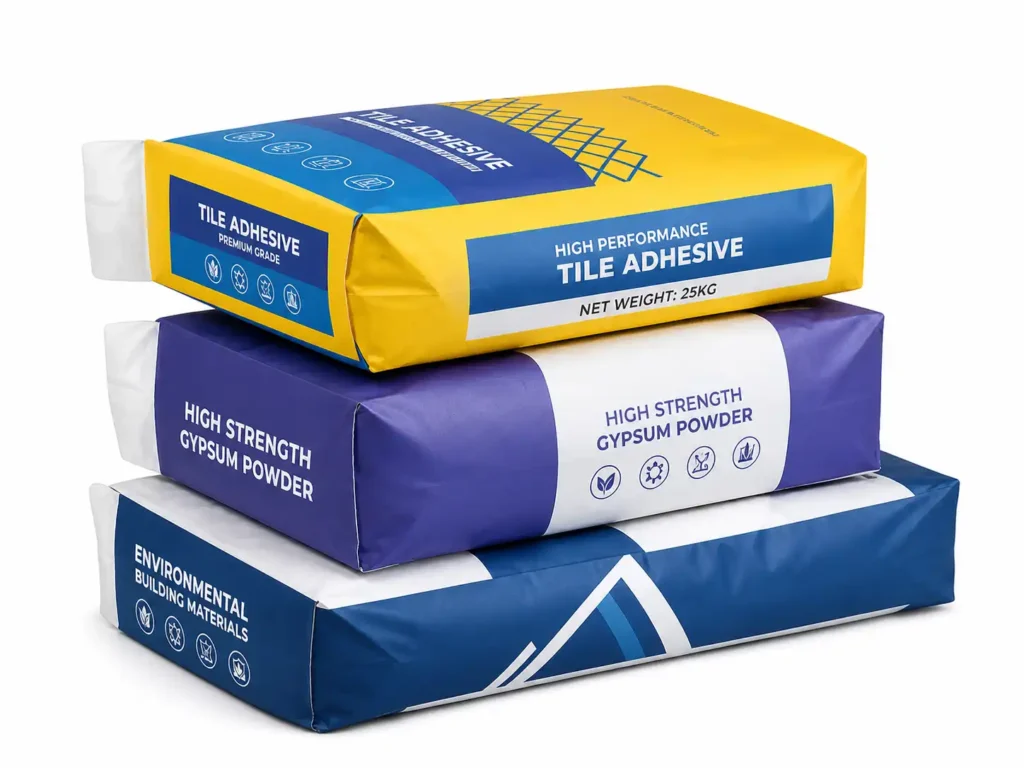
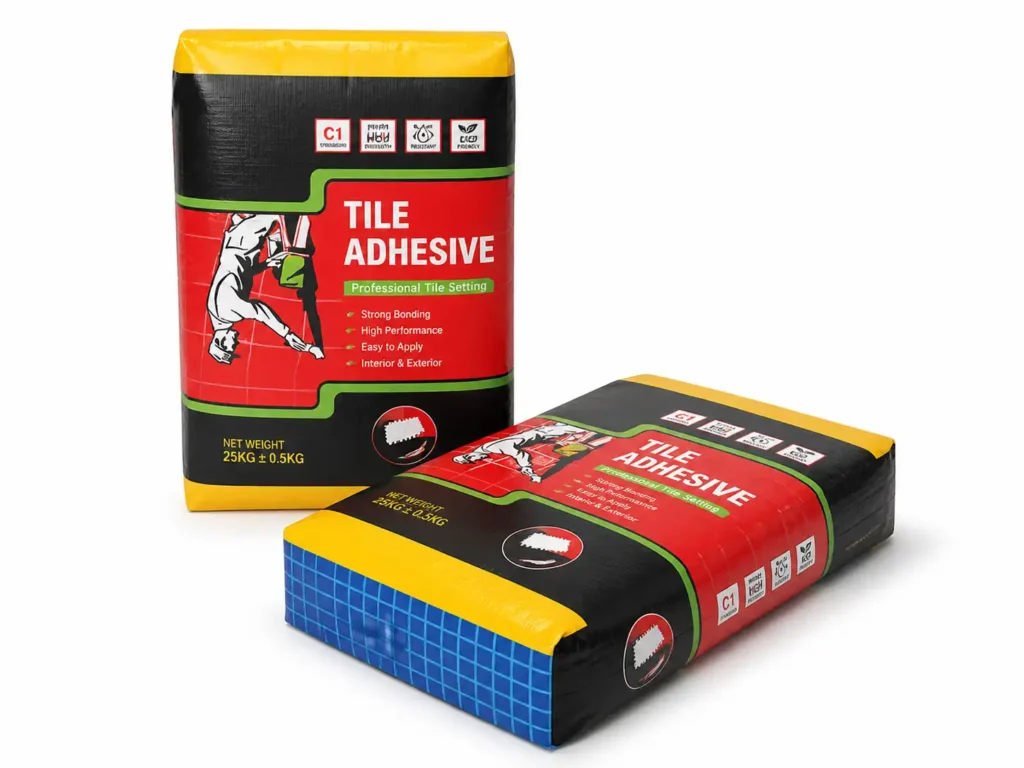
VIDEPAK Valve Bags: High-Performance Packaging for Fast Filling, Clean Handling, and Reliable Logistics
For dry powders, fine particles, and free-flowing granules, packaging has to do much more than simply hold the product. It has to meet the filling spout correctly, release air at the right speed, contain dust, resist impact, keep a stable shape on the pallet, protect the product during storage, and still present the brand clearly when the shipment reaches the customer. This is exactly where Valve Bags show their value.
VIDEPAK develops industrial Valve Bags around the complete packaging process rather than around one isolated feature. The valve, body material, barrier layer, air-release design, print surface, bottom structure, and pallet behavior are considered together. The result is simple to describe: fill faster, close cleaner, stack better, travel safer.
The two major solutions covered in this guide are Multiwall Paper Valve Bags and PP Valve Bags. They share the same basic purpose, but they reach that purpose in different ways. Multiwall Paper Valve Bags use engineered layers of sack kraft to combine stiffness, controlled air release, strength, and a natural paper surface. PP Valve Bags use woven polypropylene to create a light but tough structure with excellent resistance to tearing, moisture, and demanding transport.
Packaging principle: A good Valve Bags program is not built by choosing the thickest bag. It is built by balancing the product, filling machine, air-release requirement, valve geometry, storage climate, handling route, and required barrier. Strength without filling speed is incomplete. Speed without closure control is risky. Barrier without correct deaeration can slow the line. The best specification makes every part work together.
What Are Valve Bags and How Do They Work?
Valve Bags are industrial sacks with a specially formed opening, normally located at one corner of the bag, that fits over or around a filling spout. Powder or granules move through this valve into the bag. As filling ends and the bag leaves the spout, the valve folds, closes through product pressure, or is secured by an additional sealing method depending on the design.
This changes the whole filling process. An open-mouth sack normally needs a separate top-closing operation after filling. Valve Bags, by contrast, integrate the filling opening into the finished bag structure. Less handling. Fewer steps. A more compact package.
For dusty materials such as cementitious blends, minerals, powdered chemicals, starches, feed ingredients, fertilizer blends, and other dry products, this configuration can support cleaner filling because the product enters through a controlled sleeve instead of a completely open bag mouth. Properly designed ventilation or micro-perforation allows displaced air to leave while the product is entering. That balance is critical: air must escape fast enough to prevent ballooning, but the system should not create unnecessary paths for powder to escape.
FAST FILL
The valve is matched to the filling spout so powder or granules can enter quickly while air is managed in a controlled way.
CLEAN CLOSE
Self-closing sleeves, paper inserts, polymer locking structures, tuck-in designs, heat sealing, or sonic sealing can be selected according to the product and line.
STABLE MOVE
A rectangular or block-bottom shape creates a more regular footprint for stacking, palletizing, wrapping, transport, and warehouse handling.
VIDEPAK can configure Valve Bags with paper insert valves, tuck-in valves, polymer locking designs, sealable valve structures, micro-perforation, block bottoms, anti-slip surfaces, liners, carrying features, easy-opening systems, and different print finishes. The choice is not about adding every possible feature. The choice is about adding the features that solve a measurable problem.
That distinction matters. A highly aerated powder may need controlled venting. A moisture-sensitive material may need a liner. A product traveling through humid ports may need a stronger moisture barrier than the same product moving between dry indoor warehouses. A rough construction-material route may demand more puncture and tear resistance. One product, one route, one filling line—and one specification built around all three.
VIDEPAK Multiwall Paper Valve Bags
Multiwall Paper Valve Bags are industrial paper sacks made from several layers of strong sack kraft and formed with a valve for spout filling. The word Multiwall Paper describes the core engineering idea: instead of asking one sheet of paper to provide all required strength, several plies work together, and each layer can be selected for a different job.
The outer layer provides the visible surface. It supports printing, product information, handling instructions, barcodes, and brand graphics. Middle layers contribute mechanical strength and help distribute the energy generated by drops, vibration, compression, and stacking. The inner layer becomes the surface closest to the packed product and may be combined with a coating, free film, or PE liner when extra protection against humidity or fine-powder leakage is required.
In typical VIDEPAK constructions, industrial paper valve sacks can use multiple kraft plies selected according to payload, product density, handling conditions, and barrier needs. Common engineering ranges include approximately two to four kraft plies, with individual paper grammage often in the area of 60–90 g/m² for performance-oriented structures. Final construction is customized rather than selected from one universal formula.
Why multiple layers? Because packaging stress is also multi-layered. Filling creates internal air pressure. Transport creates vibration. Drops create short impact loads. Pallet stacking creates long compression loads. Humidity changes paper behavior. A well-designed Multiwall Paper structure distributes these demands across several plies instead of forcing one layer to solve everything.
Architecture, Valve Options, and Typical Specification of Multiwall Paper Valve Bags
The most common body structure for Multiwall Paper Valve Bags combines extensible or high-strength kraft paper with a pasted bottom and a carefully formed valve sleeve. Brown kraft gives the package a natural industrial appearance, while white kraft creates stronger color contrast for graphics, warning information, and brand presentation. Different paper grades can be selected to balance tensile strength, stretch, stiffness, porosity, and print quality.
Air management is one of the biggest advantages of well-engineered Multiwall Paper Valve Bags. Sack kraft naturally offers controlled porosity, and the bag can also use designed micro-perforation patterns. During filling, this allows entrained air to leave the package. Better deaeration helps the filled sack settle into its intended rectangular form more quickly, supporting consistent weighing, easier palletizing, and more stable unit loads.
However, more ventilation is not automatically better. Fine powders can follow escaping air. For that reason, perforation pattern, paper porosity, valve design, filling pressure, powder particle size, and dust-control system should be evaluated together. The target is not maximum airflow; the target is correct airflow.
Optional liners make Multiwall Paper Valve Bags more flexible across climates. An unlined paper structure offers simpler material construction and natural air release. Add a film barrier, and resistance to moisture rises. Add too much barrier without redesigning the vent path, however, and filling may slow. This is a classic packaging trade-off: protect the product, but do not suffocate the filling process.
The same logic applies to valve closure. A basic self-closing paper valve is practical for many dry materials. A tuck-in design gives extra protection to the valve area after filling. A sealable valve can provide a tighter closure for fine or valuable powders. The correct choice depends on leakage tolerance, filling equipment, distribution distance, and whether the customer requires a more secure final seal.
Multiwall Paper Valve Bags are especially well suited to cement blends, dry mortar, tile adhesive, gypsum, mineral powders, fertilizer products, flour, starch, food ingredients where the full material structure is suitable for food contact, animal nutrition, and selected industrial chemicals. They are often chosen when customers want fast deaeration, a rigid rectangular pack, strong paper-based branding, and an industrial sack that behaves predictably on high-speed filling equipment.
They also create a strong visual message. Kraft paper feels familiar, technical, and direct. Brown kraft communicates an industrial and natural character; white kraft makes colors and text stand out. The package can be simple or premium, functional or highly branded. The material remains the same kind of hardworking platform.
VIDEPAK PP Valve Bags
PP Valve Bags take a different route to performance. Instead of building the main body from several paper plies, VIDEPAK forms a strong woven fabric from polypropylene tapes. The polypropylene, commonly called PP, is extruded, converted into narrow tapes, stretched to orient the polymer structure, and woven into fabric. This woven body gives PP Valve Bags a valuable combination of low package weight, tensile strength, tear resistance, and toughness during rough handling.
Think of the difference this way. Multiwall Paper Valve Bags build strength by combining fiber layers. PP Valve Bags build strength through oriented tapes crossing in two directions. One behaves like engineered paper. The other behaves like flexible woven reinforcement.
VIDEPAK can then add a coating or laminated surface to the woven PP body. A PE extrusion coating can reduce porosity and support a more sealed surface, while BOPP lamination can provide high-quality graphics, added scuff protection, and improved moisture resistance. Optional liners can create an additional internal barrier for products that are highly sensitive to humidity or for fine materials requiring improved containment.
Where PP Valve Bags stand out: demanding logistics. The woven structure tolerates pulling, rubbing, pallet movement, vibration, and local impact better than many simple film or paper-only constructions. For products traveling long distances, passing through several warehouses, or facing rough industrial handling, that mechanical reserve can be highly valuable.
Woven Construction, Performance Options, and Typical Specification of PP Valve Bags
The performance of PP Valve Bags starts with the woven fabric. Tape width, orientation, weaving density, fabric grammage, coating thickness, lamination, valve construction, and final bag geometry all influence the result. A bag may look simple from the outside, yet small changes in these parameters can change how it fills, stretches, stacks, and survives a drop.
Typical engineered PP Valve Bags may use woven fabric around 70–110 g/m², depending on the packed material and route. Common weaving densities can fall around 10 × 10 to 14 × 14 tapes per inch. Laminated options may use PE extrusion coating or a BOPP film layer. Valve openings are customized to the packer spout, with practical designs often falling in a broad range of approximately 10–17 cm. Optional LDPE or HDPE liners can be added when an independent internal moisture or hygiene barrier is needed.
These are design ranges, not ordering shortcuts. A 25 kg dense mineral powder and a 25 kg light feed ingredient do not occupy the same volume. A fast pneumatic filler behaves differently from a slower gravity system. A humid marine route does not create the same barrier requirement as local dry-weather transport. VIDEPAK therefore develops PP Valve Bags from application data rather than simply copying a bag dimension from another product.
Surface treatment also matters. Anti-slip features can increase bag-to-bag friction and help reduce layer movement on pallets. Controlled micro-perforation can provide deaeration where a coated body would otherwise trap too much filling air. Matte areas can make barcodes easier to scan under strong warehouse lighting, while high-quality laminated surfaces can support detailed graphics that remain protected beneath the outer film.
The block-bottom format is another key advantage. After filling, properly dimensioned PP Valve Bags can develop a compact, brick-like shape. More regular geometry means better use of pallet area, fewer projecting corners, more predictable stretch wrapping, and a cleaner visual presentation. A stable pallet is not created by the bag alone, of course; pallet pattern, fill level, surface friction, wrap tension, and handling method all work together. Still, the bag is where that stability begins.
PP Valve Bags are widely suited to cement, mortar, gypsum, minerals, fertilizers, resins, pigments, plastic granules, masterbatch, feed ingredients, salt, sugar, and other industrial or food-related applications when the complete material structure meets the required compliance conditions. They become especially attractive when moisture resistance, puncture strength, long-distance shipping, rough handling, or high-impact branding carries more weight in the purchasing decision.
Choosing Between Multiwall Paper Valve Bags and PP Valve Bags
There is no universal winner between Multiwall Paper Valve Bags and PP Valve Bags. The better package is the one that matches the real job. Paper may provide excellent filling behavior and an attractive natural surface, while woven polypropylene provides exceptional toughness and stronger resistance to difficult transport conditions. Paper can breathe naturally; coated woven structures need engineered ventilation. Woven polypropylene naturally resists moisture better; paper may need additional barrier design for humid routes. Contrast creates clarity.
Start with the product. Is it dusty, abrasive, hygroscopic, free-flowing, oily, coarse, or highly aerated? Then look at the filling line. What is the spout diameter? How fast does the machine fill? Does it use air, an impeller, an auger, or another dosing principle? How does the bag leave the filling head? What final closure is available?
Next comes logistics. Will bags remain indoors, or will pallets wait in open loading areas? Will they travel through tropical humidity, winter cold, or both? Are they moved by conveyor, forklift, clamp truck, or repeated manual handling? A specification that performs perfectly beside the factory may still fail after weeks of shipping if the route was ignored.
Finally, consider presentation and end use. When the paper feel itself supports the brand and filling speed depends strongly on natural deaeration, Multiwall Paper Valve Bags can be an excellent answer. When the route is severe, moisture risk is high, and surface toughness is essential, PP Valve Bags may provide the stronger platform.
The practical rule: Do not ask, “Which material is best?” Ask, “Which failure do we most need to prevent?” Slow filling? Dust leakage? Moisture entry? Corner tears? Unstable pallets? Scuffed graphics? Once the real risk is clear, the choice between Multiwall Paper Valve Bags and PP Valve Bags becomes far easier.
VIDEPAK: From Specification to Finished Valve Bags
A professional Valve Bags program begins before production. VIDEPAK first needs to understand the product, target weight, bulk density, flow behavior, fines content, moisture sensitivity, filling equipment, desired filling rate, spout size, storage climate, pallet dimensions, transport method, print requirement, and relevant compliance expectations. These details form the specification.
The bag then moves through a controlled manufacturing path. The exact equipment differs between Multiwall Paper Valve Bags and PP Valve Bags, but the engineering logic remains the same: control raw material, control dimensions, control surfaces, control valve geometry, and verify the finished package.
PRODUCT DATA
→
BAG DESIGN
→
SAMPLE
→
LINE TRIAL
→
VALIDATION
→
MASS PRODUCTION
For Multiwall Paper Valve Bags, production generally involves preparing and printing the kraft plies, forming the multi-ply tube, controlling longitudinal pasting, inserting any required barrier layer, creating the valve, forming and pasting the block bottom, conditioning, inspection, and palletizing. Alignment matters because misaligned plies can change dimensions. Glue application matters because the bottom and valve depend on it. Moisture balance matters because paper dimensions and stiffness respond to environmental conditions.
For PP Valve Bags, the chain begins earlier. Virgin polypropylene is converted into oriented tapes, woven into fabric, coated or laminated when required, printed, cut and formed, converted into the required block-bottom geometry, and fitted with the selected valve construction. The process combines polymer engineering with bag conversion: tape quality becomes fabric quality, fabric quality becomes bag strength, and bag geometry becomes pallet behavior.
VIDEPAK states that its industrial packaging operations were established in Shanghai in 2008 and employ more than 500 people, with products supplied to more than 70 countries. Its facilities include more than 100 circular looms, multiple extrusion lines, and dedicated lamination and printing equipment. The company uses virgin raw materials for its core woven packaging products and operates quality management around ISO 9001 with testing aligned, where applicable, to ASTM, EN, JIS, and other relevant methods.
Within the Valve Bags category, VIDEPAK reports annual production capacity above 100 million pieces. This scale matters not simply because large orders can be produced; it matters because repeatability becomes essential. A buyer does not need one good bag. A buyer needs the first bag, the ten-thousandth bag, and the millionth bag to run on the same filling line with the same predictable behavior.
Quality, Storage, and Handling of Valve Bags
Finished packaging performance depends on what happens after manufacturing as well. Empty Valve Bags should be protected from unnecessary moisture, dirt, direct weather exposure, and mechanical damage before filling. Filled bags should be palletized in a stable pattern and protected according to the product, bag structure, storage time, and climate.
For Multiwall Paper Valve Bags, warehouse discipline is especially important. Keep pallets away from wet floors. Maintain protective stretch wrapping or hoods until the bags are needed. If only part of a pallet is used, close the remaining protective cover again. Avoid long exposure to direct sunlight and extreme conditions. Store in a clean, dry area and handle pallets carefully so forklift blades do not damage the edges.
Paper packaging should also be matched to the actual humidity route. Plain Multiwall Paper can perform very well under controlled conditions, while humid or coastal logistics may justify a coated layer or liner. Industry research has shown that properly designed multiwall paper valve sacks with a moisture barrier can preserve cement quality for extended storage periods under varying climatic conditions, demonstrating why the total bag structure matters more than a simple “paper versus plastic” label.
For PP Valve Bags, moisture resistance is generally stronger, but good warehousing is still necessary. Protect pallets from sharp objects, contaminated floors, excessive heat, and unnecessary long-term UV exposure unless the specific PP formulation has been designed for the expected outdoor period. Keep pallet loads square, use stretch wrapping appropriate to the surface friction, and avoid unstable stacking simply to increase warehouse density.
Storage checklist for Valve Bags
- Keep empty bags clean, covered, and protected from wet surfaces.
- Keep pallet protection intact until bags are required for filling.
- Match liner or barrier level to humidity, storage time, and product sensitivity.
- Protect pallets from direct sunlight and prolonged outdoor exposure unless the specification is designed for it.
- Avoid forklift puncture, sharp pallet boards, projecting nails, and unstable stacking.
- Use the oldest qualified stock first and maintain lot traceability.
Quality control should follow the same practical logic. For Multiwall Paper Valve Bags, important checks can include per-ply grammage, paper tensile properties, dimensions, valve bond, paste quality, perforation pattern, print registration, and finished-bag appearance. For PP Valve Bags, inspection may include fabric weight, weave consistency, tensile or tear performance, coating or lamination condition, valve dimensions, seal quality, coefficient of friction, printing, and drop performance according to the agreed specification.
Not every customer needs every laboratory test. A food ingredient supplier may focus heavily on material compliance, cleanliness, migration documentation, and traceability. A cement producer may prioritize filling speed, dust control, drop resistance, and pallet stability. A chemical producer may place barrier integrity and traceability first. The test plan should follow risk.
VIDEPAK can support projects from reference samples through customized mock-up samples and final production specifications. For an efficient quotation, buyers should provide the packed product, target net weight, bulk or tapped density, preferred bag size if already known, existing bag sample or drawing, filling-spout dimensions, filling method, target speed, valve preference, required moisture barrier, printing artwork, pallet pattern, expected storage period, destination climate, and annual volume.
With that information, Multiwall Paper Valve Bags can be tuned through ply count, paper grade, Multiwall Paper grammage, valve sleeve, perforation pattern, barrier layer, bottom geometry, and print finish. PP Valve Bags can be tuned through PP fabric weight, weave density, coating or lamination, vent pattern, liner, valve structure, anti-slip treatment, block-bottom dimensions, and graphic surface.
The result is not simply a bag with the correct length and width. It is a packaging system built around the filler, the product, and the journey.
VIDEPAK Valve Bags: engineered to fill, engineered to close, engineered to move. Choose Multiwall Paper Valve Bags when controlled paper breathability, multi-ply strength, clean industrial presentation, and flexible fiber engineering lead the requirement. Choose PP Valve Bags when tough handling, moisture resistance, woven strength, and long-distance logistics carry more weight. Different materials. Different strengths. One goal: packaging that performs from the filling spout to the final customer.