
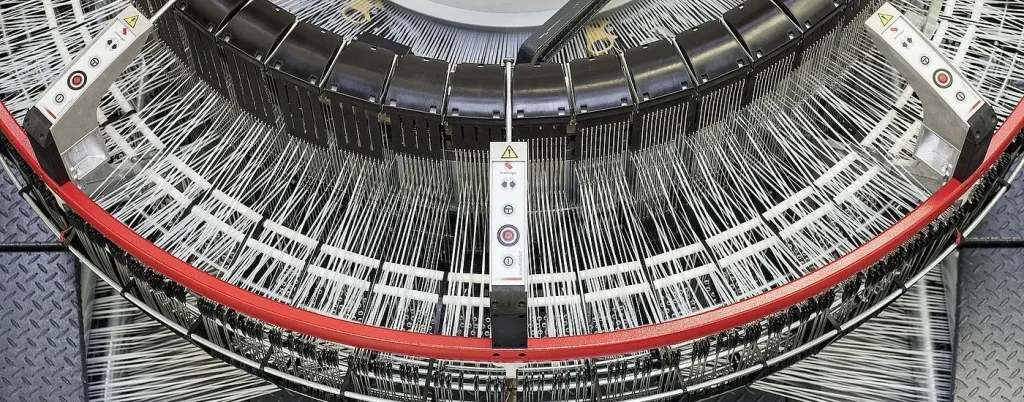
VidePak’s SOS PP fabric bags redefine durability and sustainability, achieving a 99.8% defect-free rate through rigorous raw material screening and compliance with global recycling mandates. By leveraging ISO 9001-certified virgin polypropylene (PP) granules, advanced Austrian Starlinger machinery, and a closed-loop recycling system, these bags meet stringent EU Circular Economy Package standards while reducing landfill waste by 70% in construction and industrial sectors. Since 2008, VidePak has delivered 500 million+ bags globally, combining 30+ years of expertise with a commitment to eco-innovation.
The Critical Role of Raw Material Analysis in Quality Control
Quality begins at the molecular level. VidePak’s SOS PP fabric bags use 100% virgin PP granules, free from recycled contaminants, ensuring uniformity in tensile strength (45–60 N/cm²) and elongation (15–30%). Unlike competitors relying on blended materials, our PP undergoes three-stage testing:
- Purity Screening: Gas chromatography identifies trace impurities (<0.01%), preventing weak spots in woven fabric.
- Melt Flow Index (MFI) Checks: Consistent MFI (8–12 g/10 min) guarantees uniform extrusion, reducing thread breakage during weaving.
- UV Stabilization: PP is infused with UV inhibitors during polymerization, extending outdoor usability to 5+ years without brittleness.
Case Study: Reducing Waste in Construction Logistics
A German waste management firm reported a 40% drop in bag replacements after switching to VidePak’s SOS PP bags for transporting sharp debris. The high-purity PP matrix resisted abrasion from concrete fragments, while laminated BOPP layers (25–30 microns) prevented punctures.
Sustainability & Regulatory Compliance: Beyond Basic Recycling
Aligned with the EU’s 2030 plastic recycling target (55%), VidePak’s SOS PP bags are designed for circularity:
- Recyclability: Post-use bags are shredded, melted, and reprocessed into non-critical items like geotextiles or furniture covers, retaining 85% mechanical strength.
- Government Incentives: Clients in France and Canada qualify for tax rebates under Extended Producer Responsibility (EPR) schemes by using VidePak’s certified recyclable bags.
- Carbon Footprint: Each ton of recycled PP reduces CO2 emissions by 1.5 tons compared to virgin production, supporting corporate ESG goals.
PP Woven Bags Manufacturer
Learn about professional PP woven bags production, raw material selection and quality control standards.
Check More →Woven Fabric PP Bags Features
Explore core features, material advantages and application scenarios of PP woven fabric bags.
Check More →Breathable PP Woven Bags Supplier
Reliable China supplier of breathable PP woven bags with strict raw material inspection.
Check More →Breathable PP Woven Bags Factory
Direct factory supply of PP woven bags with standardized raw material quality control system.
Check More →Technical Specifications
| Parameter | Specification |
|---|---|
| Material Composition | 100% Virgin PP Granules |
| Fabric Density | 90–160 g/m² |
| Tensile Strength | 45–60 N/cm² (longitudinal), 40–55 N/cm² (transverse) |
| UV Resistance | 5+ years (outdoor exposure) |
| Recyclability Rate | 100% (meets ISO 14021 standards) |
| Custom Printing | Up to 8 colors, Pantone-matched |
FAQs: Addressing Procurement Concerns
- How do SOS PP bags compare to non-woven alternatives?
Woven PP offers 3x higher tear resistance (30 N vs. 10 N) and reusability (10+ cycles), ideal for abrasive waste. - Are they compliant with U.S. FDA regulations?
Yes. Our PP resin is FDA-approved (21 CFR 177.1520), safe for indirect food contact during agricultural use. - Can bags be customized for hazardous waste labeling?
Absolutely. We integrate RFID tags and hazard symbols (e.g., “Biohazard”) using UV-resistant inks. - What is the environmental impact of production?
VidePak’s solar-powered facilities cut energy use by 30%, while wastewater is recycled at 95% efficiency. - How does raw material quality affect lead times?
Pre-screened PP granules reduce production delays, ensuring 98% on-time delivery for orders up to 500,000 units.
VidePak’s Manufacturing Edge
With 568 employees and $80 million annual revenue, VidePak’s infrastructure ensures scalability and precision:
- Machinery: 100+ Starlinger circular looms weave fabric at 200 m/min, while 30 lamination machines apply BOPP/kraft layers.
- Quality Assurance: Each batch undergoes ASTM D882 tensile tests and seam burst strength checks (min. 350 kPa).
- Global Logistics: Warehouses in Rotterdam and Houston enable 15-day delivery to Europe/North America.
Case Study: Circular Economy in Action
A Dutch construction firm achieved zero landfill waste by partnering with VidePak:
- Process: Used SOS PP bags were collected, shredded, and repurposed into erosion-control geotextiles.
- Savings: €200,000/year in waste disposal fees and a 25% boost in sustainability ratings.
Future-Forward Innovations
VidePak is piloting blockchain-tracked PP granules (2026 rollout) to ensure material traceability from refinery to recycling.
References
- Guangzhou Nanqixing Nonwoven Co., Ltd. (2023). PP Spunbond Nonwoven Fabric Production Standards.
- Made-in-China (2024). PP Nonwoven Materials Market Analysis.
- VidePak Company Profile. https://www.pp-wovenbags.com/ | Email: info@pp-wovenbags.com
Explore Related Solutions:
- For insights into sustainable material engineering, visit our guide on recyclable PP bags for chemical powders.
- Learn about advanced manufacturing in PP woven bags production.
This article merges technical depth, regulatory insights, and VidePak’s operational excellence to position your brand as a leader in sustainable industrial packaging.