
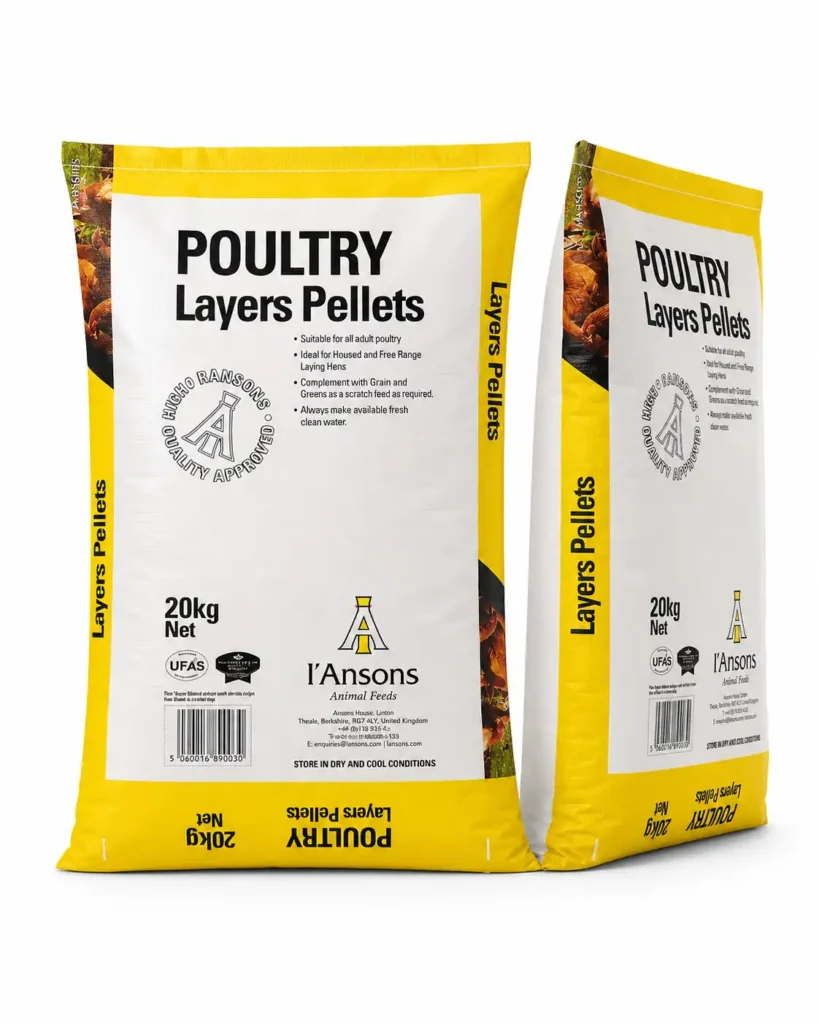
Multiwall Kraft Paper Sacks, Multiwall Paper Sacks and Kraft Paper Sacks: Industrial Packaging Built Around Product Protection, Filling Efficiency and Supply-Chain Performance
Industrial packaging has a simple job that becomes surprisingly complex in the real world: hold the product, protect the product, move the product and present the product. A sack may travel through a high-speed filling line, drop onto a conveyor, enter a warehouse, sit on a pallet, cross borders in a container and finally reach a distributor or end user. At every step, the package must keep working. This is why VIDEPAK develops Multiwall Kraft Paper Sacks, Multiwall Paper Sacks and Kraft Paper Sacks as engineered industrial packages rather than ordinary paper bags.
VIDEPAK’s published kraft paper sack range covers heavy-duty packaging from approximately 2 kg to 60 kg and includes brown and white kraft structures, multiwall constructions, PE-coated options, kraft-paper laminated structures, valve sacks and open-top sacks. The product family is intended especially for powdered and granular materials used in construction, food ingredients, agriculture and chemical-related applications. VIDEPAK also publishes annual kraft paper bag production capacity of more than 300 million pieces.
THE CORE IDEA: The best Multiwall Kraft Paper Sacks are not simply made by adding more paper. Performance comes from matching paper strength, number of plies, air release, barrier design, bag dimensions, filling opening, bottom construction and closure method to the product and packing line. Strength without filling efficiency is incomplete. Barrier without reliable sealing is incomplete. A good industrial sack must work as one complete system.
Understanding the Three Core Product Categories
What Are Multiwall Kraft Paper Sacks?
Multiwall Kraft Paper Sacks are heavy-duty industrial sacks made with multiple layers, or plies, of kraft paper. VIDEPAK describes its multiwall kraft structures as generally using two to five kraft paper layers, with the structure adjusted according to strength, print, breathability, puncture resistance, stackability and product-protection needs. Optional PE inner bags or coated layers can be introduced where humidity control or fine-powder containment is more important than an all-paper structure.
The word “multiwall” matters. One layer can provide the printable outer surface. Another can carry mechanical load. Another can improve resistance to puncture or rough handling. A barrier component can reduce moisture transfer or powder leakage. The result is not merely thicker packaging; it is a structure in which different components can perform different jobs.
What Are Multiwall Paper Sacks?
Multiwall Paper Sacks are the broader industrial category covering sacks constructed from more than one paper ply, including structures in which paper remains the main material while other functional materials may also be present. The current ISO terminology for paper sacks specifically covers both single-ply and multi-ply sacks made from paper or combinations in which paper is the main part, distinguishing these industrial sacks from ordinary retail bags.
In practical purchasing language, Multiwall Paper Sacks can include open-mouth sacks, valve sacks, block-bottom sacks, pinch-bottom sacks, all-paper constructions and sacks with liners or coatings. This makes Multiwall Paper Sacks a flexible platform rather than one fixed product.
What Are Kraft Paper Sacks?
Kraft Paper Sacks describe the wider VIDEPAK kraft-paper packaging family. A Kraft Paper Sacks project can be relatively simple or highly engineered: brown or white paper, flat or gusseted body, valve or open mouth, block bottom or sewn closure, multiple kraft plies, a PE inner bag, a functional coating or a more advanced composite structure. VIDEPAK’s published portfolio includes multiwall kraft paper bags, kraft paper valve bags, PE-coated kraft paper bags and other reinforced kraft structures.
Think of the relationship this way: Kraft Paper Sacks are the broad family. Multiwall Paper Sacks describe the multi-ply industrial concept. Multiwall Kraft Paper Sacks focus that concept specifically on strong kraft-paper structures designed for industrial filling, handling, storage and transport.
Inside Multiwall Kraft Paper Sacks: Materials, Plies and Performance
A high-performing sack begins with the paper. Sack kraft paper is valued because strength and controlled porosity can work together: strength helps the sack survive industrial handling, while suitable porosity can allow displaced air to leave the package during fast powder filling. Industry research has documented major long-term improvements in both sack-kraft strength and porosity, allowing paper sacks to combine efficient filling with lower material use.
Two-Ply, Three-Ply and Heavier Multi-Ply Designs
Two-ply Multiwall Kraft Paper Sacks can be effective where the product and logistics conditions do not justify a heavier construction. Three-ply structures provide more opportunities to balance outer-surface quality, load strength and inner protection. Four- or five-ply structures can be considered when handling conditions, puncture risk, sack weight, product density or transport stress becomes more demanding. VIDEPAK specifically describes multiwall kraft constructions using multiple kraft layers and emphasizes that the structure can be tuned rather than simply standardized around one fixed ply count.
Outer Ply
Supports graphics, product identification and handling resistance. Natural brown kraft creates an industrial appearance, while white kraft can provide stronger print contrast.
Structural Plies
Add mechanical strength and help the sack resist stress during filling, conveyor transfer, stacking and transport.
Functional Inner Layer
Can remain paper for a simpler structure or include a PE liner/coated component when moisture control, hygiene or sift resistance requires extra protection.
Brown Kraft and White Kraft
VIDEPAK offers both unbleached brown kraft and bleached white kraft options. Brown kraft provides a natural industrial appearance and is commonly selected when robust handling performance and a traditional paper look are priorities. White kraft gives packaging designers a brighter printing surface, making fine text, color coding and brand graphics easier to distinguish. VIDEPAK also identifies long-fiber kraft options for applications requiring stronger tensile, tear and seam performance.
Published Reference Parameters
VIDEPAK’s published specifications provide useful starting points rather than a universal specification for every application. Its product information refers to kraft paper basis-weight options around 70–150 g/m², customized structures and an overall kraft paper sack capacity range from approximately 2 kg to 60 kg depending on the product family. Final paper grade, ply count, size and barrier structure should therefore be selected according to the actual filling material, density, handling method and required safety margin.
These parameters should be treated as engineering variables, not isolated purchasing numbers. Higher grammage does not automatically mean a better sack; more plies do not automatically mean a better sack. The best Multiwall Kraft Paper Sacks are the ones that meet the required performance with an efficient, stable structure.
Valve, Open-Mouth, Block-Bottom and Pinch-Bottom Multiwall Paper Sacks
The opening and bottom construction can change how Multiwall Paper Sacks behave as much as the paper itself. VIDEPAK offers valve designs, open-top designs, flat and gusseted formats, pasted block bottoms and several closure concepts, allowing the sack geometry to be matched to filling equipment and pallet requirements.
Valve Multiwall Paper Sacks
Valve Multiwall Paper Sacks are closed at the main ends and filled through a valve sleeve positioned in the sack construction. This format is widely associated with powders because it can support fast, controlled filling on suitable spout-based packing equipment. Industry guidance describes valve sacks as a dominant paper-sack format and notes their particular suitability for powdered products such as cement.
VIDEPAK’s valve options include paper-insert, tuck-in and other specialized valve configurations. The right choice depends on the product flow, required closure security, filling technology and desired level of dust control.
Open-Mouth Multiwall Kraft Paper Sacks
Open-mouth Multiwall Kraft Paper Sacks provide a fully open top during filling. After the required net weight is reached, the mouth can be sewn, taped, glued or otherwise closed depending on the design. This format is particularly useful when a customer needs flexible filling access, when the product does not suit a narrow valve sleeve or when the existing production line is based on open-mouth filling.
For food-related paper sacks, industry guidance identifies both open-mouth and valve formats and notes that typical constructions can use two or three paper layers together with an optional PE free-film tube or coated paper when additional protection is required.
Block-Bottom and Gusseted Designs
A block-bottom structure creates a more rectangular filled shape, while side gussets allow the package body to expand in a controlled way. These features can improve presentation and can help create more orderly pallet patterns when sack dimensions are correctly matched to the product volume. VIDEPAK identifies block-bottom, flat-side and gusset-side formats within its customizable Kraft Paper Sacks portfolio.
PACKAGING RULE: Choose the filling system first, then choose the sack opening. Choose the product volume next, then optimize width, length and gusset. Choose the required barrier after that. A packaging specification works best when every decision follows the product and process—not when the factory is forced to adapt to a bag selected only by price.
Air Release, Moisture Protection and Fine-Powder Control
Why Breathability Matters
When fine powder enters a sack quickly, air enters with it. That air must leave. If air release is too slow, filling can become unstable and the sack may remain inflated longer than desired; if the sack is perforated too aggressively, strength and dust control can suffer. Industry technical guidance for cement packaging recommends high-porosity sack paper and explains that unnecessary perforations can reduce sack strength and contribute to dust leakage.
This is a key reason why well-designed Multiwall Paper Sacks should balance porosity against barrier performance. For dry construction powders and similar products, an engineered breathable paper structure may be more useful than simply adding holes. For moisture-sensitive ingredients, however, the designer may need a liner or barrier, which changes the air-release strategy. There is no contradiction: different products need different structures.
When a PE Inner Bag Makes Sense
A PE inner bag can give Multiwall Kraft Paper Sacks an additional moisture shield and improved sift resistance. VIDEPAK offers both sleeve-in and pasted inner-bag options, and its product literature positions PE-lined multiwall constructions for fine powders and humidity-sensitive materials.
The trade-off is equally important. A closed or low-permeability film may restrict natural deaeration, so the sack and filling system may require another method of releasing air. Industry guidance specifically notes that when a closed film is needed for longer protection, high-porosity paper and dedicated top or side deaeration can be considered.
Where Kraft Paper Sacks Create Value Across Industries
Construction Materials
Cement, dry mortar, tile adhesive, gypsum-based materials, mineral powders and similar construction products create demanding conditions for Kraft Paper Sacks. High filling speed matters. Dust matters. Drop resistance matters. Pallet shape matters. Research and industry guidance continue to highlight the use of paper sacks in cement and building-material applications, while current ISO standards include specific methods for paper-sack terminology, dimensions, conditioning and drop testing.
For these products, VIDEPAK can configure Multiwall Kraft Paper Sacks around high-strength kraft plies, valve filling, block-bottom geometry, air-release requirements and optional moisture-control structures. The engineering goal is straightforward: fast in the packing plant, stable in the warehouse, strong on the road.
Food Ingredients
Flour, starches, sugar-related ingredients, dry powders and other bulk food ingredients need a different balance. Cleanliness and suitable material selection become central, but air exchange can also matter for some products. Industry food-sack guidance states that the exact package construction should consider the food itself together with storage duration, temperature and conditions of use.
This makes customized Multiwall Paper Sacks particularly useful. One customer may prioritize a highly breathable paper structure; another may need a PE inner bag; another may value white kraft for clearer print and product presentation. “Food packaging” is not one specification. It is a collection of product-specific packaging decisions.
Agricultural Products and Feed
Animal feed, premixes, seed-related products and selected agricultural powders often need strong stacking performance, resistance to routine warehouse handling and clear printed information. VIDEPAK lists agricultural applications among the main uses of its Kraft Paper Sacks, while industry recyclability studies have also tested open-mouth paper sacks used for animal feed, illustrating the established role of this packaging format in such supply chains.
Chemicals and Industrial Powders
For compatible non-dangerous industrial powders, minerals and granular products, the value of Multiwall Kraft Paper Sacks comes from customization. Product density may affect bag volume. Particle size may affect sift resistance. Humidity sensitivity may require additional barrier protection. Filling equipment may favor valve or open-mouth construction. For products subject to special transport, dangerous-goods or contact requirements, however, the packaging specification must be validated against the exact regulatory and performance requirements rather than assumed from a standard industrial sack.
BETTER QUESTION, BETTER BAG: Instead of asking, “How many plies do I need?”, ask: “What is the product density? How is it filled? How fast is it filled? Is it moisture-sensitive? Does it release dust? How high will pallets be stacked? How far will the sack travel?” The answers lead naturally toward the correct Multiwall Paper Sacks specification.
From Requirement to Finished Sack: A Practical Selection Flow
Selecting Multiwall Kraft Paper Sacks should follow a logical sequence. Each choice narrows the next choice. This prevents over-engineering, but it also prevents the opposite problem: a low-cost sack that performs poorly on a real filling line.
Net weight • bulk density • particle size • moisture sensitivity • flow behavior
↓
Valve filling or open-mouth filling • expected filling speed • air-release demand
↓
Kraft grade • ply count • liner/coating requirement • closure type
↓
Width • length • gusset • filled shape • pallet footprint
↓
Filling trial • weight control • sealing • drop behavior • stacking • transport performance
Start With Product Data
Net weight alone is not enough. Twenty-five kilograms of a dense mineral does not occupy the same volume as twenty-five kilograms of a light powder. Density changes dimensions; dimensions change pallet patterns; dimensions also affect how the valve and bottom behave. VIDEPAK can therefore develop Kraft Paper Sacks around actual product characteristics rather than a nominal bag weight alone.
Match the Filling Line
A valve packer should normally lead the discussion toward valve Multiwall Paper Sacks. An open-mouth filling line should lead toward an open-mouth sack. Fine, aerated powders require special attention to deaeration. The connection between paper porosity and filling efficiency is well established in technical paper-sack guidance.
Prototype Before Full Production
Specifications on paper cannot completely reproduce a customer’s production environment. A practical validation should examine filling speed, actual filled dimensions, sealing quality, handling behavior, pallet formation and transport risks. ISO currently lists dedicated paper-sack methods covering dimensions and measurement, conditioning and drop testing, providing a useful standards framework for structured quality evaluation.
Sustainability Without Oversimplification
Paper has a strong sustainability story, but professional buyers should look beyond slogans. All-paper Multiwall Kraft Paper Sacks can offer a straightforward fiber-based structure, while liners and coatings can add valuable barrier performance. Yet the same added material can influence how easily a package moves through a recycling system. The correct decision therefore depends on both required product protection and the end-of-life system available in the target market.
A European industry study assessed several common paper-sack formats using a harmonized laboratory recyclability method. Five of six tested sack structures were considered suitable for standard mill recycling, including printed sacks for flour, cement, animal feed and pet food. However, one open-mouth sack with a plastic inner tube performed poorly when the film remained part of the recovered material stream, showing why recyclability should be evaluated by actual construction rather than claimed from the word “paper” alone.
DESIGN FOR THE REAL REQUIREMENT: When an all-paper Multiwall Kraft Paper Sacks structure can safely protect the product, simplicity can be an advantage. When moisture, hygiene or sift resistance requires a liner, the barrier should not be removed merely to create a simpler sustainability message. Product loss is also waste. The better strategy is to use the minimum structure that reliably performs the complete packaging job.
Material Efficiency Matters Too
The strength-to-weight relationship of sack kraft paper has improved substantially over time. Industry data reports simultaneous advances in strength and porosity, enabling manufacturers to achieve required performance with less fiber than older sack designs. This highlights an important principle for modern Kraft Paper Sacks: optimization means meeting performance with the right amount of material, not automatically maximizing material.
Recyclability Should Be Specified, Not Assumed
Customers purchasing Multiwall Paper Sacks for markets with defined recycling targets should discuss the complete structure: paper grades, adhesives, coatings, liners, printing and separation behavior. A technically responsible sustainability specification is much stronger than a generic “eco-friendly” label because it connects package design with the actual collection and recycling conditions of the destination market.
Why VIDEPAK for Multiwall Kraft Paper Sacks, Multiwall Paper Sacks and Kraft Paper Sacks?
Industrial buyers do not purchase sacks only by the piece. They purchase continuity. They purchase predictable filling. They purchase pallet stability. They purchase print consistency. They purchase fewer interruptions and fewer unexpected packaging problems. That is the commercial logic behind VIDEPAK’s approach to Multiwall Kraft Paper Sacks.
A Broad Configuration Range
VIDEPAK’s published product range covers brown kraft, white kraft, multiwall structures, PE-coated options, PE-lined options, valve sacks, open-top sacks, flat formats, gusseted formats, block bottoms and several closure configurations. This breadth allows customers to begin with one manufacturing partner while configuring the package around different products and production lines.
Industrial-Scale Production
VIDEPAK states that its kraft paper sack operation produces more than 300 million bags per year and supplies heavy-duty kraft packaging across an overall published capacity range of approximately 2 kg to 60 kg. For buyers with recurring programs, multiple SKUs or international distribution, scale matters because reliable supply is part of packaging performance.
Quality Built Around the Application
The current ISO paper-sack framework includes standardized terminology together with methods covering dimensions, conditioning and drop testing. VIDEPAK’s product-development logic similarly focuses on the relationship among paper structure, bag geometry, closure, filling system and expected handling conditions.
One Sack, Several Jobs
A successful industrial package protects what is inside, works with the equipment around it and communicates what the product represents. These goals should reinforce one another. The outer ply carries the brand. The structural plies carry the load. The valve or open mouth supports the filling process. The liner, when required, protects against moisture or sifting. The bottom supports stacking. The dimensions support pallet efficiency. Piece by piece, the Multiwall Paper Sacks structure becomes a supply-chain tool.
VIDEPAK PRODUCT PHILOSOPHY: Strong where strength is needed. Breathable where air must escape. Protected where moisture must stay out. Simple where simplicity is enough. Customized where standard packaging is not enough. That is the practical value of professionally engineered Multiwall Kraft Paper Sacks, Multiwall Paper Sacks and Kraft Paper Sacks.
Choosing the Right VIDEPAK Sack
For dry powders filled through automated spouts, valve Multiwall Kraft Paper Sacks can provide an efficient starting point. For products requiring a wide filling opening, open-mouth Multiwall Paper Sacks provide greater access. For products exposed to humidity, PE-lined Multiwall Kraft Paper Sacks can add barrier protection. For customers prioritizing fiber-based simplicity, all-paper Kraft Paper Sacks should be evaluated where product requirements allow. For premium presentation, white outer kraft and structured bottoms can strengthen visual impact. For demanding logistics, paper grade, ply count and sack dimensions can be reinforced according to actual handling conditions.
The final specification should never be decided by one number. Not GSM alone. Not ply count alone. Not sack weight alone. The right Multiwall Kraft Paper Sacks specification connects product, paper, barrier, opening, closure, filling speed, pallet pattern and transport conditions into one coherent design.
That is why VIDEPAK approaches Multiwall Paper Sacks as engineered packaging rather than commodity paper containers. A sack may appear simple when it leaves the factory, but simplicity at the end is the result of many correct decisions at the beginning. When those decisions are made well, Kraft Paper Sacks can fill smoothly, travel securely, stack cleanly and present the product professionally from production line to final destination.
VidePak stands at the forefront with its premium Kraft Paper Sacks. Combining decades of expertise in woven packaging solutions with cutting-edge manufacturing technologies, our kraft paper sacks redefine reliability across industries.
Product Specifications: Precision Meets Performance
VidePak’s kraft paper sacks are engineered to withstand rigorous handling while adhering to international quality benchmarks. Key specifications include:
- Material Composition: 100% virgin or recycled kraft paper (70–150 g/m² basis weight), laminated with food-grade polypropylene (PP) or polyethylene (PE) coatings for moisture resistance.
- Thickness: 0.15–0.30 mm, customizable based on load requirements.
- Load Capacity: 5–50 kg, validated through ISO 2226:2018 compression testing.
- Printing: Up to 8-color flexographic printing with resolution ≤0.1 mm deviation, certified by Pantone Matching System (PMS) standards.
A recent third-party evaluation by Smithers Pira highlighted that VidePak’s 120 g/m² kraft paper sacks achieved a tensile strength of 12 kN/m, exceeding industry averages by 18%.
Multiwall Paper Valve Bags Manufacturing
Professional production of multi-wall kraft paper bags with reliable quality and industrial performance.
Check More →3-4-5 Ply Multiwall Paper Bags with PE Liner
Multi-layer kraft paper bags with PE lining for enhanced strength and moisture protection.
Check More →Multiwall Paper Bags Pinch Block Bottom
Sturdy multi-wall kraft paper bags with stable block bottom design for heavy-duty packaging.
Check More →Kraft Paper Sacks Product Guide
Complete overview of multi-wall kraft paper bags and their applications in various industries.
Check More →Production Process: Quality Embedded at Every Stage
VidePak’s manufacturing workflow integrates Austrian Starlinger and German W&H machinery, ensuring precision across six critical phases:
- Raw Material Preparation
- Kraft Pulp Refining: Pulp is treated with sodium hydroxide and sodium sulfide (Kraft process) to enhance fiber strength.
- Quality Control: Incoming pulp batches undergo ISO 5351:2010 viscosity testing to verify cellulose integrity.
- Sheet Formation (Fourdrinier Machine)
- The pulp slurry is spread onto a moving mesh, dehydrated, and pressed into continuous sheets.
- VidePak’s real-time moisture sensors (accuracy ±0.5%) ensure uniform grammage (70–150 g/m²).
- Lamination and Coating
- Extrusion lamination (160–200°C) bonds PP/PE films to kraft sheets for waterproofing.
- Defect Detection: Laser scanners identify pinholes or air bubbles, rejecting substandard rolls automatically.
- Sack Construction
- High-speed circular looms weave laminated sheets into tubular sacks. Seam strength is validated via ASTM D5265 peel tests (≥4 N/mm).
- Printing and Customization
- Advanced CI flexo printers apply logos or safety labels using REACH-compliant inks.
- Final Inspection
- A 3-stage QA process includes:
- Load Testing: Simulated drops from 1.2 m (ISTA 3A standard).
- Print Accuracy: Spectrophotometer analysis (ΔE ≤2.0).
- Certification: Compliance with FDA 21 CFR §176.170 (food contact) and EU 10/2011.
3-4-5 Ply Multiwall Paper Bags
Heavy-duty multi-wall kraft paper bags with PE liner for industrial bulk packaging applications.
Check More →Multiwall Paper Bags Pinch Block Bottom
Structurally reinforced multi-wall kraft paper bags for secure and stable bulk material handling.
Check More →Kraft Paper Sacks Product Guide
Complete guide to multi-wall kraft paper bags, specifications and industrial packaging solutions.
Check More →Pasted Paper Valve Bags
Multi-wall kraft paper valve bags designed for efficient filling and reliable powder packaging.
Check More →Future Trends: Aligning with Global Sustainability Goals
The packaging industry’s shift toward circular economies drives VidePak’s R&D focus:
- Enhanced Recyclability
- Our kraft paper sacks are certified FSC Mix Credit (license code FSC-C154786) and comply with EN 13432 compostability standards.
- A 2025 study by Maastricht University warned of heavy metal leaching in recycled paper packaging. VidePak addresses this by using non-toxic, soy-based adhesives and water-based coatings.
- Industry-Specific Customization
- Agriculture: Anti-static sacks for fertilizer storage (surface resistivity ≤10^9 Ω/sq, per IEC 61340-5-1).
- Food & Beverage: Oxygen barrier layers (OTR ≤5 cc/m²/day) extend shelf life for coffee beans.
- Construction: 3-ply reinforced sacks with puncture-resistant liners for cement transport.
A case study with a European pet food manufacturer demonstrated a 30% reduction in transport damage after switching to VidePak’s custom-designed sacks, yielding an ROI of 14 months.
Why Choose VidePak?
- Proven Expertise: 30+ years in global markets, supported by 568 employees and 100+ production lines.
- Certifications: ISO 9001, ISO 14001, and BRCGS Packaging AA grade.
- Global Reach: Serving 60+ countries with an 8,000 MT/month capacity.
References
- Smithers Pira. (2024). Global Sustainable Packaging Market Analysis.
- EN 13432:2000. Packaging – Requirements for packaging recoverable through composting.
- FDA 21 CFR §176.170. Components of paper and paperboard in contact with aqueous and fatty foods.
Company Contact
Website: https://www.pp-wovenbags.com/kraft-paper-bags/
Email: info@pp-wovenbags.com