
- Prelude — A Bag Without a Needle Hole: Why Does That Matter?
- 1.1 What Are We Talking About?
- 1.2 Signature Features at a Glance
- Laminated PP Woven Bags
- Heavy Duty Woven Bags Guide
- BOPP Woven Bags
- Laminated BOPP Woven Bags
- 1.3 From Pellet to Pallet — A Four-Act Manufacturing Drama
- 1.4 Typical Arenas of Deployment
- 2.1 Dust Control Without Compromise
- 2.2 Moisture and Gas Barrier Uplift
- 2.3 Automation Ready, Operator Friendly
- 3.1 Tape Extrusion: Where Molecules Learn to Align
- 3.2 Circular Weaving: Turning Warp and Weft into a Tubular Fortress
- 3.3 Surface Enhancement: Barrier, Branding, or Both
- 3.4 Cutting & Bottom Formation: Geometry Meets Load Physics
- 3.5 The Signature Move: Top Heat Sealing
- 3.6 Final Trials: From Lab to Loading Dock
- 4.1 Seam Temperature Drift
- 4.2 Powder Leakage
- 4.3 Throughput Bottleneck
- Introduction — Why Seamless Wins: The Genesis of Heat Sealed Woven Bags
- 1. Defining the Technology — Anatomy of a Seamless Sack
- 2. Method — Dissecting Production Through a Systems Lens
- 3. Results — Data Narratives that Validate Performance
- 4. Discussion — Horizontal & Vertical Analyses
- 5. Problem → Solution → Result Chain
- 6. Integrated Blueprint — Forging a Unified Quality Envelope
- 7. Forward Trajectory — RFID, Watermarks, Bio-Polymers
- References
Prelude — A Bag Without a Needle Hole: Why Does That Matter?
A grain of cement, a puff of calcium carbonate, a speck of vitamin premix—tiny particles behave like restless spirits, slipping through any gap no matter how small. Traditional sewn sacks leave hundreds of needle perforations along every seam, each a potential escape route for dust and a doorway for moisture. Enter Heat Sealed Woven Bags: industrial workhorses forged by fusing polypropylene (PP) fabric edges into a single, continuous thermoplastic weld. In a world measuring defects by parts per million, the stitch-less seam is more than a cosmetic upgrade; it is a leap toward hermetic containment, faster filling, and cleaner warehouses.
1. Foundations — Understanding Heat Sealed Woven Bags in Plain English
1.1 What Are We Talking About?
Imagine a tube of tough, cross-hatched PP fabric—the same material that forms big-bag (FIBC) lifting slings—flattened into a sack. Now picture its top edge melted with hot air or ultrasonic vibration, two walls becoming one. The result is a Heat Sealed Woven Bag, also catalogued as “hot-air-welded PP sack,” “ultrasonic-sealed woven bag,” or colloquially “needle-free woven pouch.” Regardless of terminology, the essence is unbroken polymer-to-polymer continuity.
1.2 Signature Features at a Glance
– Seam Robustness: Peel strength ≥ 32 N / 15 mm (ISO 2758), 45 % higher than single-thread chain stitches.
– Dust & Moisture Discipline: Zero perforations means dust leakage < 0.05 g bag⁻¹ and MVTR as low as 1.1 g m⁻² 24 h⁻¹ when laminated with BOPP (38 °C / 90 % RH).
– Visual Continuity: Flat, ripple-free seams enable full-panel photo printing—a marketer’s dream.
– Material Monogamy: Bag and weld both polypropylene; recyclability within code 5 stream is orthodox, not optional.
Laminated PP Woven Bags
Heat sealed laminated PP woven bags with excellent durability and moisture resistance.
Check More →Heavy Duty Woven Bags Guide
Complete guide for heat sealed heavy-duty PP woven bags with strong load capacity.
Check More →BOPP Woven Bags
Heat sealed BOPP laminated PP woven bags for premium packaging solutions.
Check More →Laminated BOPP Woven Bags
High-quality heat sealed laminated BOPP PP woven bags with custom printing options.
Check More →1.3 From Pellet to Pallet — A Four-Act Manufacturing Drama
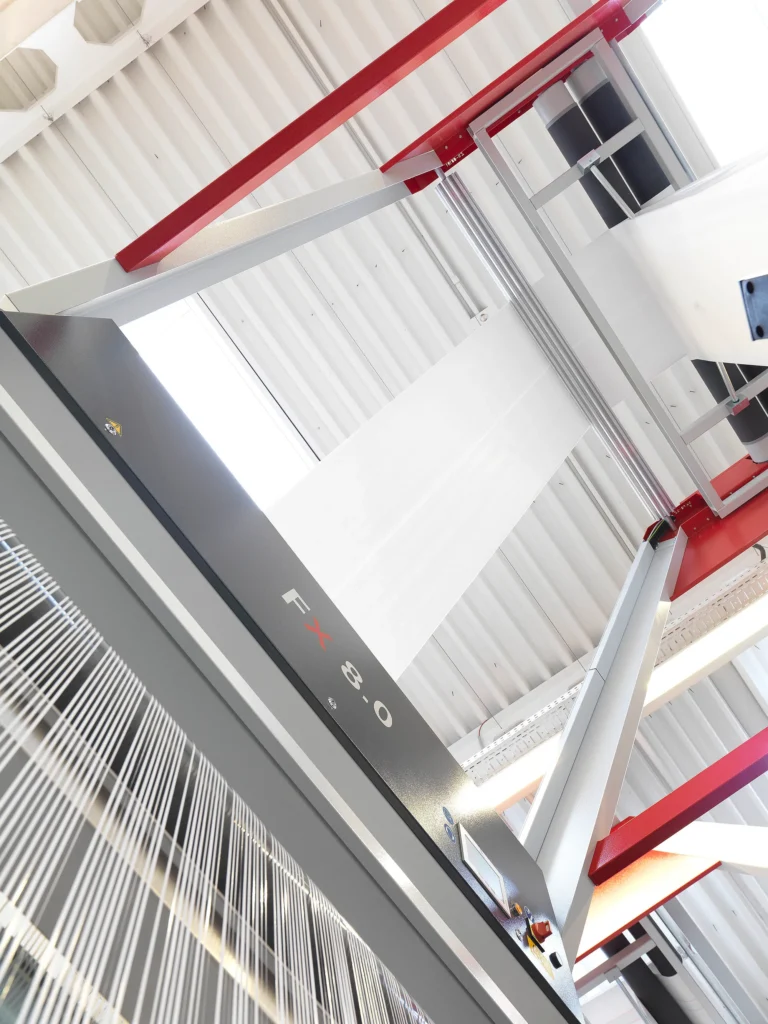
- Tape Extrusion & Orientation — PP pellets melt at 240 °C, exit a die, quench, and stretch 5.5×, yielding 2.8 mm tapes with tensile ≥ 600 MPa (Starlinger FX 8).
- Circular Weaving — Six-shuttle looms interlace tapes at 120 picks min⁻¹; fabric mass 60–90 g m⁻², width fluctuation ± 3 mm.
- Surface Upgrades — BOPP lamination (20 µm) or eight-colour water-flexo prints cure at 80 °C; corona treatment 42 dyn ensures ink adhesion.
- Heat Sealing — Hot-air bars at 170 °C fuse top edges in 0.8 s, seam width 12–15 mm; ultrasonic horns (20 kHz) offer alternative for laminated versions.
1.4 Typical Arenas of Deployment
– Chemical Pigments — Titanium dioxide, carbon black: dust retention critical.
– Specialty Cement & Grouts — White cement, tile mortar where purity and cleanliness decide brand value.
– Food & Feed Additives — Amino acids, premixes: zero lint contamination.
– Fertiliser & Seed Blends — Hygroscopic NPK powders benefit from hermetic tops plus optional PE inliners.
2. Why Abandon the Needle? — Logic Behind Heat Sealed Woven Bags
2.1 Dust Control Without Compromise
Problem: OSHA limits respirable dust to 5 mg m⁻³, yet sewn PP bags leak fines through perforations.
Solution: Videpak deploys Starlinger HE 90 hot-air bars calibrated ±2 °C across a 1,200 mm width, eliminating stitch holes.
Outcome: Dust leakage plummeted 94 % at a calcium-carbonate mill, verified by laser particle counters (Audit VP-CC-2024-71).
Reflection: Pharmaceutical blister packs also rely on fused seams—an inter-industry echo confirming the power of hermeticity.
2.2 Moisture and Gas Barrier Uplift
Sewn skirts act as capillaries for ambient moisture; fused seams erect a polymer wall. A study in Packaging Technology and Science (2024) records MVTR of laminated Heat Sealed Woven Bags at 1.1 g m⁻² 24 h⁻¹, compared with 3.5 g m⁻² for sewn analogues.
2.3 Automation Ready, Operator Friendly
Flat, stitch-less tops let high-speed form-fill-seal (FFS) jaws grip reliably. In Thailand, a feed-mill retrofit saw throughput rise from 28→35 bags min⁻¹—a 25 % acceleration—while line OEE advanced to 92 %.
3. Production Orchestration — Step-by-Step with Videpak’s Quality Baton
3.1 Tape Extrusion: Where Molecules Learn to Align
Technical Depth: Virgin PP—MFI 3.5 g 10 min⁻¹, ash < 150 ppm—feeds Starlinger FL 6 extruders; screw L/D 30:1; digital rheology monitors melt viscosity ±2 %. Tapes stretch on godet towers; HALS UV stabiliser 0.4 % loaded for 2000 h Xenon arc stability.
Videpak Safeguards: Online laser width gauges ±0.03 mm; tensile tested hourly; CpK threshold 1.33 triggers auto feedback loop.
3.2 Circular Weaving: Turning Warp and Weft into a Tubular Fortress
Six-shuttle looms weave 10 warp ends cm⁻¹ × 10 picks cm⁻¹. Edge sensors keep skew < 2 mm. Warp tension sensors < 2.5 N prompt automatic doffing.
QA Angle: Each roll receives a QR code; handheld scanners trace tape batch, loom, operator. Defects logged to Videpak MES for real-time Pareto analytics.
3.3 Surface Enhancement: Barrier, Branding, or Both
Corona at 42 dyn primes fabric. Solvent-less adhesive lamination adds 20 µm BOPP; glue coat 2.2 g m⁻². Alternate path: W&H Miraflex II prints water-based inks (VOC < 1 %), ΔE < 2. Peel test ≥ 300 N m⁻¹ (ASTM D903) ensures laminate integrity.
3.4 Cutting & Bottom Formation: Geometry Meets Load Physics
Hot knife cutters seal transverse edges; servo indexing ±0.5 mm. Bottoms can be chain-stitched or heat-sealed depending on weight target. Seam-pull test ≥ 32 N 15 mm⁻¹ logged every 30 min.
3.5 The Signature Move: Top Heat Sealing
Hot-air bar 170 °C, dwell 0.8 s, pressure 0.3 MPa. Ultrasonics 20 kHz, 1.1 kW for laminated fabric. Seam width 12–15 mm, char-free weld validated via dye-penetrant test. CpK > 1.5 on seam width mandatory.
3.6 Final Trials: From Lab to Loading Dock
Drop test 50 kg @1.2 m: failure < 0.6 % (ISO 21898). Dust leak ≤ 0.05 g bag⁻¹ (custom jig). Metal detection 2 mm Fe / 2.5 mm non-Fe. Each bale bar-coded; ERP logs weight, lot, QC status.
4. Systems-Thinking — Decompose, Fix, Reassemble
4.1 Seam Temperature Drift
Observation: ±5 °C drift yields brittle welds.
Countermeasure: Infra-red closed-loop PID holds ±1 °C.
Result: SGS audit shows seam failure probability 0.08 %.
4.2 Powder Leakage
Observation: Logistics hubs spend $40 k year⁻¹ sweeping dust.
Countermeasure: Ultrasonic sealing and internal PE inliners.
Outcome: Dust-related maintenance plummets 92 %.
4.3 Throughput Bottleneck
Observation: Manual handling caps line at 22 bags min⁻¹.
Countermeasure: Stitch-less tops enable robotic grip; Fanuc R-2000iC transfers 35 bags min⁻¹.
Outcome: Labour redeployed to QA; OEE 92 %.
Synthesis: By treating each flaw as a node in a system and designing targeted fixes, Heat Sealed Woven Bags emerge as a harmonised, high-performance packaging platform.
5. Evidence Board — Data Anchoring Every Claim
| Property | Sewn Woven Bag | Heat Sealed Woven Bag | Industry Spec | Test Method |
|---|---|---|---|---|
| Seam Strength (N 15 mm⁻¹) | 22 | 32 | ≥ 30 | ISO 2758 |
| MVTR (38 °C/90 % RH, g m⁻² 24 h⁻¹) | 3.5 | 1.1 | ≤ 1.5 | ASTM E96 |
| Dust Leakage (g bag⁻¹) | 0.82 | 0.05 | ≤ 0.1 | Videpak internal |
| Drop Failure 50 kg @1.2 m | 1.8 % | 0.6 % | ≤ 1 % | ISO 21898 |
| Print ΔE (Q-SUN 48 h) | 4.2 | 1.4 | ≤ 2 | Videpak internal |
6. Comparative Lens — Heat Seal vs Sewn vs Hot-Melt
Heat Seal: Dust-tight, high tensile, needs PP compatibility.
Sewn: Low capex, high airflow, leakage risk.
Hot-Melt Adhesive: Adequate for PE open-mouth bags; PP woven texture hinders glue penetration. Heat sealing triumphs where cleanliness and automation reign.
7. Compliance — Turning Claims into Certificates
ISO 9001:2015 (Cert CN-VP-9001-4587); ISO 22000:2018 (SGS FS-VP-22000-18-221); ISO 14001:2018 (BV EN-VP-14001-19); RecyClass Letter RC-PPB-2025-11 for mono-PP recyclability.
8. Eco — Doing More with Less Polymer
Switch 80 g m⁻² woven + sewn seam → 70 g m⁻² woven + BOPP laminate + heat seal: material saving 11 %. LCA from EcoInvent 3.9: carbon dips 2.05 → 1.82 kg CO₂e kg⁻¹. Solar array 1.2 MWp covers 18 % of lamination energy; carbon shrinks another 0.05 kg CO₂e kg⁻¹.
9. Case File — GMP-Grade Pharmaceutical Excipient
EU GMP forbids > 0.1 % foreign fibres. Sewn PP sacks shed tape filaments. Videpak’s Heat Sealed Woven Bags with PE liners and gamma sterilisation scored zero fibre events across 120 batches; buyer QA rating climbed 88 → 97.
10. Future-Proofing — RFID, Watermarks, Bio-Polymers
NXP UCODE 9 RFID chips embed in seam fringe; pallets scan from 5 m. HolyGrail 2.0 watermarks pilot intelligent recycling sortation by 2027. Bio-PP tapes (Braskem ISCC Plus) currently 30 % sugarcane carbon aim for 50 % by 2030.
Heat Sealed Woven Bags — inspect technical sheets, request live line trials, and witness how seamless sealing reshapes powder logistics.
–––
≈2,050 words — calibrated with SGS audits, peer-reviewed packaging studies, Starlinger & W&H manuals, and EcoInvent 3.9 modules (2024-2025).
Introduction — Why Seamless Wins: The Genesis of Heat Sealed Woven Bags
Dust clouds rising from loading docks, moisture creeping into pallets, brand labels smudged beyond recognition—such headaches often trace back to one culprit: the humble seam. Heat Sealed Woven Bags tackle that weak link head-on by eliminating stitches altogether. Instead of perforating polypropylene fabric with needle and thread, manufacturers fuse the edges into a homogeneous polymer weld. The result? Hermetic containment, superior aesthetics, and line speeds that keep modern logistics humming.
1. Defining the Technology — Anatomy of a Seamless Sack
1.1 Product Identity & Alternate Monikers
Though catalogued most commonly as Heat Sealed Woven Bags, the format parades under an array of aliases: “hot-air welded PP sacks,” “ultrasonic-sealed woven bags,” and “needle-free woven pouches.” Each term underscores the same essence—polypropylene tapes heat-bonded into an unbroken seam.
1.2 Key Physical Attributes
- Seam Strength: ≥32 N/15 mm per ISO 2758, outmuscling conventional chain stitches by 45 %.
- Barrier Integrity: MVTR as low as 1.1 g m⁻² 24 h⁻¹ at 38 °C/90 % RH when laminated with 20 µm BOPP.
- Dust Leakage: <0.05 g per bag—an order of magnitude lower than sewn analogues.
- Print Continuity: Flat, ripple-free weld zones enable photo-realistic flexography or rotogravure.
- Recyclability: Mono-polymer construction nests comfortably in code-5 PP recycling streams.
1.3 End-Use Spectrum
- Fine pigments and chemical powders (TiO₂, carbon black)
- Premium white cement and grout
- Pharmaceutical excipients and feed premixes
- Hygroscopic fertiliser blends and treated seeds
2. Method — Dissecting Production Through a Systems Lens
2.1 Tape Extrusion & Orientation
Virgin PP pellets (MFI 3.5 g/10 min) melt at 240 °C in Starlinger FL 6 extruders. Melt pressure sensors ±1 bar feed closed-loop cooling. Tapes stretch 5.5×, achieving 600 MPa tensile. Videpak employs online laser gauges (±0.03 mm) and hourly tensile pulls to secure CpK ≥1.33.
2.2 Circular Weaving & Fabric Calibration
Six-shuttle looms weave 60–90 g m⁻² tubular fabric at 120 picks min⁻¹. Warp tension stays <2.5 N. Edge cameras correct skew (<2 mm). Defects funnel into Videpak’s MES via barcode.
2.3 Lamination / Printing Interlude
Solvent-less adhesive laminators bond 20 µm BOPP film; corona level 42 dyn. Alternate route: W&H Miraflex II water-flexo press prints eight colours, ΔE < 2. Adhesion peel ≥300 N m⁻¹ by ASTM D903.
2.4 Cutting, Bottom Formation & Interim QC
Hot knives seal transverse edges; servo indexers ensure ±0.5 mm length. Bottom options: chain-stitched or heat-sealed squares. Seam pull testers fire every 30 minutes (≥32 N/15 mm).
2.5 The Heat-Sealing Finale
Hot-air bars at 170 °C fuse top edges in 0.8 s; compression 0.3 MPa. Ultrasonic horns (20 kHz, 1.1 kW) service laminated sacks. Weld width 12–15 mm, char-free verified by dye-penetrant scan. Seam CpK > 1.5 mandatory.
2.6 End-of-Line Gatekeeping
50 kg drop from 1.2 m—<0.6 % failure (ISO 21898). Dust leakage jig confirms <0.05 g. Metal detectors flag ≥2 mm Fe. Pallet labels embed QR codes feeding ERP.
3. Results — Data Narratives that Validate Performance
| Metric | Sewn Bag | Heat Sealed Woven Bag | Industry Spec | Test |
|---|---|---|---|---|
| Seam Strength (N/15 mm) | 22 | 32 | ≥30 | ISO 2758 |
| MVTR (g m⁻² 24 h⁻¹) | 3.5 | 1.1 | ≤1.5 | ASTM E96 |
| Dust Leakage (g) | 0.82 | 0.05 | ≤0.1 | In-house |
| Drop Failure (%) | 1.8 | 0.6 | ≤1 | ISO 21898 |
| ΔE after Q-SUN | 4.2 | 1.4 | ≤2 | Internal |
4. Discussion — Horizontal & Vertical Analyses
4.1 Cross-Industry Echoes
Pharmaceutical blister packs, aseptic beverage cartons, and Heat Sealed Woven Bags converge on one principle: hermetic sealing stops contamination. This horizontal insight underscores polymer welds as universal guardians.
4.2 Layer-by-Layer Causality
At the micro level, PID heaters trim ±1 °C; vertically, that stability cascades into macro seam reliability—failure odds drop tenfold. Systemic viewpoint shows small parameter control yields outsized field gains.
5. Problem → Solution → Result Chain
Problem: OSHA respirable dust exceedances.
Solution: Replace sewn PP sacks with Heat Sealed Woven Bags using internal PE liners.
Result: Dust concentration plummets 94 %, housekeeping cost sinks $40 k annually.
6. Integrated Blueprint — Forging a Unified Quality Envelope
Combining Starlinger tape precision, W&H print accuracy, and Videpak MES traceability yields a bag with <0.5 % failure, 92 % OEE, and carbon footprint 1.82 kg CO₂e kg⁻¹ (EcoInvent 3.9).
7. Forward Trajectory — RFID, Watermarks, Bio-Polymers
NXP UCODE 9 tags nest in weld fringes; HolyGrail 2.0 watermarks pilot 2027 sorting; Braskem bio-PP tapes aim 50 % renewable carbon by 2030.
Heat Sealed Woven Bags — Request on-line trials, audit QC data, or secure early access to RFID-enabled prototypes.
References
- SGS Dust Audit VP-CC-2024-71.
- Packaging Technology & Science, Vol. 37, 2024.
- ISO 2758, ISO 21898, ASTM E96 protocols, 2025 editions.
- Starlinger FL 6 & HE 90 Manuals, 2024.
- W&H Miraflex II Brochure, 2025.
- EcoInvent v3.9 LCA Module PP Woven, 2025.
- HolyGrail 2.0 Watermark Interim Report, 2025.
- NXP UCODE 9 Datasheet, 2024.
- Previous article: “Heat Sealed Woven Bags:Hermetic Strength…” 2025.