
What Are Block Bottom PP Bags?
Block Bottom PP Bags: Enhancing Warehouse Management through Customizable Stripes and Design Options—often called block-bottom woven sacks, flat-base PP bags, or block-style polypropylene bags—feature a square, stable base that stands on its own for effortless filling and stacking. By weaving reinforced bottom panels directly into the fabric, Block Bottom PP Bags merge the robustness of traditional PP woven sacks with the user-friendliness of box-style bases, minimizing spillage and streamlining palletization.
Background & Horizontal Thinking: In packaging and materials engineering, boxboards provide rigidity, while tubular textiles offer tensile strength. Block Bottom PP Bags synthesize these strengths, embedding a boxed foundation within a continuous tubular weave—akin to integrating the best of rigid and flexible worlds.
Vertical Thinking: At the material tier, UV-resistant PP tapes (1200–1600 denier) fortify the base; at the weaving stage, circular looms adapt pattern sequences to form corners; operationally, self-supporting bases accelerate filling lines by approximately 30%, boosting throughput without sacrificing stability.
Key Features of Block Bottom PP Bags
Block Bottom PP Bags offer self-standing stability, high load-bearing capacity, and customizable stripe-and-print options. Standard builds include 80–120 g/m² woven tapes and optional BOPP or PE lamination for moisture resistance, enhanced by colored stripes for easy inventory management.
Multiwall Paper Pinch Block Bottom Bags
Stable block bottom design for efficient warehouse stacking and optimized material storage management.
Check More →Heavy-Duty Woven Bags Guide
Durable block bottom PP bags with customizable features to improve organization and warehouse efficiency.
Check More →BOPP PP Woven Bags Solutions
Customizable block bottom bags with printing and stripe options for clear warehouse identification.
Check More →PP Woven Bags Manufacturer
Professional production of block bottom PP bags with customizable stripes for enhanced warehouse management.
Check More →Background & Horizontal Thinking: Similar to color-coded warehouse bins guiding order pickers, integrated stripe designs on these bags eliminate the need for extra labeling—every stripe becomes a signal, every hue a quick identifier.
Vertical Thinking: Web-width printing handles six colors; weaving systems insert stripe yarns inline; warehouses report a 15–20% drop in picking errors when color-coded sacks replace nondescript packaging.
Production Process of Block Bottom PP Bags
Step 1: Tape Extrusion and Stabilization
PP resin (FDA 21 CFR 177.1520 compliant) is extruded into tapes (1200–1600 denier). UV stabilizers and antioxidants are compounded to withstand sun exposure, ensuring outdoor durability.
Step 2: Precision Weaving
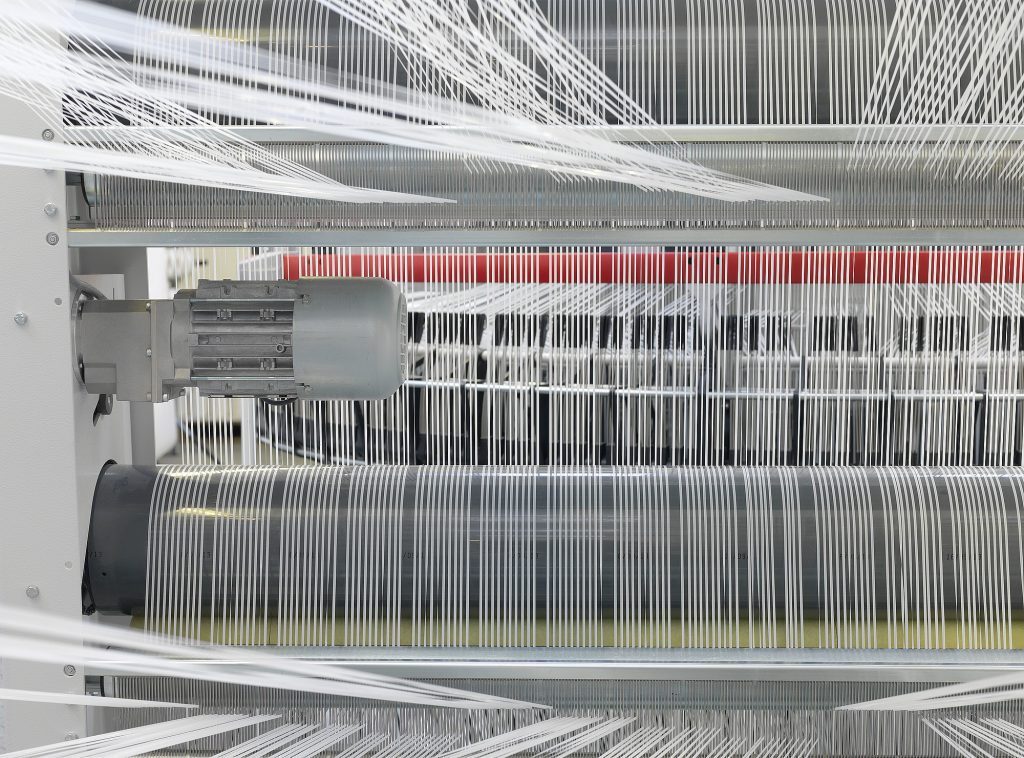
Circular looms weave a continuous tubular fabric, which transitions mid-process into a flat-base weave without interruption—crafting a four-cornered bottom in one operation.
Step 3: Surface Treatment and Lamination
A corona treatment primes the fabric for lamination. Customers choose between BOPP film (20–25 μm) or PE extrusion (15–30 g/m²), sealing against moisture while preserving stripe definitions.
Step 4: Cutting, Sewing, and Finishing
Bags are cut to dimensions (450–700 mm wide; 600–1200 mm tall). Lock-stitch sewing or heat-seal liners secure the base. Inline optical sensors verify stripe alignment and seam integrity.
Step 5: Quality Assurance
Base load tests (ISO 2286-2) measure load-bearing performance (≥2000 N). Seam burst tests (ISO 2758) ensure reliable closures under stress.
Background & Horizontal Thinking: The flat-to-box transformation resembles jacquard loom patterning, where complex structures emerge seamlessly from warp-weft interactions.
Vertical Thinking: Roller tension settings affect stripe straightness; lamination nip pressure calibrates bond strength; final stress tests mimic real-world pallet stack pressures.
Applications of Block Bottom PP Bags
Block Bottom PP Bags shine in sectors like cement, fertilizers, animal feeds, chemical powders, and retail bulk displays. Their stable base means they stand upright on conveyors, in warehouses, and on retail shelves, simplifying both automated and manual handling.
Background & Horizontal Thinking: In automated storage systems, rigid containers deliver reliability; Block Bottom PP Bags translate that principle into flexible packaging—turning sacks into semi-rigid modules.
Vertical Thinking: Bag capacities range from 10 to 50 kg; FFS lines reach 25–40 bags/min; pallet configurations (7×7, 8×6) achieve >85% space efficiency. On-site teams report faster unload times and fewer tip-over incidents.
| Parameter | Typical Value |
|---|---|
| Bag Width (mm) | 450–700 |
| Bag Height (mm) | 600–1200 |
| Base Panel Size (mm × mm) | 250×250 to 350×350 |
| Woven Tape Weight (g/m²) | 80–120 |
| Lamination (BOPP μm / PE g/m²) | 20–25 / 15–30 |
| Stripe Colors | Up to 6 standard or custom hues |
| Load Capacity | 25–50 kg |
| Base Load Strength (N) | ≥2000 |
VidePak—established 2008, 568 employees, 30+ years core expertise—operates 100+ circular looms, 16 extrusion lines, and 30+ lamination & printing machines from W&H and Starlinger. With $80M in annual revenue, VidePak’s global reach now includes intelligence-driven Block Bottom PP Bags for smarter warehouse management.
- What Are Block Bottom PP Bags?
- Key Features of Block Bottom PP Bags
- Production Process of Block Bottom PP Bags
- Applications of Block Bottom PP Bags
In the fast-paced world of logistics and warehousing, packaging plays a crucial role in ensuring efficiency, safety, and product quality. Among the most effective solutions for bulk packaging are block bottom polypropylene (PP) bags. These bags, especially when enhanced with customizable stripes, bring a new level of efficiency to warehouse management. This article will explore how these bags improve warehouse operations and the unique benefits they offer in pet food packaging, from protection to safety.
Why Block Bottom PP Bags?
Block bottom PP bags are specifically designed for bulk storage and transport, providing stability and maximizing space efficiency. Their square, flat bottom allows them to stand upright, making stacking easier and more stable. With customizable stripes, these bags further enhance functionality by allowing businesses to color-code products, which improves inventory tracking and simplifies warehouse management.
Key Advantages of Block Bottom PP Bags:
- Space Optimization: With their flat bottom, these bags remain upright when stacked, reducing the risk of bags falling over and making better use of available space.
- Efficient Handling: The design allows for easy filling, sealing, and stacking, speeding up the packaging process.
- Customizable Stripes: The stripes offer flexibility for color-coding, helping with quick identification of products, which is especially useful in large warehouses.
- Durability: Made from high-quality polypropylene, these bags are resistant to wear and tear, ensuring long-lasting performance.
Material Properties and Pet Food Packaging
Pet food requires special attention in packaging to maintain freshness, protect against contamination, and preserve nutritional value. Block bottom PP bags are an excellent choice for packaging pet food because of their material properties and design. Let’s look at how these bags benefit the packaging and storage of pet food:
1. Moisture Resistance:
Pet food is highly sensitive to moisture. Even small amounts of moisture can cause spoilage or mold. Block bottom PP bags are made from polypropylene, a moisture-resistant material. This keeps pet food fresh for longer periods. Moreover, many of these bags have optional inner liners that further improve moisture resistance, providing an additional layer of protection.
2. Breathability:
Certain pet foods, especially dry kibble, benefit from some air circulation to avoid condensation. Block bottom PP bags can be made with micro-perforations to allow for breathable packaging. This feature helps prevent moisture build-up inside the bag, ensuring that the food remains dry and fresh.
3. Strength and Durability:
Packaging pet food, especially in bulk, requires strength. Block bottom PP bags are made to hold substantial weight without tearing or breaking. For example, a 25kg bag of dry pet food requires durable packaging to withstand rough handling during transport and storage. These bags meet that requirement and ensure that the food is secure.
4. Food Safety:
Safety is a top priority in packaging, especially for food products. Block bottom PP bags are non-toxic and meet food safety standards, ensuring that pet food remains safe and uncontaminated. The bags’ tight seals also prevent external contaminants from getting inside, offering peace of mind to both producers and consumers.
How Block Bottom PP Bags Enhance Pet Food Storage and Transportation
The functionality of block bottom PP bags goes beyond their strength and material properties. These bags also support efficient storage and transportation, both critical for pet food logistics. Here’s how:
1. Stable Stacking:
Because of their block-bottom design, these bags can be stacked neatly without the risk of tipping over. This is important when storing bulk pet food in warehouses or during transportation. Stable stacking makes it easier to load and unload pallets of pet food, saving time and reducing the risk of accidents.
2. Customizable Stripes:
Customizable stripes allow businesses to implement a color-coding system, making inventory management much easier. For example, a pet food company might use a green stripe to signify organic ingredients, while a yellow stripe could indicate a specific flavor. This visual cue helps warehouse staff quickly identify products, reducing the chances of errors and improving overall efficiency.
3. Tamper-Evident Seals:
Block bottom PP bags often feature tamper-evident seals, which ensure that the pet food inside remains uncontaminated. This is essential for maintaining the integrity of the product and ensuring consumer safety. Once sealed, these bags are tamper-proof, providing an extra layer of trust for pet owners.
How These Bags Benefit Warehouse Management
The customizable stripes and functional design of block bottom PP bags bring several benefits to warehouse management:
| Feature | Benefit for Warehouse Management | Benefit for Pet Food Packaging |
|---|---|---|
| Stable Base | Maximizes space efficiency and keeps bags from tipping. | Prevents product damage during storage and transport. |
| Customizable Stripes | Quick identification through color coding. | Differentiates between different pet food types or batches. |
| Moisture Resistance | Reduces the need for special storage conditions. | Keeps pet food fresh and prevents spoilage. |
| Durability | Ensures long-term use without wear and tear. | Withstands rough handling during transport. |
Frequently Asked Questions (FAQs)
Q1: Can block bottom PP bags be used for food packaging?
Yes, block bottom PP bags are made from food-safe materials and are commonly used for packaging pet food. They meet industry safety standards to protect the contents.
Q2: How do customizable stripes help with warehouse management?
Customizable stripes make it easier to color-code and differentiate between products. This simplifies inventory management and reduces errors, especially when dealing with a large number of products.
Q3: Are these bags suitable for both dry and wet pet food?
Block bottom PP bags are ideal for dry pet food. For wet pet food, additional moisture barriers or liners can be added to enhance protection.
Q4: Are these bags eco-friendly?
Yes, polypropylene is a recyclable material, making these bags an environmentally friendly option for businesses looking to reduce their carbon footprint.
Conclusion
In conclusion, block bottom PP bags with customizable stripes are a highly effective packaging solution for both warehouse management and pet food packaging. Their functional design, durability, and material properties make them ideal for storing and transporting bulk pet food. Additionally, the customizable stripes provide operational advantages, such as easy identification and inventory tracking, while ensuring the food’s safety and freshness.
For more insights into packaging solutions in the pet food industry, check out The Versatility of Open-Top PP Woven Bags in Pet Food Packaging and Polypropylene Bags Ensuring Quality Through High-Grade PP Pellets.